Bastrop County Chapter

NICE Partner Program

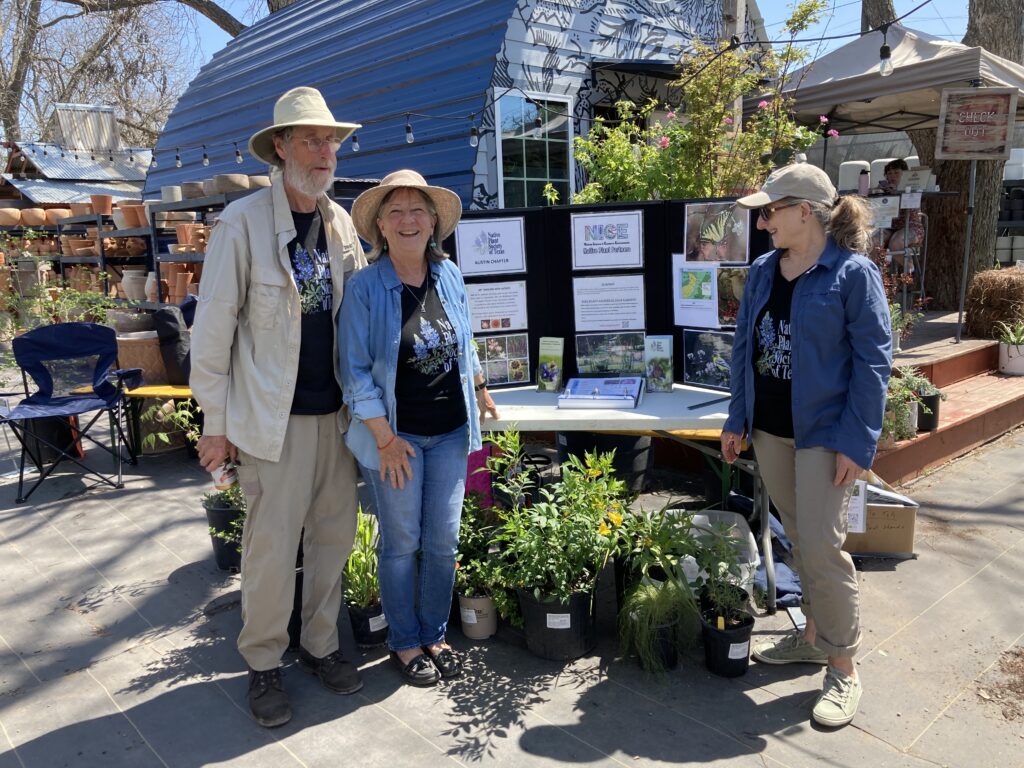
Photo Credit: Claire Sorenson

Purpose

The NICE Native Plant Partner program is a collaboration between the Native Plant Society of Texas and local nurseries around the state to offer native plants that are right for the local environment. NICE stands for Natives Improve and Conserve Environments.

Texas is a large, diverse state and plants that work for one region may not always be the best choice in a different region. NICE Partner committees, run by our local chapters, highlight native plants of the month or the season in cooperation with participating local nurseries and wholesalers in order to assure availability. The Native Plant Society chapter then helps promote native plant sales to the public by providing signs and plant information at the point of sale, advertising on its website and assisting with onsite plant sale events.

Why Plant Natives In Your Yard?

Save Water: Native plants are drought-tolerant, naturally conserving our precious water resources. 

Support Wildlife: Native plants bring back critical habitat to our urban and suburban landscapes that provide food and shelter for birds, butterflies, and other wildlife.

Reduce Chemical Use: Native plants don’t need pesticides or fertilizers.

Best Adapted to the Local Region: Native plants evolved to thrive in local climate and soils. 

Are Beautiful: We do not need to sacrifice beauty in our landscapes when growing native plants.

NPSOT Native Plant Database

Click here to search for plants by Texas region, season, and other attributes that fit your landscape.

 Volunteer Opportunities

  • Recruit partner nurseries
  • Participate in onsite events to promote native plants with nursery partners
  • Publicity: Chapter Social Media, Newspaper articles, posters and signs, t-shirts and buttons
  • Sign up here to help us with upcoming NICE events
Bastrop County Chapter Native Plant Partner Nurseries

Associated Chapters: Bastrop County
316 Old 71, Cedar Creek, TX, USA
Associated Chapters: Bastrop County
1067 State Highway 71, Bastrop, TX, USA
Associated Chapters: Bastrop County
791 State Highway 21, Bastrop, TX 78602, USA

Additional NICE Partner Nurseries in Central Texas

Associated Chapters: La Bahia
10000 FM 50, Brenham, TX 77833, USA
Associated Chapters: Austin
3601 Bee Caves Rd, Austin, TX 78746, USA
Associated Chapters: La Bahia
191 N Madison St, Giddings, TX 78942, USA
Associated Chapters: Austin
601 W Pecan St, Pflugerville, TX 78660, USA
Associated Chapters: La Bahia
1452 Schoenberg Rd, Carmine, TX 78932, USA
Associated Chapters: Pines and Prairies, La Bahia
2701 Lone Star Parkway, Montgomery, Texas 77356, USA
Associated Chapters: La Bahia
Brenham, TX, USA
Associated Chapters: Lindheimer, Boerne, San Antonio
101 South St, Converse, TX, USA
Associated Chapters: La Bahia
Brenham, TX, USA
Associated Chapters: La Bahia
382 FM 2672, Schulenburg, TX 78956, USA
Associated Chapters: Boerne, San Antonio
7600 Eckhert Road, San Antonio, TX, USA
Associated Chapters: Austin
801 Tillery St, Austin, TX 78702, USA
Associated Chapters: La Bahia
10050 TX-36, Brenham, TX 77833, USA

For statewide nurseries look at our statewide NICE partners page.

About the Region

Fall Symposium 2025 Logo - Teach for the Future

Salado, the location of our Fall 2025 Symposium, lies at the intersection of two ecoregions: the Edwards Plateau (Limestone Cut Plain) and Blackland Prairie (Northern Blackland Prairie).

The Edwards Plateau area is also called the Hill Country; however, this general term covers a much larger area extending farther north. Spring-fed creeks are found throughout the region; deep limestone canyons, rivers, and lakes (reservoirs) are common. Ashe juniper is perhaps the most common woody species found throughout the region. Additional woody species include various species of oak, with live oak (Quercus fusiformis) being the most common. Sycamores (Platanus occidentalis) and bald cypress (Taxodium distichum) border waterways. This area is well known for its spring wildflower displays, though they may be viewed in spring, late summer, and fall, as well. According to Texas Parks and Wildlife, average annual rainfall in the Edwards Plateau ranges from 15 to 34 inches.

The Blackland Prairie extends from the Red River south to San Antonio, bordered on the west by the Edwards Plateau and the Cross Timbers, and on the east by the Post Oak Savannah. Annual rainfall averages 30 to 40 inches, with higher averages to the east. This region is dominated by prairie species. The most common grass species include little bluestem (Schizachyrium scoparium) and Indian grass (Sorghastrum nutans) in the uplands and switchgrass (Panicum virgatum) in the riparian areas and drainages. Common herbaceous flowering plants include salvias, penstemons, and silphiums. This area has suffered greatly from overgrazing and agricultural use. Few intact areas remain, though many of the plants can be found along county roadsides throughout the region.

Our fall Symposium host chapter, the Tonkawa Chapter, includes both of these ecoregions.

Source: Wildflowers of Texas by Michael Eason