Creating a More Purposeful Native Landscape
When I started choosing native plants for my home landscape, I had limited space. So after moving to our current house, which has a larger yard, I wanted to take the next step and transform the landscape into a native wildscape. My reasons were two-fold: ecological and a more natural aesthetic. But over time, I realized that for my wildscape to be sustainable in the long term, it needed to feel more visually purposeful and practical to maintain.
What Are Cues to Care?
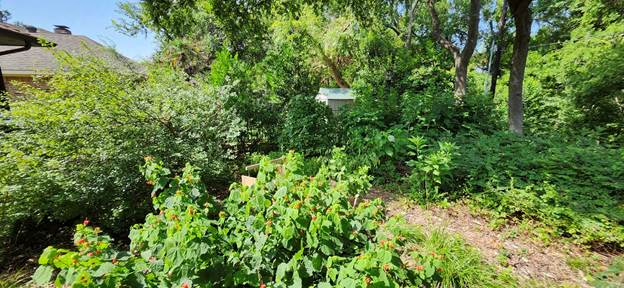
The term Cues to Care originated in the late 1980s from landscape architect Joan Nassauer of the University of Michigan. Nassauer’s research uncovered an interesting paradox. She noted that, “A large body of landscape perception research…leaves no doubt that people prefer to see landscapes that they perceive as natural.” However, there is a fine line, as “too much nature” is uninviting.
The core of her work is that “cues” showing human intervention in the landscape have a powerful impact on people and their acceptance of natural landscapes. These measures help bridge the gap between what makes up a wild garden, a living, dynamic mini-ecosystem, and people’s perception of an intentional and tended landscape.
In conventional yards with non-native plants, these indicators are easily recognizable: mowed and edged turf grass lawn, neatly trimmed foundation plantings, and similar touches. For neighbors and others, these actions and results provide clear assurance that someone is maintaining the property.
A native wildscape, on the other hand, differs noticeably from a conventional yard. Local native perennials, shrubs, trees, and grasses are allowed to grow in a more organic form, benefiting pollinators and other wildlife. However, neighbors unfamiliar with ecological landscapes can perceive it as unkempt or messy. Because of this disconnect, intentional cues can help people better understand and appreciate wildscapes.
Paths as a Turning Point
For my property, one simple change helped it feel more intentional and easier to manage – adding paths through the wildscape. In all fairness, it was an idea my wife strongly “encouraged”.
Paths are one of the strongest Cues to Care elements because they are instantly recognizable to nearly everyone. Here are some of the benefits of building paths in your wildscape:
- Structure — Paths can establish more defined “spaces” throughout your yard, instead of a single mass of plants, helping the landscape feel more inviting.
- Maintenance — Improved access makes it simpler for you to check on plants, pull unwanted plants, and perform other low-impact maintenance.
- Enjoyment — Defined walkways allow you to move more easily through the landscape, offering an easier way to enjoy your hard work up close.
- Purposefulness — In our case, another sign of a need for change was neighbors asking curiously about the “weeds” in the landscape. Putting in paths and other elements helped signal planning and purpose, not just uncared-for weeds.
Small Signals with Big Impact
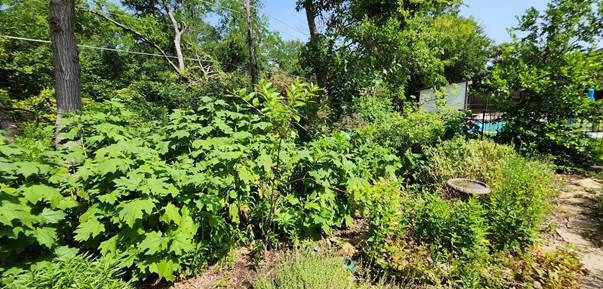
Paths are not the only cues available in a native landscape to demonstrate purposefulness. Below are other elements that you can use to help shape a landscape without taming nature:
Minding the Borders – Cutting back vegetation or mowing a strip along property borders, driveways, or sidewalks conveys that your yard is thoughtfully maintained.
Specimen Tree or Shrub – Designing your wildscape to showcase a prized native tree or large shrub can draw passersby’s attention. Additionally, most people tend to have a greater appreciation for trees and large shrubs than tall grasses or ground covers.
Wildlife Support – Your neighbors and others are unlikely to recognize a bird’s natural habitat requirements. However, they can readily associate birdbaths, feeders, and nest boxes with intentional support.
Hardscaping – Decorative fences, benches, small rock walls, trellises, and similar structures help to display stewardship and care.
Large Flowers – Nassauer’s research also reveals that the small flowers of some native perennials “tend to be misunderstood as weeds”, while larger, brighter flowers are perceived as intentional and attractive.
Native Landscape Sign – (A shameless plug) Including a Native Plant Society of Texas sign or other native landscape sign in your yard can increase awareness about native plants and reinforce the purpose of the landscape.
Whether you include all or just a few of the above items, these cues help people distinguish between an intentional natural landscape and benign neglect. Especially for homeowners in HOAs, they can be the difference between acceptance and unwanted scrutiny.
Balancing Nature and Neighborhoods
Working through my own process of creating a wildscape helped me to see why the Cues to Care concept matters as much as it does. It is not about forcing a native landscape to appear conventional, but helping neighbors see that, while different, it is cared for ecologically and aesthetically.
As stewards of native plants, we are ambassadors for a critical shift in how landscapes function within the local ecosystem, and the visible signals of intent we choose shape how that shift is perceived.