

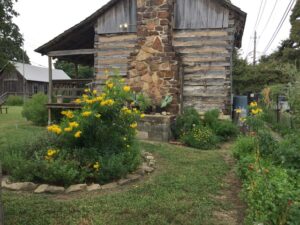
Butterfly Garden at Knapp Heritage Park
LOCATION: Knapp Heritage Park, Arlington TX Volunteer Workdays: Monthly, please contact us to be added to the volunteer list for this garden. Garden Leaders: Josephine

Container Pollinator Garden at UUMC
LOCATION: 2416 West Berry Street, Fort Worth TX 76110 at University United Methodist Church. Enter the parking lost on Forest Park Blvd, across from Paschal
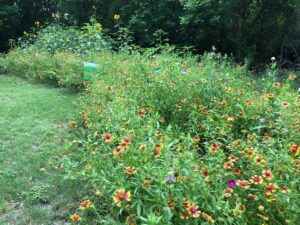
Fort Worth Zoo Pollinator Garden
LOCATION: 1989 Colonial Parkway, Fort Worth, TX. Located on the east side of the Fort Worth Zoo’s parking lot. Workdays: 2nd and 4th Fridays of
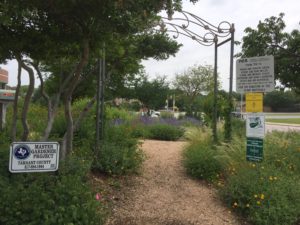
Native Gardens at Southwest Regional Library
LOCATION: 4001 Library Ln, Fort Worth, TX 76109 Workdays: Second and Fourth Thursday of the month. If you’d like to volunteer at this garden, please
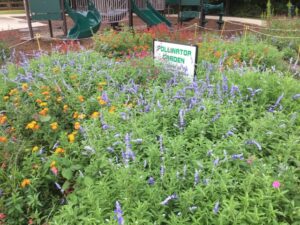
O.S. Gray Natural Area
LOCATION: O.S. Gray Natural Area, Arlington TX. Volunteer Workdays: Second Saturday of each month. Please contact us if you’d like to be added to the
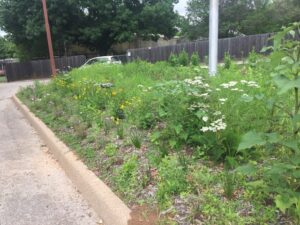
Pollinator Garden at Randol Mill Park
LOCATION: Randol Mill Park, Arlington. Workdays: Fourth Monday of each month, please contact us to be added to the volunteer list for this garden. Garden
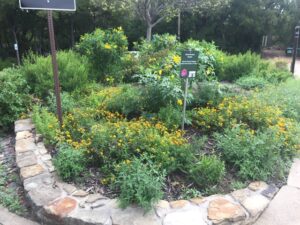
Pollinator Garden at River Legacy Park
LOCATION: River Legacy Park, Arlington TX. Workdays: Third Monday of each month. If you’d like to volunteer at this garden, please contact us to be
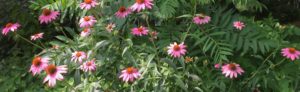
Randol Mill Park Pond Triangle Garden
LOCATION: 1901 W. Randol Mill Rd., Arlington, TX 76012. Volunteer Days: The 4th Thursday of the month. If you’d like to volunteer, please contact us
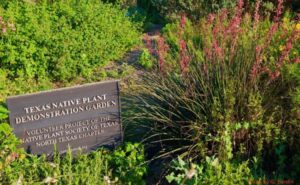
Southwest Sub-Courthouse Garden
LOCATION: 6551 Granbury Rd, Fort Worth, TX 76133 Volunteer Workdays: to be scheduled, please contact us to be added to the volunteer list for this
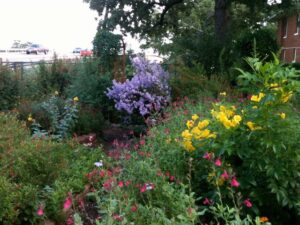
The Butterfly Garden at Fielder House
LOCATION: Fielder House, Arlington TX. Volunteer Workdays: To be announced. If you’d like to volunteer at this garden, please contact us to be added to
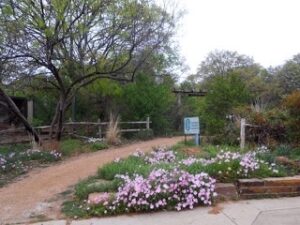
The Molly Hollar Wildscape
LOCATION: 2866 Spanish Trail, Arlington, TX 76016 Workdays: Every Wednesday, and first Saturday, of the month. If you’d like to volunteer at this garden, please
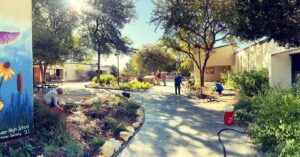
White Settlement Monarch Waystation
LOCATION: 8213 White Settlement Rd, White Settlement TX, 76108 Volunteer Days: Every Wednesday, 9:00 am to 11:00 am. (Summer hours start at 8:00am) In the
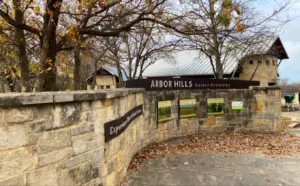
Arbor Hills Nature Preserve
Arbor Hills Nature Preserve is a 200-acre park in Plano, Texas. It has several amenities including 3 miles of paved hiking trail, 3 miles of
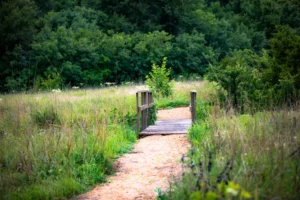
Blackland Prairie Raptor Center
The Blackland Prairie Raptor Center in Lucas promotes and enhances populations of raptors through rehabilitation, conservation, and education initiatives. In line with their name, the
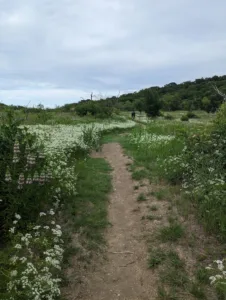
Cedar Hill State Park
Cedar Hill State Park is located on FM 1382 and the eastern shore of Joe Pool Lake in Cedar Hill, Texas, ten miles southwest of
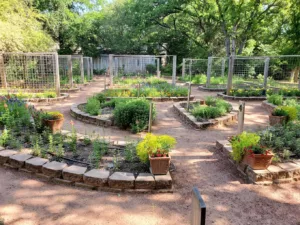
Clark Gardens
The mission of Clark Gardens is to inspire and demonstrate the many rich horticulture and nature-based possibilities of North Texas to tourists and residents alike.
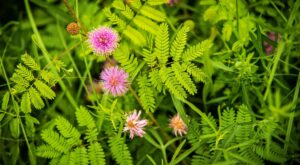
Clymer Meadow Preserve
The 1,475 acre preserve in Hunt County contains some of the largest and most diverse remnants of the Blackland Prairie — the Texas version of
Connemara Meadow Nature Preserve
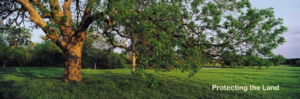
The nature preserve, located in Allen, is 72 acres of natural habitat, and rich in floral diversity that is reminiscent of the native tallgrass Blackland
Cross Timbers Hiking Trail at Lake Texoma
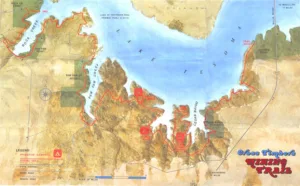
This near-15 mile trail runs along the shore of Lake Texoma from Paw Paw Creek to Juniper Point, passing through Cedar Bayou about 13 miles
Cross Timbers Trailhead
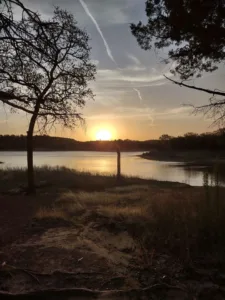
If you go to the left–Equestrian Trail: Experience this 6.5-mile out-and-back trail near Flower Mound, Texas. Generally considered a moderately challenging route, it takes an
Dr Bettye Myers Butterfly Garden and Carrol Abbot Wildflower Sanctuary
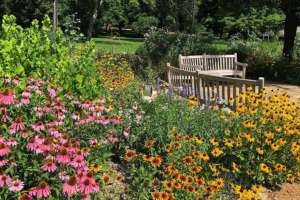
TWU’s Denton campus is host to two a native-plant butterfly gardens that attract and sustain monarchs and many other butterflies, bees and birds. The Dr. Bettye
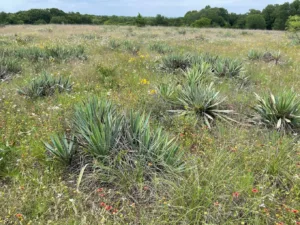
Fort Worth Nature Center & Refuge
The Fort Worth Nature Center & Refuge is a nature center located between Lakeside and Lake Worth, Texas within Fort Worth, Texas city limits. It
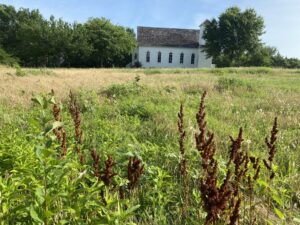
Frankford Blackland Prairie
A historic five-acre nature preserve situated in the midst of north Dallas. The site features a rare remnant of the Blackland Prairie once indigenous to
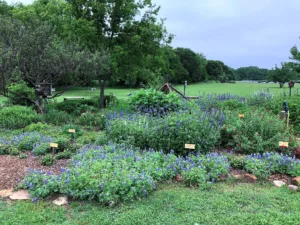
Green Acres Farm Memorial Park
Green Acres is a Flower Mound town park of about 13 acres, located at4400 Hide-A-Way Lane, off of Simmons Road near to Grapevine Lake.The land
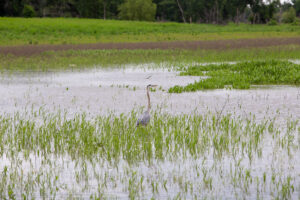
Hagerman National Wildlife Refuge
The 11,320-acre refuge on Lake Texoma includes shallow marshes, creeks, bottomland hardwoods, forested uplands and grasslands, that provide habitat for more than 300 species of birds and many varieties of wildlife.
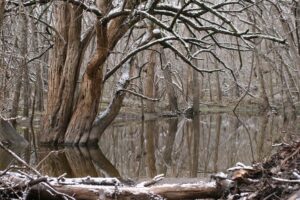
Heard Natural Science Museum & Wildlife Sanctuary
A 289 acre nature preserve and natural science museum in McKinney. The grounds include a native plant garden, native Texas Butterfly house, and wildlife sanctuary with
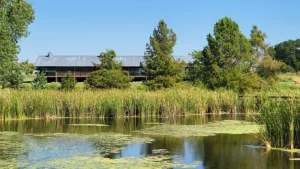
John Bunker Sands Wetland Center
Set amid a working cattle ranch and an expansive wetland on the East Fork of the Trinity River, the John Bunker Sands Wetland Center is
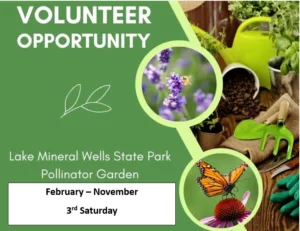
Lake Mineral Wells State Park – Pollinator Garden
This pollinator garden provides visitors the opportunity to see native plants of Texas through all seasons. It is located in front of the Administration Building
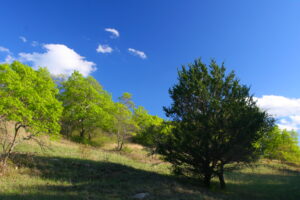
LBJ National Grasslands
Lyndon B. Johnson National Grassland is a national grassland located near Decatur, and within an hour’s drive from Fort Worth. It is primarily used for
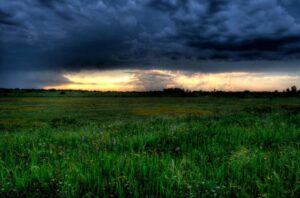
Lewisville Lake Environmental Learning Area
Includes over 2,600 acres of prairies and bottomland forests adjacent to Lewisville Lake. LLELA’s mission is to preserve and restore the native habitat and biodiversity, with
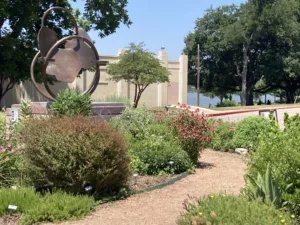
Monarch Waystation at The Bath House
Located on the shores of beautiful White Rock Lake, the Bath House Cultural Center, owned and operated by the City of Dallas Office of Cultural
Palo Pinto Mountains State Park
Drive about 75 miles west of the Dallas / Fort Worth Metroplex and you’ll enter the Palo Pinto Mountains. Just north of the freeway lies
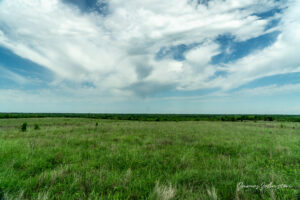
Parkhill Prairie
A 436-acre native plant preserve located in northeast Collin County. Parkhill Prairie Park features a 52-acre relic of the Blackland tall-grass prairie and provides magnificent
Roots for Wings Demo Garden
Lewisville Animal Shelter Roots for Wings Demo Garden The City of Lewisville is excited to launch Roots for Wings, a pilot program certifying residential pollinator
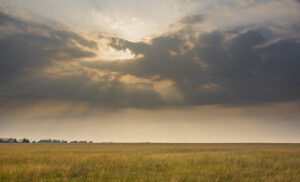
Smiley-Woodfin Prairie
The 2,100-acre meadow in Lamar County is the largest section of native grassland existing in Texas. This grassland has remained uncultivated, providing an annual harvest
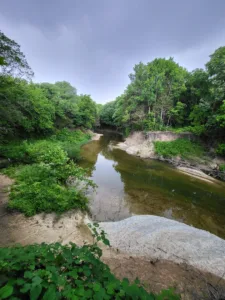
Spring Creek Forest Preserve
The preserve is situated in northern Dallas County, and features old-growth bottomlandforest with a gentle, wide spring water stream that flows over a bed of solid limestone. The

Station 511 in Argyle
Located at Station 511 in Argyle, Rewilding Station 511 is a joint project between Denton County ESD 1, Keep Argyle Beautiful, the Denton County Master
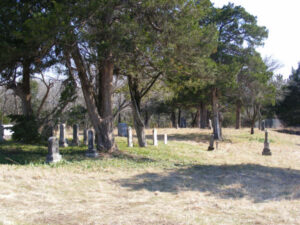
Stiff Chapel Cemetery
A two-acre Texas Historic Cemetery dating from 1847. Located in McKinney, the grounds have a wide variety of native grasses and perennials on undisturbed soil.
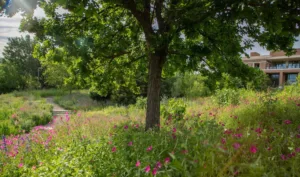
The Laura W. Bush Native Texas Park
The Laura W. Bush Native Texas Park, open year round, reflects President and Mrs. Bush’s love of the native Texas landscape. Visitors can explore native
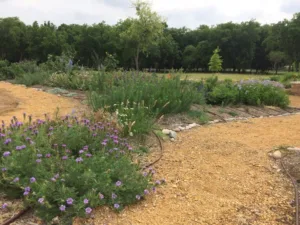
Windmill Garden – Brookhaven College
The native plant and pollinator Windmill Garden of Brookhaven College was awarded a grant from the Dallas chapter for additional native plants to continue their
