Northeast Texas Chapter

Northeast Texas


Upcoming Events

October Program: Thursday 10/26 at 2PM

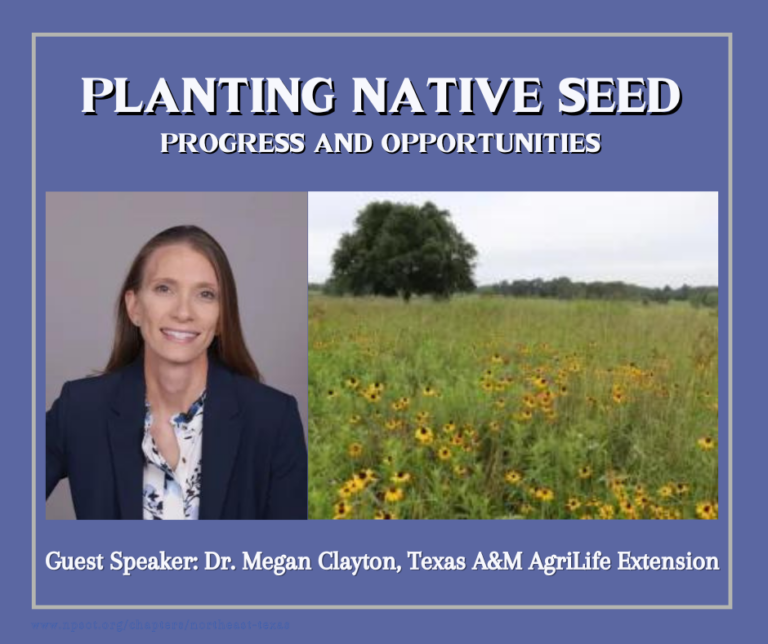
Dr. Megan Clayton Texas A&M AgriLife Extension and Research Center at Uvalde will speak about “Planting Native Seed – Progress and Opportunities!” Program will be centered around Native Seed programs for landowners restoration efforts, Native Seeding Certification Course, and their partnership with Texas Native Seed. If you are unable to join in person, please contact Nick Makarenko at northeast1npsot@gmail.com to receive the link to join virtually. The Zoom link will be provided the morning of the program by 8AM so please check your email. We request links not be shared with others to ensure the best quality presentation for everyone and for our speaker.


Follow Us on Facebook


Native Plant Society News

A Thorny Dilemma

By Peter Keilty, Austin Chapter Land stewardship is often described as a matter of simple choices, but invasive species can make those choices emotionally and ecologically complicated. This article begins
Read More »

Summer 2026 Member News

Shepherding Texas’ Pollinators Members of the Society are constantly surprising us with their dedication to improving the health of our great state. Whether it’s performing cleanups of public lands or

Read More »

Native Plant Society Virtual Events

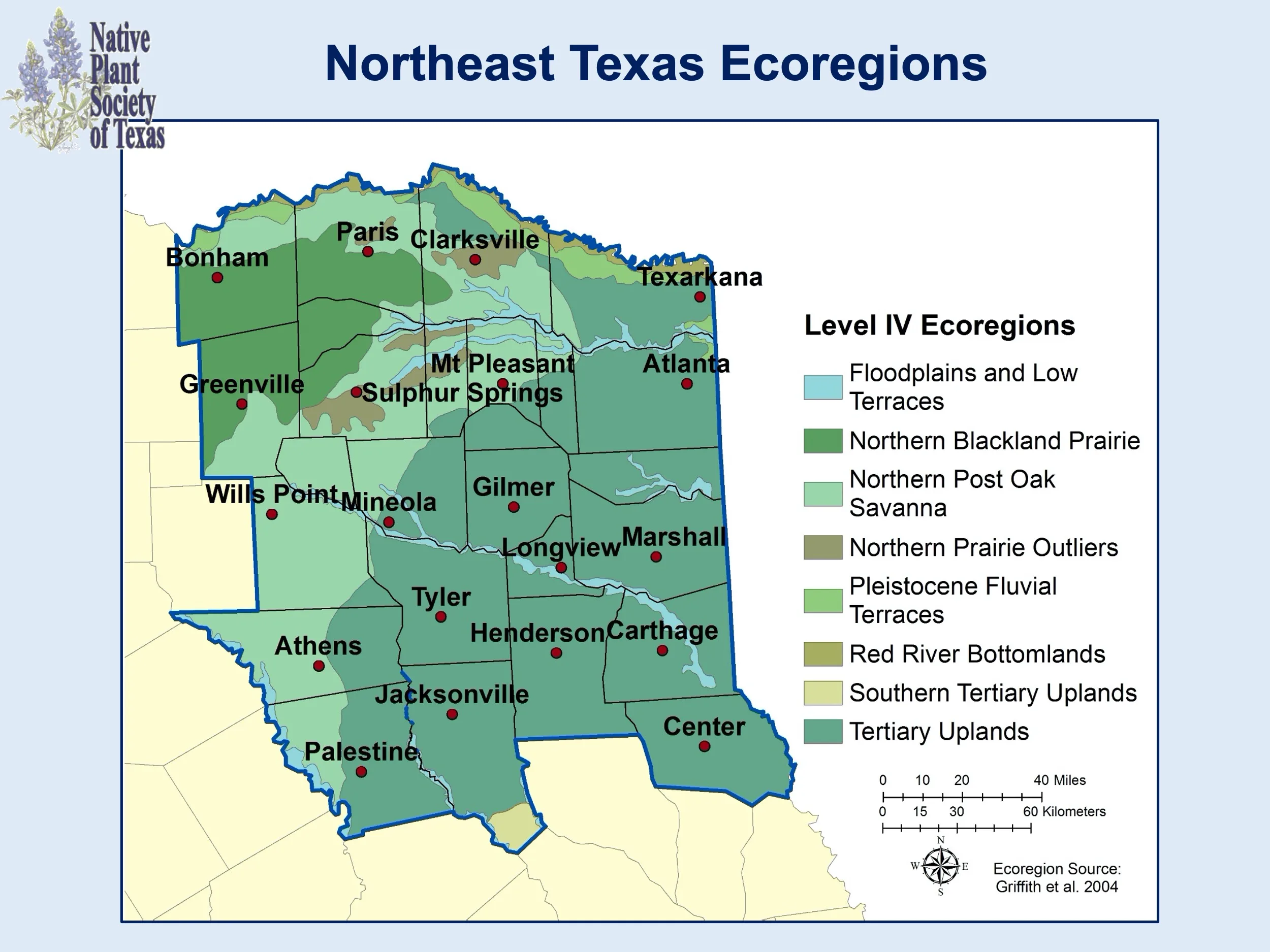
Northeast Texas Ecoregions Map

Welcome!

We are a non-profit organization run by volunteers serving all of Longview and surrounding counties. The Northeast Chapter's mission is to promote research, conservation, and utilization of native plants and plant habitats of Texas, through education, outreach, and example. We hold monthly meetings that are open to the public that feature a variety of guest speakers that are passionate about native plants and related topics.

In addition, our chapter also hosts plant sales, maintain a garden that features native plants at the Longview Arboretum, and hosts other educational and outreach activities that support our mission throughout the year. Check our calendar for upcoming events and follow us on Facebook!

Stay in Touch

Contact

About the Region

2026 Fall Symposium Logo

This low-elevations region of Texas extends inland from the barrier islands, about 60 or so miles, and stretches from Brownsville to Louisiana. In total, it covers about 9.5 million acres, with a high point of 150 feet in elevation. More than 1000 species of plants can be found in this region. On the southern end, species more common in Mexico (such as Sabal mexicana) and Central America occur.

The barrier islands provide us with dune systems, and clay flats to the inland side, which have species found in these areas alone. Many plants here, such as Ipomoea pes-caprae (beach morning glory), can be found throughout tropical regions of the globe. I’ve encountered the same species on the beaches of Guam.

Once inland, vast marshes and wet prairies occur. Occasionally, oak (Quercus fusiformis) groves can be found. Common grasses include species of Bothriochloa, Paspalum, and Sporobolus; eastern gamagrass (Tripsacum dactyloides); and switchgrass (Panicum species). Many rivers and creeks cut through the Gulf Prairies, and along these riparian areas various species of trees, Sabal minor, and other plants adapted to clay soils can be found. Due to overgrazing, farming, and fire suppression, woody species such as mesquite (Prosopis glandulosa) and huisache (Acacia farnesiana), and invasive species such as chinaberry (Melia azedarach), Brazilian pepper (Schinus terebinthifolius), and Chinese tallow (Sapium sebiferum) have increased and displaced our native flora.

Source: Wildflowers of Texas by Michael Eason