Pollinator Landscaping

Member Recommended Resources

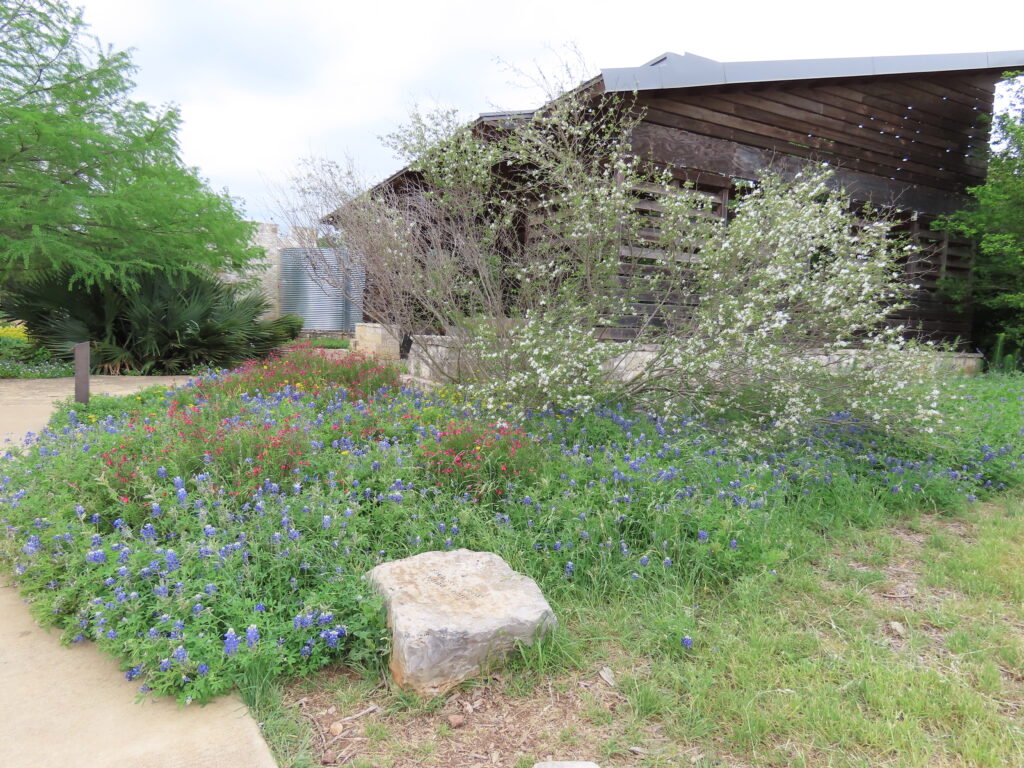
Photo Credit; Claire Sorenson

Many of our members are drawn to native plants because of the butterflies they attract. Below is a list of miscellaneous Monarch and milkweed resources as well as all things butterfly and pollinator gardening. We hope this list serves as a general resource. Be sure to check out the Bring Back the Monarchs to Texas program and the I-35 Waystation program for more information and ways to get involved.

TitleDescription
Map of Native Milkweeds and Where They GrowMaps
Milkweed Finder ToolOnline Search Tool
Milkweed A Dinner For Butterfly Royalty - Partial TalkVideo Excerpt
Milkweed A Dinner For Butterfly Royalty - Full TalkVideo
Milkweeds & Monarchs PowerpointPowerpoint view
Milkweeds & Monarchs VideoVimeo video
Cajun Prairie Habitat Preservation Society: Louisiana Milkweeds
Citizen science monitoring demonstrates dramatic declines of monarch butterflies in western North America
St. Julian’s Crossing Flyer
“Transforming Landscapes for Pollinators” (St. Julian’s Crossing) Resources
Monarch Garden Grants
Monarch Joint Venture
Monarch Watch
Texas Wildscapes: A Backyard Wildlife Habitat ProgramHow to create backyard wildlife habitat for butterflies and more!
Key for identification of native milkweed plants
Milkweed: A Conservation Practitioner's Guide
Monarch Watch
Schoolyard Habitat Guide
Butterflies, Moths, & Caterpillars
South Texas butterflies
Butterflies of Houston and Southeast Texas
Planting Instructions for Plant Sale Plants
TPWD An Intro to Butterfly Watching
Inviting Nature Back Home by North Texas Chapter of Texas Master NaturalistA Complete Guide to Updating Your Landscape for Birds, Bees and Butterflies
A Guide to Butterfly Gardens
This table is still a work in progress!

About the Region

2026 Fall Symposium Logo

This low-elevations region of Texas extends inland from the barrier islands, about 60 or so miles, and stretches from Brownsville to Louisiana. In total, it covers about 9.5 million acres, with a high point of 150 feet in elevation. More than 1000 species of plants can be found in this region. On the southern end, species more common in Mexico (such as Sabal mexicana) and Central America occur.

The barrier islands provide us with dune systems, and clay flats to the inland side, which have species found in these areas alone. Many plants here, such as Ipomoea pes-caprae (beach morning glory), can be found throughout tropical regions of the globe. I’ve encountered the same species on the beaches of Guam.

Once inland, vast marshes and wet prairies occur. Occasionally, oak (Quercus fusiformis) groves can be found. Common grasses include species of Bothriochloa, Paspalum, and Sporobolus; eastern gamagrass (Tripsacum dactyloides); and switchgrass (Panicum species). Many rivers and creeks cut through the Gulf Prairies, and along these riparian areas various species of trees, Sabal minor, and other plants adapted to clay soils can be found. Due to overgrazing, farming, and fire suppression, woody species such as mesquite (Prosopis glandulosa) and huisache (Acacia farnesiana), and invasive species such as chinaberry (Melia azedarach), Brazilian pepper (Schinus terebinthifolius), and Chinese tallow (Sapium sebiferum) have increased and displaced our native flora.

Source: Wildflowers of Texas by Michael Eason