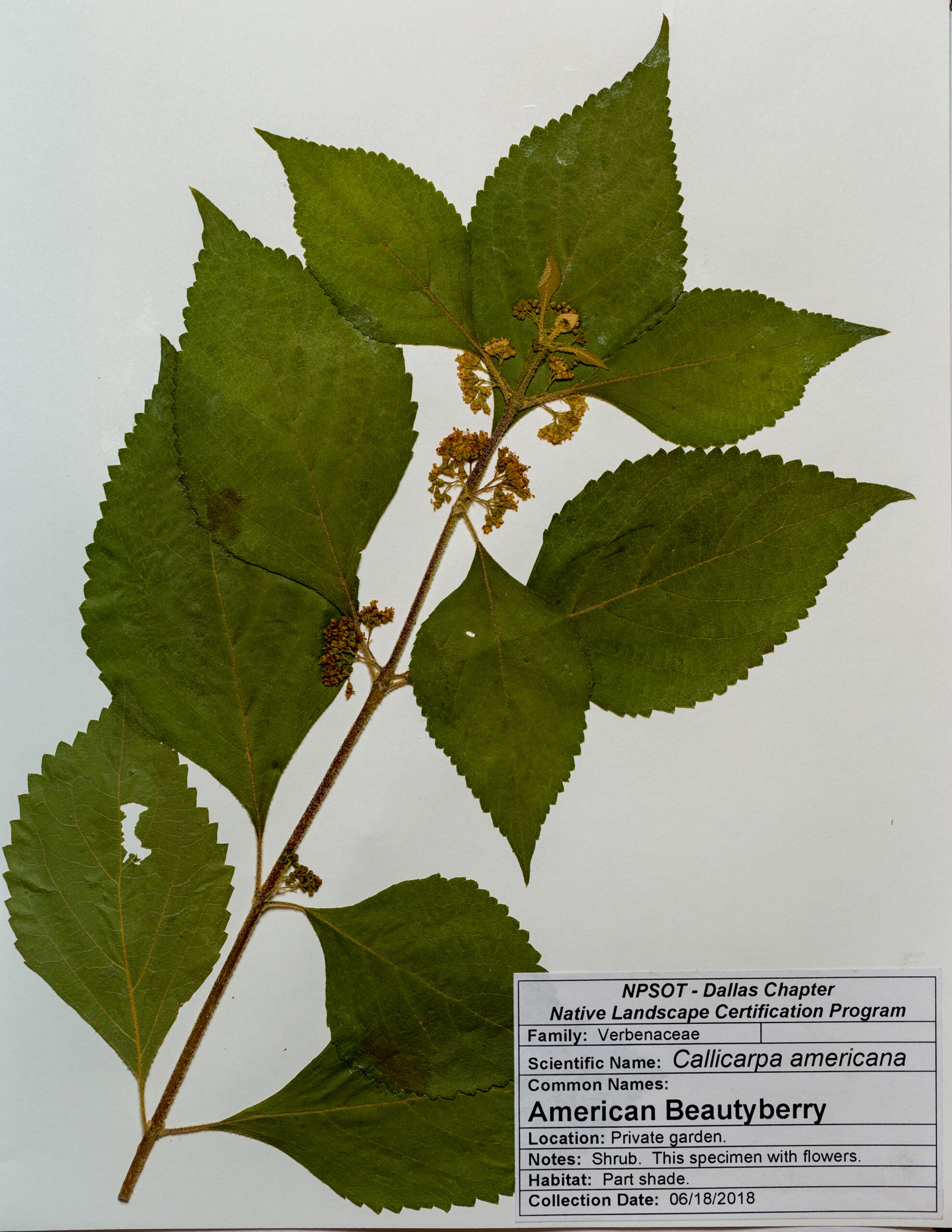
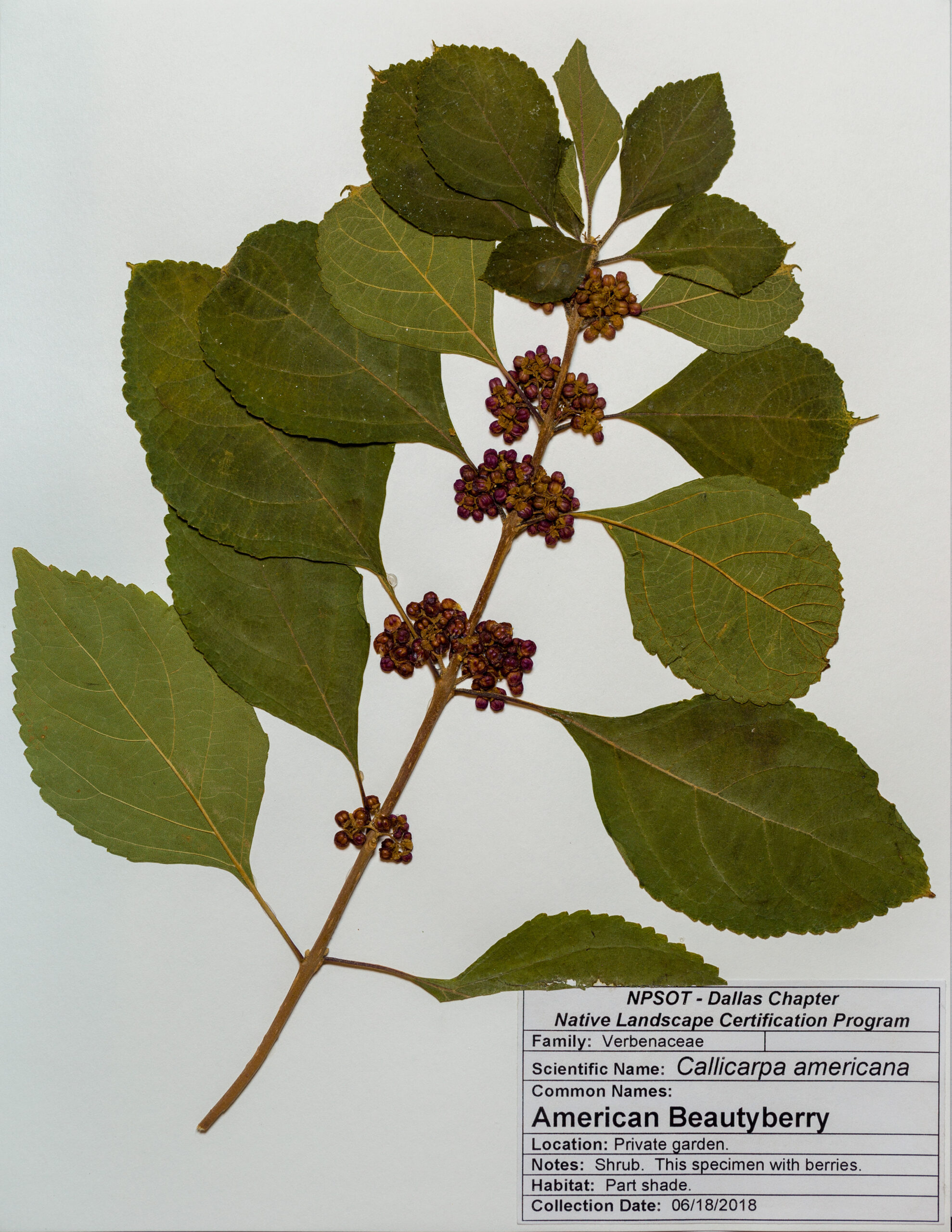


American Beautyberry

Callicarpa americana

Other common name(s):

French Mulberry

Family:

Lamiaceae (Mint Family)

Plant Ecoregion Distribution Map

This map uses data from the US EPA. EPA  servers have been offline frequently so maps may not display. We are working on a solution.

Cross Timbers, East Central Texas Plains, Edwards Plateau, Gulf Coast Prairies and Marshes, Texas Blackland Prairies, Western Gulf Coastal Plain
Eastern Cross Timbers, Grand Prairie, Limestone Cut Plain
Bastrop Lost Pines, Floodplains and Low Terraces2, Northern Post Oak Savanna, Northern Prairie Outliers, San Antonio Prairie, Southern Post Oak Savanna
Balcones Canyonlands
Floodplains and Low Terraces4, Lower Rio Grande Alluvial Floodplain, Mid-Coast Barrier Islands and Coastal Marshes, Northern Humid Gulf Coastal Prairies, Southern Subhumid Gulf Coastal Prairies, Texas-Louisiana Coastal Marshes
Floodplains and Low Terraces1, Northern Blackland Prairie, Southern Blackland Prairie
Flatwoods, Floodplains and Low Terraces3, Pleistocene Fluvial Terraces, Red River Bottomlands, Southern Tertiary Uplands, Tertiary Uplands

Plant Characteristics

Growth Form

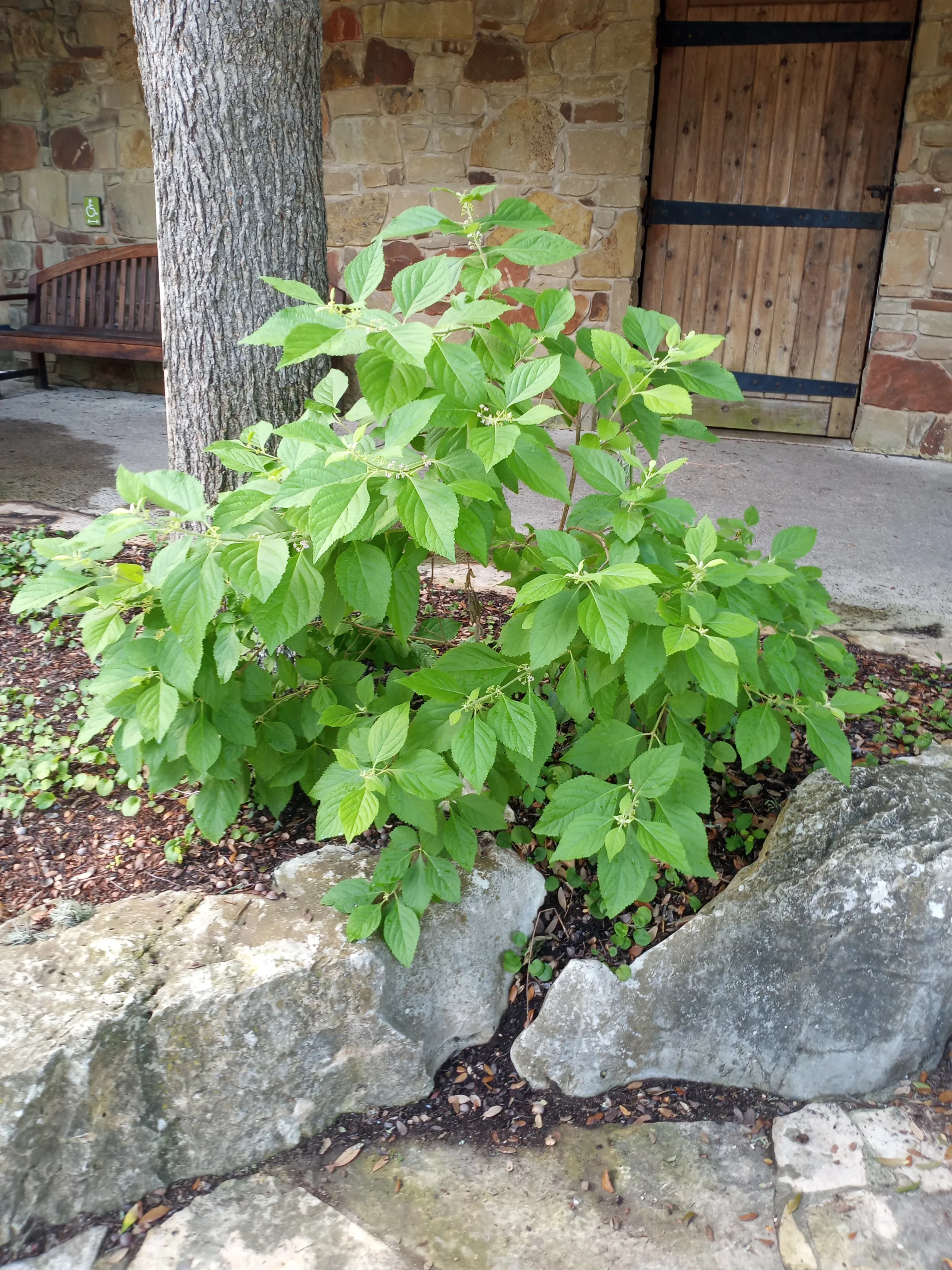
Shrub

Height

4
to
6
ft.

Spread

4
to
6
ft.

Leaf Retention

Deciduous

Lifespan

Perennial

Habitat and Care Requirements

Soil Type(s)

Sand, Loam, Clay, Well Drained, Moist, Dry

Light Requirement

Part Shade

Water Requirement

Low, Medium

Native Habitat

Woodland

Bloom and Attraction

Bloom Color

White, Pink

Bloom Season

Spring, Summer

Seasonal Interest

Berry, Forage, Nectar

Wildlife Benefit

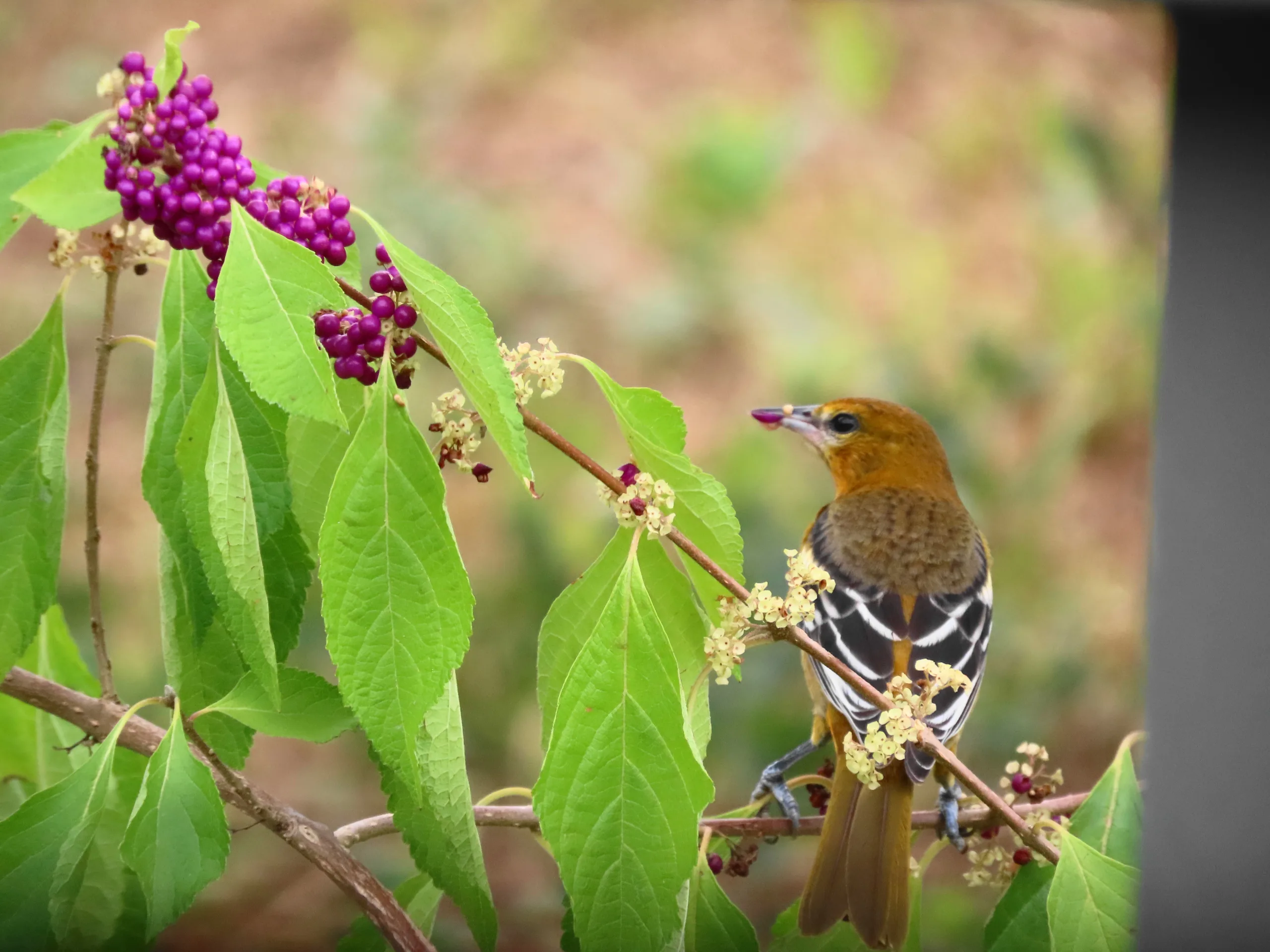
Browsers, Butterflies, Birds, Small Mammals, Deer

Maintenance

Great understory shrub. Easily propagated and requires little maintenance. Needs moisture and deep soil. Give lots of room for its long arching stems. Prune only errant branches and to control size if space is an issue. The shrub may temporarily defoliate and drop fruit during periods of prolonged summer drought. Native habitat: woods, bottom lands, thickets. Propagation: seed, root cutting.

Comments

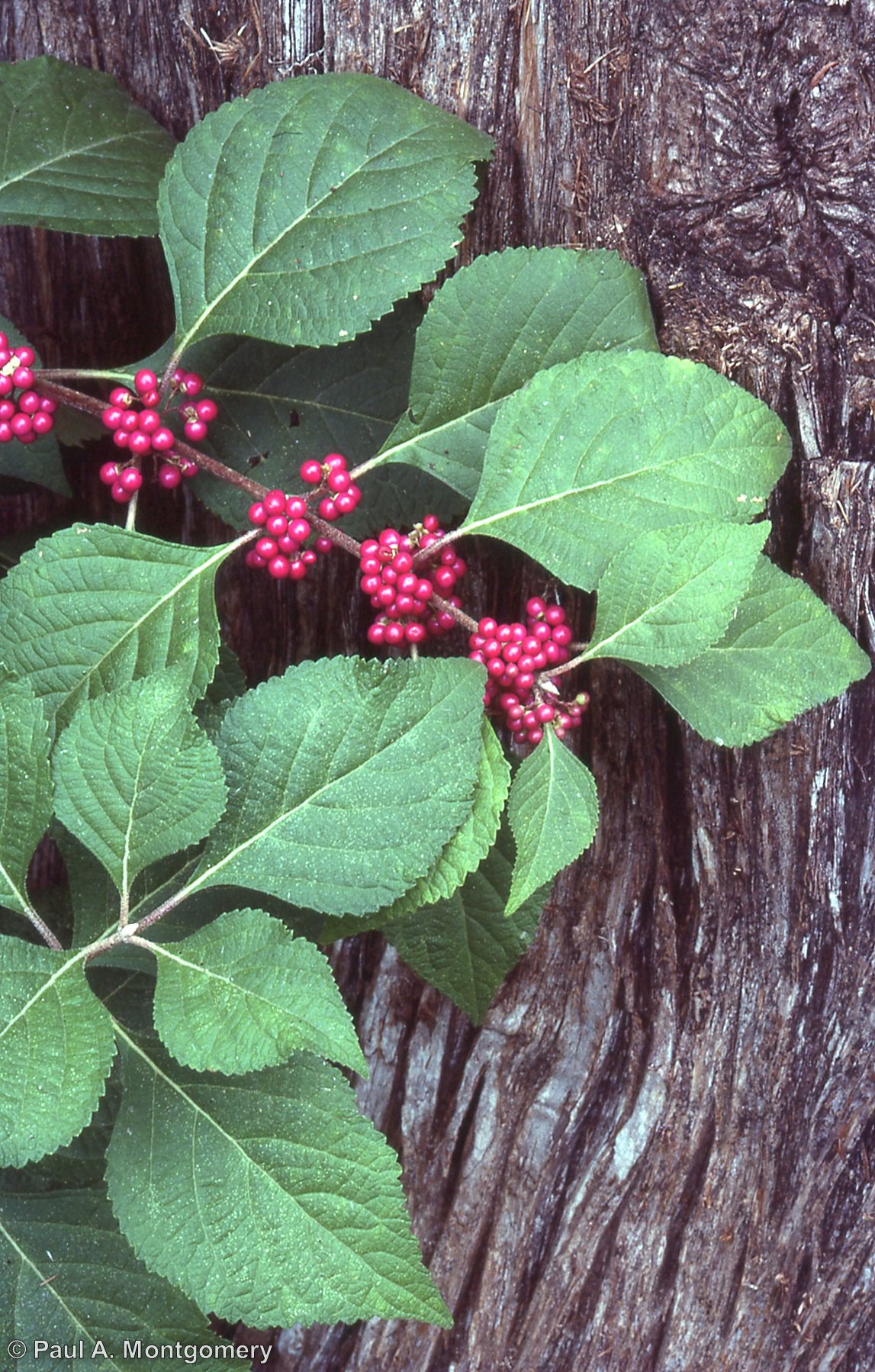
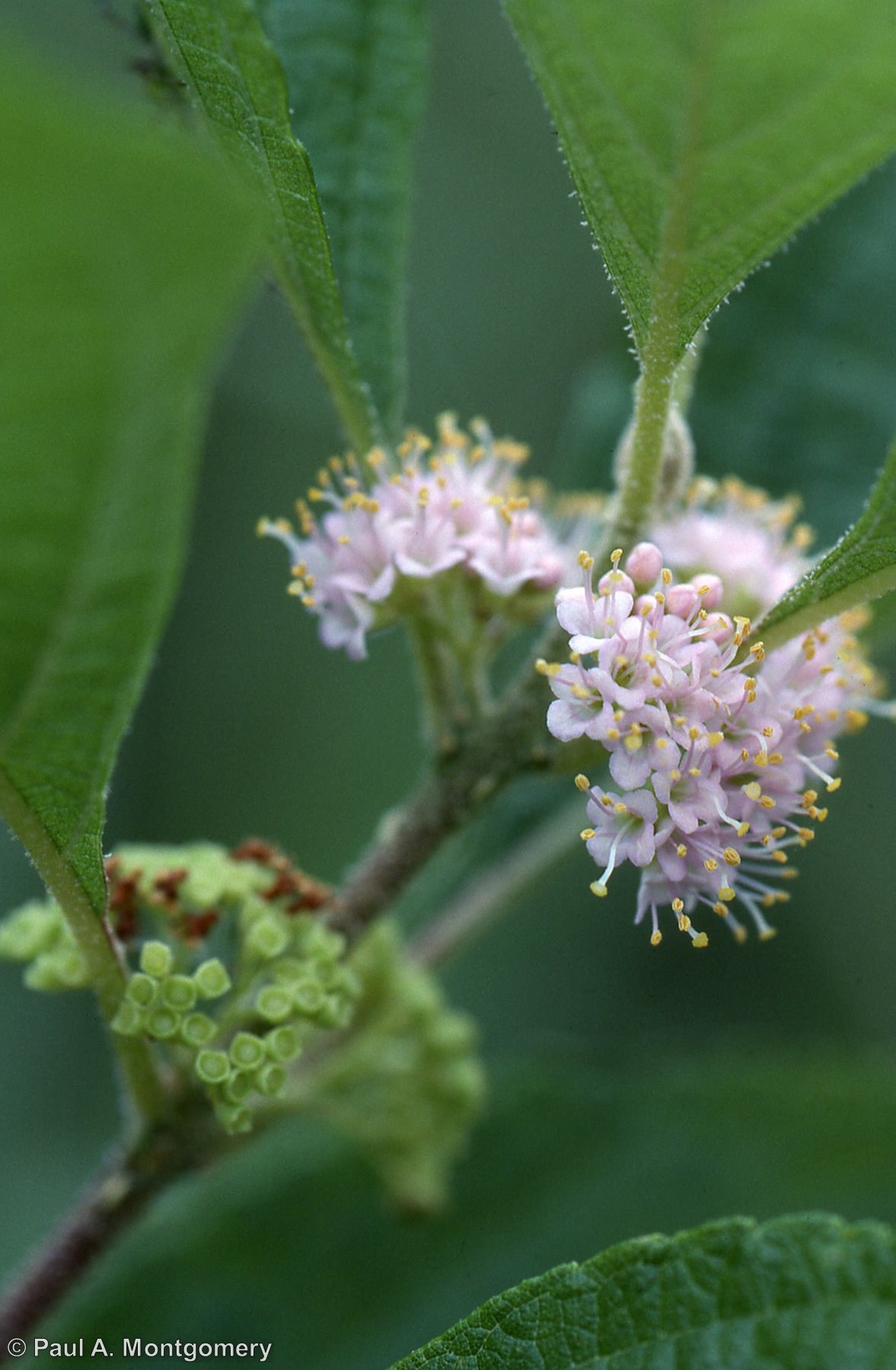
Blooms May-July. Forms long, graceful, arching stems. Oval leaves are coarsely toothed. Flowers are white to pink, arranged in clusters. Striking iridescent-purple fruit (sometimes white) in fall and winter. Foliage is a favorite of white-tailed deer.
Previous Scientific Name(s): Callicarpa americana var. lactea

References

1) Griffith, Bryce, Omernick & Rodgers (2007). Ecoregions of Texas. 2) https://www.wildflower.org/plants/result.php?id_plant=CAAM2. 3) https://portal.torcherbaria.org/portal/taxa/index.php?taxon=Callicarpa+americana&formsubmit=Search+Terms. 4) http://bonap.net/TDC/Image/Map?taxonType=Species&taxonId=13314&locationType=County&mapType=Normal. 5) Miller, George O., Landscaping with Native Plants of Texas 2nd Ed., 2013, pg 48. 6) Wasowski and Wasowski, Native Texas Plants Landscaping Region by Region, 1991, pg. 235. 7) https://www.itis.gov/servlet/SingleRpt/SingleRpt?search_topic=TSN&search_value=32144#null, 8) Native and Adapted Landscape Plants, City of Austin and Texas A&M, 2014., 9) https://rootedin.com/tough-texas-native-plants-for-shade-creating-a-cool-haven-before-the-heat/, 10) https://seedsource.com/american-beautyberry/
Material Treatment Method Collection References
Seed No Treatment Sowing the cleaned seeds lightly in a greenhouse kept just above 40 degrees in November. They will germinate in January and February, and are ready to plant outside under shade by April. Each berry contains at least 2 to 3 seeds that are 1/16 inch long. To propagate by seed, plant the whole berry after crushing it between your fingers to expose the seeds, or process the berries to separate the seeds from the fruit. Berries can be placed in a blender with water. After mixing, allow the liquid to sit. Viable seeds will sink to the bottom, and everything else can be skimmed off the top and blended again. Do this until the seeds are adequately separated. Drain the seeds and allow them to dry before storing. 1) How To Grow Native Plants of Texas And The Southwest by Jill Nokes 2) https://www.epicgardening.com/american-beautyberry/#:~:text=Propagating%20From%20Cuttings,to%204%20weeks%20to%20root. 3) chrome-extension://efaidnbmnnnibpcajpcglclefindmkaj/https://www.fnps.org/assets/pdf/pubs/callicarpa_americana_beautyberry.pdf
Seed Stratification Cold stratification for 1 month 1) How To Grow Native Plants of Texas And The Southwest by Jill Nokes 2) chrome-extension://efaidnbmnnnibpcajpcglclefindmkaj/https://plants.usda.gov/DocumentLibrary/factsheet/pdf/fs_caam2.pdf
Softwood Cutting Softwood tip cuttings should be taken from "early May through June, just after the first flush of growth but before the plant has flowered." The cuttings should be 4 to 5 inches long with the leaves from the bottom half removed. Treat the cuttings with rooting hormone (5,000 ppm) and place gently in your rooting material. Roots should begin to grow within 1 to 2 weeks. 1) How To Grow Native Plants of Texas And The Southwest by Jill Nokes 2) chrome-extension://efaidnbmnnnibpcajpcglclefindmkaj/https://plants.usda.gov/DocumentLibrary/factsheet/pdf/fs_caam2.pdf 3) https://theplantnative.com/plant/american-beautyberry/#:~:text=Can%20I%20grow%20American%20Beautyberry%20by%20cuttings?,your%20garden%202%20months%20later! 4) https://www.epicgardening.com/american-beautyberry/#:~:text=Propagating%20From%20Cuttings,to%204%20weeks%20to%20root.
Hardwood Cutting Hardwood cuttings should be 5 to 8 inches long, treated with rooting hormone (10,000 ppm), and placed under intermittent mist. While we don't think that putting cuttings directly in the ground will work very well, you may successfully separate large clumps of mature plants in the winter. 1) How To Grow Native Plants of Texas And The Southwest by Jill Nokes 2) chrome-extension://efaidnbmnnnibpcajpcglclefindmkaj/https://plants.usda.gov/DocumentLibrary/factsheet/pdf/fs_caam2.pdf 3) https://theplantnative.com/plant/american-beautyberry/#:~:text=Can%20I%20grow%20American%20Beautyberry%20by%20cuttings?,your%20garden%202%20months%20later! 4) https://www.epicgardening.com/american-beautyberry/#:~:text=Propagating%20From%20Cuttings,to%204%20weeks%20to%20root.

About the Region

Fall Symposium 2025 Logo - Teach for the Future

Salado, the location of our Fall 2025 Symposium, lies at the intersection of two ecoregions: the Edwards Plateau (Limestone Cut Plain) and Blackland Prairie (Northern Blackland Prairie).

The Edwards Plateau area is also called the Hill Country; however, this general term covers a much larger area extending farther north. Spring-fed creeks are found throughout the region; deep limestone canyons, rivers, and lakes (reservoirs) are common. Ashe juniper is perhaps the most common woody species found throughout the region. Additional woody species include various species of oak, with live oak (Quercus fusiformis) being the most common. Sycamores (Platanus occidentalis) and bald cypress (Taxodium distichum) border waterways. This area is well known for its spring wildflower displays, though they may be viewed in spring, late summer, and fall, as well. According to Texas Parks and Wildlife, average annual rainfall in the Edwards Plateau ranges from 15 to 34 inches.

The Blackland Prairie extends from the Red River south to San Antonio, bordered on the west by the Edwards Plateau and the Cross Timbers, and on the east by the Post Oak Savannah. Annual rainfall averages 30 to 40 inches, with higher averages to the east. This region is dominated by prairie species. The most common grass species include little bluestem (Schizachyrium scoparium) and Indian grass (Sorghastrum nutans) in the uplands and switchgrass (Panicum virgatum) in the riparian areas and drainages. Common herbaceous flowering plants include salvias, penstemons, and silphiums. This area has suffered greatly from overgrazing and agricultural use. Few intact areas remain, though many of the plants can be found along county roadsides throughout the region.

Our fall Symposium host chapter, the Tonkawa Chapter, includes both of these ecoregions.

Source: Wildflowers of Texas by Michael Eason