

Little Bluestem

Schizachyrium scoparium

Other common name(s):

Popotillo Azul

Family:

Poaceae (Grass Family)

Plant Ecoregion Distribution Map

This map uses data from the US EPA. EPA  servers have been offline frequently so maps may not display. We are working on a solution.

Central Great Plains, Chihuahuan Deserts, Cross Timbers, East Central Texas Plains, Edwards Plateau, Gulf Coast Prairies and Marshes, High Plains, Southern Texas Plains, Southwestern Tablelands, Texas Blackland Prairies, Western Gulf Coastal Plain
Broken Red Plains, Limestone Plains, Red Prairie
Chihuahuan Basins and Playas, Chihuahuan Desert Grasslands, Chihuahuan Montane Woodlands, Low Mountains and Bajadas, Stockton Plateau
Carbonate Cross Timbers, Eastern Cross Timbers, Grand Prairie, Limestone Cut Plain, Western Cross Timbers
Bastrop Lost Pines, Floodplains and Low Terraces2, Northern Post Oak Savanna, Northern Prairie Outliers, San Antonio Prairie, Southern Post Oak Savanna
Balcones Canyonlands, Edwards Plateau Woodland, Llano Uplift, Semiarid Edwards Plateau
Coastal Sand Plain, Floodplains and Low Terraces4, Laguna Madre Barrier Island and Coastal Marshes, Lower Rio Grande Alluvial Floodplain, Lower Rio Grande Valley, Mid-Coast Barrier Islands and Coastal Marshes, Northern Humid Gulf Coastal Prairies, Southern Subhumid Gulf Coastal Prairies, Texas-Louisiana Coastal Marshes
Arid Llano Estacado, Canadian/Cimarron High Plains, Llano Estacado, Rolling Sand Plains, Shinnery Sands
Northern Nueces Alluvial Plains, Rio Grande Floodplain and Terraces, Semiarid Edwards Bajada, Texas-Tamaulipan Thornscrub
Canadian/Cimarron Breaks, Caprock Canyons Badlands Breaks, Flat Tablelands and Valleys, Semiarid Canadian Breaks
Floodplains and Low Terraces1, Northern Blackland Prairie, Southern Blackland Prairie
Flatwoods, Floodplains and Low Terraces3, Pleistocene Fluvial Terraces, Red River Bottomlands, Southern Tertiary Uplands, Tertiary Uplands

Plant Characteristics

Growth Form

Grass & Sedge

Height

2
to
4
ft.

Spread

1.5
to
2
ft.

Leaf Retention

Deciduous

Lifespan

Perennial

Habitat and Care Requirements

Soil Type(s)

Clay, Dry, Limestone, Rocky, Sand, Well Drained

Light Requirement

Sun, Part Shade

Water Requirement

Low, Medium

Native Habitat

Grassland, Woodland, Woodland Edge

Bloom and Attraction

Bloom Color

Brown, Green, White

Bloom Season

Summer, Fall

Seasonal Interest

Fall Color, Forage, Larval Host, Nectar, Pollen, Seeds

Wildlife Benefit

Bees, Birds, Browsers, Butterflies, Small Mammals

Maintenance

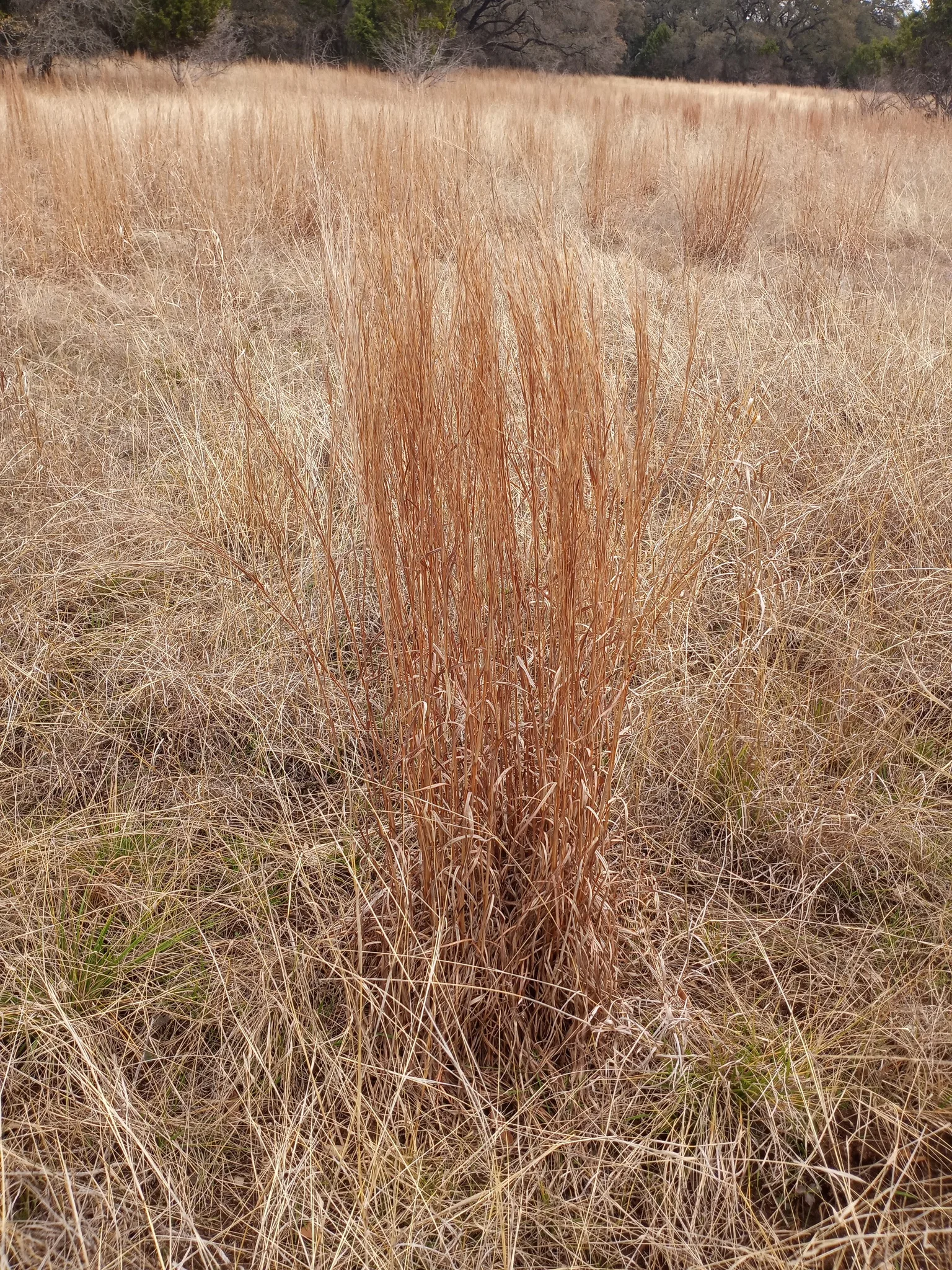
Very ornamental, especially in mass plantings. Gets its name from the bluish color of the stem bases in the spring, but most striking is the plant’s reddish-tan color in fall. It readily reseeds, so give it lots of space. One of the “big four” grasses of the American Tallgrass Prairie. Native habitat: woodlands’ edge, mixed grass prairie, meadows, pastures, sandy barrens and dry, rocky, limy glacial hills, Oak and Juniper woodlands, pine forest, mountain meadows

Description

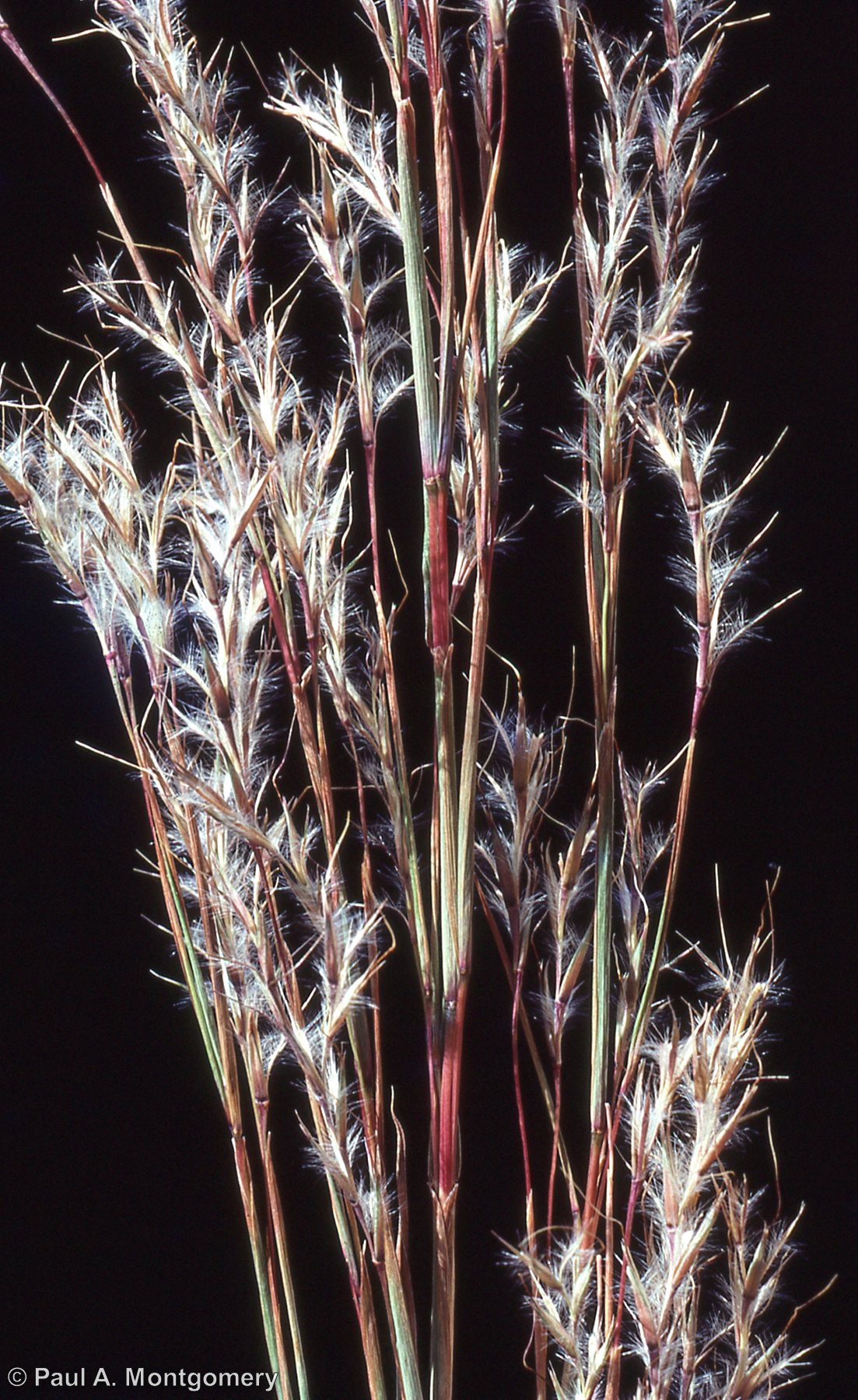
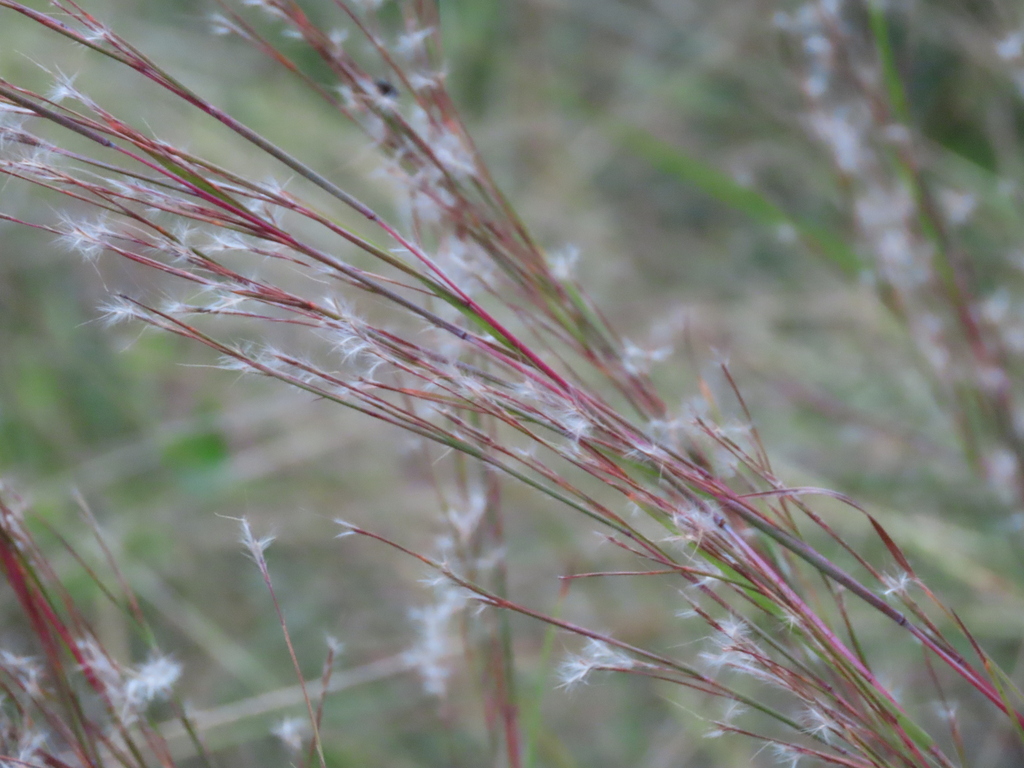
Blooms June-December. A warm-season, clump forming, tall grass. Stems turn radiant mahogany, with silver seed heads in the fall all through winter. The fuzzy white seeds are of particular value to small birds in winter. Larval host: Celia’s Roadside Skipper, Crossline Skpper, Ottoe Skipper.
Previous Scientific Name(s): Andropogon scoparius

References

1) Griffith, Bryce, Omernick & Rodgers (2007). Ecoregions of Texas. 2) Wasowski and Wasowski, Native Texas Plants Landscaping Region by Region, 1991, pg. 132. 3) https://www.wildflower.org/plants/result.php?id_plant=SCSC. 4) https://portal.torcherbaria.org/portal/taxa/index.php?taxon=Schizachyrium+scoparium&formsubmit=Search+Terms. 5) http://bonap.net/TDC/Image/Map?taxonType=Species&taxonId=18975&locationType=County&mapType=Normal, 6) https://www.itis.gov/servlet/SingleRpt/SingleRpt?search_topic=TSN&search_value=42076#null, 7) Native and Adapted Landscape Plants, City of Austin and Texas A&M, 2014., 8) Hatch, Umphres, Ardoin, 2015, Field Guide to Common Texas Grasses, pg 246., 9) https://seedsource.com/little-bluestem/ 10) Weber, Jim; Weber, Lynne; Wauer, Roland H. Native Host Plants For Texas Butterflies. Texas A&M University Press. 2018 Weber, Jim; Weber, Lynne. Native Host Plants For Texas Moths. Texas A&M University Press. 2022
Material Treatment Method Collection References
Clump Division Little bluestem is easy to propagate by dividing healthy, established clumps in the spring. Doing it early in the year allows the roots of the division plenty of time to establish before winter. Space the divisions around 1 1/2 feet apart. This species and most other grasses are best divided and planted in the spring, to allow the full season for their roots to develop. Grasses planted or transplanted in the fall may not establish well enough to survive winter. It should be seeded as early in the spring as possible. 1) https://hort.extension.wisc.edu/articles/little-bluestem-schizachyrium-scoparium/#:~:text=Propagation%20of%20Little%20Bluestem,to%20be%20divided%20very%20often. 2) https://www.thespruce.com/little-bluestem-growing-guide-5214474#:~:text=Propagating%20Little%20Bluestem,Does%20little%20bluestem%20spread%20fast?
Seed No Treatment, Stratification Little bluestem is easy to grow from seed, and it's best to do this as early in the spring as possible. That way, the extensive root system will have a chance to establish before winter arrives. It will germinate within one to three weeks with the right temperatures (around 80°F). Using 3 to almost 5 pounds of seeds per acre produces good results.1 Little Bluestem Grass. USDA. https://www.thespruce.com/little-bluestem-growing-guide-5214474#:~:text=Propagating%20Little%20Bluestem,Does%20little%20bluestem%20spread%20fast?

About the Region

2026 Fall Symposium Logo

This low-elevations region of Texas extends inland from the barrier islands, about 60 or so miles, and stretches from Brownsville to Louisiana. In total, it covers about 9.5 million acres, with a high point of 150 feet in elevation. More than 1000 species of plants can be found in this region. On the southern end, species more common in Mexico (such as Sabal mexicana) and Central America occur.

The barrier islands provide us with dune systems, and clay flats to the inland side, which have species found in these areas alone. Many plants here, such as Ipomoea pes-caprae (beach morning glory), can be found throughout tropical regions of the globe. I’ve encountered the same species on the beaches of Guam.

Once inland, vast marshes and wet prairies occur. Occasionally, oak (Quercus fusiformis) groves can be found. Common grasses include species of Bothriochloa, Paspalum, and Sporobolus; eastern gamagrass (Tripsacum dactyloides); and switchgrass (Panicum species). Many rivers and creeks cut through the Gulf Prairies, and along these riparian areas various species of trees, Sabal minor, and other plants adapted to clay soils can be found. Due to overgrazing, farming, and fire suppression, woody species such as mesquite (Prosopis glandulosa) and huisache (Acacia farnesiana), and invasive species such as chinaberry (Melia azedarach), Brazilian pepper (Schinus terebinthifolius), and Chinese tallow (Sapium sebiferum) have increased and displaced our native flora.

Source: Wildflowers of Texas by Michael Eason