

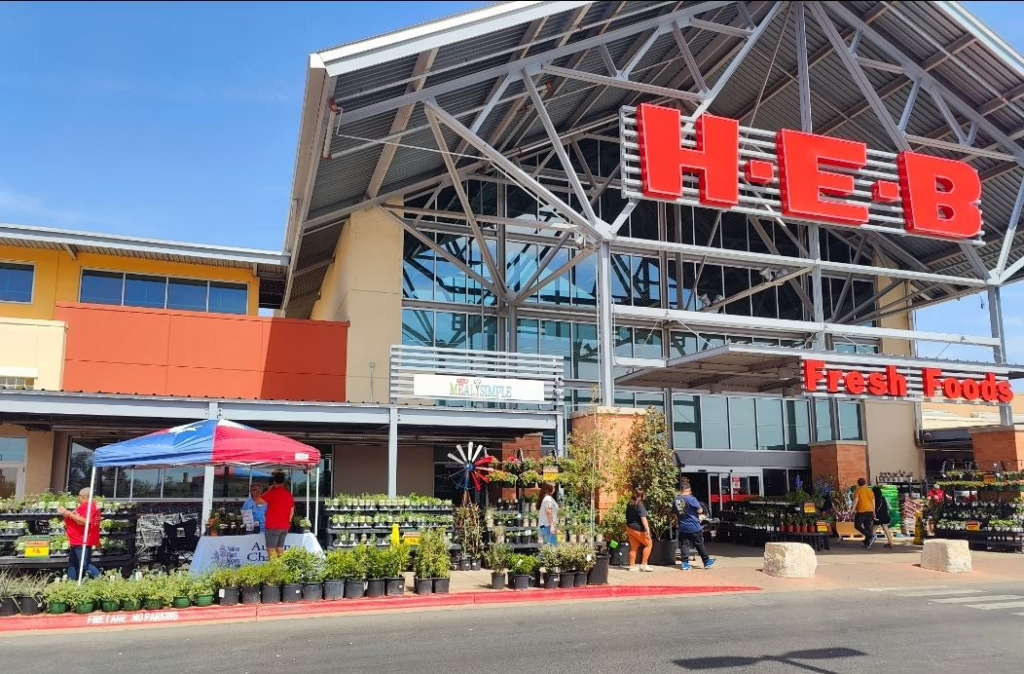
This fall, the Native Plant Society of Texas will bring native plant education to communities across the state through the Texas Native Plant Celebration at H-E-B.
NPSOT volunteers will connect with customers at participating H-E-B stores, helping Texans discover plants suited to their region and find trusted resources for creating healthier landscapes. Through practical conversations and educational materials, volunteers will share how native plants can conserve water, support wildlife, and contribute to a more resilient Texas.
2026 Celebration Dates
The celebration will take place over two weekends:
Weekend One
- Saturday, October 17 | 11:00 a.m.–3:00 p.m.
- Sunday, October 18 | 12:00–4:00 p.m.
Weekend Two
- Saturday, October 24 | 11:00 a.m.–3:00 p.m.
- Sunday, October 25 | 12:00–4:00 p.m.
Participating locations are selected by H-E-B and may change before or during the event based on operational needs.
Growing Healthier Texas Landscapes Together
The celebration is made possible through the generous support of Our Texas, Our Future and the Texas Parks and Wildlife Foundation.
Educational materials include regionally appropriate prairie seed packets and access to the free Wild Thumb app, which helps Texas gardeners select native plants and create pollinator-friendly landscapes at home.
<< Learn More About H-E-B’s Sustainability Efforts >>
<< Download the Wild Thumb App >>
NPSOT Members: Join the Celebration Team
NPSOT members are invited to volunteer, serve in local or regional leadership roles, and connect with other native plant advocates in their area.
The NPSOT Member Portal includes:
- The current list of participating H-E-B stores
- Volunteer and leadership role descriptions
- Team Orientation registration
- Local and regional team-building information
- Tabling registration details
- Training materials and event resources
- Important program updates
Whether you are interested in supporting one table, helping coordinate volunteers across your region, or simply learning more, there is a place for you.
Teams are already beginning to form, so members are encouraged to visit the portal and register for Team Orientation as soon as possible.
<<Access pertinent volunteer information and resources in the NPSOT member portal>>
If you need help accessing the member portal reach out to chapter-support@npsot.org.
Not a member?
Participation is open to NPSOT members. If you are not yet a member, we invite you to join our statewide community of native plant advocates and volunteers.
When you join NPSOT, you become part of a statewide community working to conserve, promote, and celebrate Texas native plants. Members receive access to educational programs, chapter activities, volunteer opportunities, native plant resources, and connections with people who share an interest in healthier Texas landscapes.
<< Join the Native Plant Society of Texas >>
Find a Celebration Near You
The list of H-E-B locations with scheduled NPSOT volunteer tables will be released publicly before the celebration. Check back closer to the event dates to find a participating location near you.
Store participation and volunteer coverage remain subject to change based on local volunteer capacity and H-E-B’s operational needs.
Looking for Native Plants Near You?
Even if your local H-E-B is not hosting a volunteer table, we encourage you to look for native plants in its garden center. Availability, quantities, and varieties vary by store.
You can also find upcoming native plant sales hosted by NPSOT chapters and other organizations across Texas.
