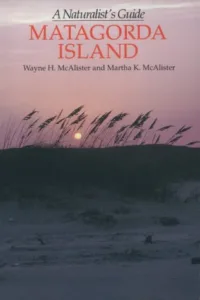
Matagorda Island, A Naturalist’s Guide

Wayne H. McAlister

Publisher:

University of Texas Press

Publication Date:

January 1, 1993

Category:

Coastal, History, Reference, Regional, Wildlife

This book is a comprehensive exploration of Matagorda Island, one of the barrier islands along the Texas coastline. The book sheds light on the island’s natural wealth and ecological fragility. Here are the key takeaways:

Matagorda Island stands as a pristine example of an undisturbed barrier island. Unlike many others affected by human development, it remains a haven for sand dunes, sea grasses, waterbirds, and beach creatures. The authors delve into the island’s geology, history, and ecological systems. From vegetation to mammals, birds, herptiles, fish, and invertebrates, every component plays a vital role in maintaining the island’s delicate balance.

Beyond its natural wonders, Matagorda Island has a rich human history. From Karankawa Indians to European explorers, Civil War-era settlers, lighthouse keepers, and even the U.S. Air Force (which used it as a bombing range), the island’s past is woven into its landscape.The book emphasizes the island’s potential future—a place where humans can coexist with nature, appreciating the intricate web of relationships that connect land and living creatures.

In summary, this book invites readers to explore this unique ecosystem, appreciate its past, and envision a sustainable future.

About the Region

2026 Fall Symposium Logo

This low-elevations region of Texas extends inland from the barrier islands, about 60 or so miles, and stretches from Brownsville to Louisiana. In total, it covers about 9.5 million acres, with a high point of 150 feet in elevation. More than 1000 species of plants can be found in this region. On the southern end, species more common in Mexico (such as Sabal mexicana) and Central America occur.

The barrier islands provide us with dune systems, and clay flats to the inland side, which have species found in these areas alone. Many plants here, such as Ipomoea pes-caprae (beach morning glory), can be found throughout tropical regions of the globe. I’ve encountered the same species on the beaches of Guam.

Once inland, vast marshes and wet prairies occur. Occasionally, oak (Quercus fusiformis) groves can be found. Common grasses include species of Bothriochloa, Paspalum, and Sporobolus; eastern gamagrass (Tripsacum dactyloides); and switchgrass (Panicum species). Many rivers and creeks cut through the Gulf Prairies, and along these riparian areas various species of trees, Sabal minor, and other plants adapted to clay soils can be found. Due to overgrazing, farming, and fire suppression, woody species such as mesquite (Prosopis glandulosa) and huisache (Acacia farnesiana), and invasive species such as chinaberry (Melia azedarach), Brazilian pepper (Schinus terebinthifolius), and Chinese tallow (Sapium sebiferum) have increased and displaced our native flora.

Source: Wildflowers of Texas by Michael Eason