Container Gardening with Native Plants

By Rebecca Bowden Narramore, Caddo Wildflower Chapter
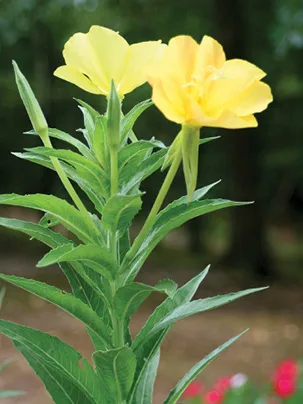
Oenothera elata, Rebecca Narramore

Many gardeners likely plant natives directly in the soil, but I decided to experiment with natives in containers. My first choice was Hooker’s Evening Primrose (Oenothera elata) which I purchased a few years ago at the local plant sale held by the Caddo Wildflower Chapter. Starting with one plant, I filled a medium-sized container with good potting soil, put in the plant, and watered it. To my joy, it thrived and late in the first summer at the end of July or early August, it began to bloom.

The plants are pleasing to view from early spring up through bloom time, growing to be quite tall with slim pointed leaves and lightly serrated margins clustered up and down the stalk. The single main stalk can get to be six feet tall with blooms opening at the top cluster of leaves.

Another positive of this plant is its prolific reseeding. I began with one pot and now have six pots full of Hooker’s Evening Primrose simply by allowing the seeds to fall in pots that were around my original plant.

I have also harvested seeds and sown them in other areas of my property where they are beginning to flourish. Replenishing the potting soil and regular watering have yielded lovely blossoms for the past several summers, a great mood booster for the hottest days of August.

Since the primroses have been so rewarding, it’s time to experiment with other native plants in containers to see if I can replicate this successful venture.

Rebecca Bowden Narramore can be reached at  rebeccan@wb4me.com.

Did you like this article? It’s from our Fall 2023 Texas Native Plants magazine. Read more here
Volume 41 | No. 4 | Fall 2023

About the Region

2026 Fall Symposium Logo

This low-elevations region of Texas extends inland from the barrier islands, about 60 or so miles, and stretches from Brownsville to Louisiana. In total, it covers about 9.5 million acres, with a high point of 150 feet in elevation. More than 1000 species of plants can be found in this region. On the southern end, species more common in Mexico (such as Sabal mexicana) and Central America occur.

The barrier islands provide us with dune systems, and clay flats to the inland side, which have species found in these areas alone. Many plants here, such as Ipomoea pes-caprae (beach morning glory), can be found throughout tropical regions of the globe. I’ve encountered the same species on the beaches of Guam.

Once inland, vast marshes and wet prairies occur. Occasionally, oak (Quercus fusiformis) groves can be found. Common grasses include species of Bothriochloa, Paspalum, and Sporobolus; eastern gamagrass (Tripsacum dactyloides); and switchgrass (Panicum species). Many rivers and creeks cut through the Gulf Prairies, and along these riparian areas various species of trees, Sabal minor, and other plants adapted to clay soils can be found. Due to overgrazing, farming, and fire suppression, woody species such as mesquite (Prosopis glandulosa) and huisache (Acacia farnesiana), and invasive species such as chinaberry (Melia azedarach), Brazilian pepper (Schinus terebinthifolius), and Chinese tallow (Sapium sebiferum) have increased and displaced our native flora.

Source: Wildflowers of Texas by Michael Eason
