
False Indigo Bush

Amorpha fruticosa

Other common name(s):

Indigo Bush, False Indigo, Desert False Indigo

Family:

Fabaceae (Pea Family)

Plant Ecoregion Distribution Map

This map uses data from the US EPA. EPA  servers have been offline frequently so maps may not display. We are working on a solution.

Chihuahuan Deserts, Cross Timbers, East Central Texas Plains, Edwards Plateau, Gulf Coast Prairies and Marshes, Southern Texas Plains, Southwestern Tablelands, Texas Blackland Prairies, Western Gulf Coastal Plain
Low Mountains and Bajadas
Carbonate Cross Timbers, Eastern Cross Timbers, Grand Prairie, Limestone Cut Plain, Western Cross Timbers
Bastrop Lost Pines, Floodplains and Low Terraces2, San Antonio Prairie, Southern Post Oak Savanna
Balcones Canyonlands, Edwards Plateau Woodland
Lower Rio Grande Alluvial Floodplain, Northern Humid Gulf Coastal Prairies
Northern Nueces Alluvial Plains, Semiarid Edwards Bajada
Canadian/Cimarron Breaks, Caprock Canyons Badlands Breaks, Flat Tablelands and Valleys
Floodplains and Low Terraces1, Northern Blackland Prairie
Flatwoods, Southern Tertiary Uplands

Plant Characteristics

Growth Form

Shrub

Height

6
to
12
ft.

Spread

6
to
12
ft.

Leaf Retention

Deciduous

Lifespan

Perennial

Habitat and Care Requirements

Soil Type(s)

Calcareous, Clay, Dry, Loam, Moist, Sand

Light Requirement

Sun, Part Shade

Water Requirement

Low, Medium, High

Native Habitat

Disturbed Areas, Grassland, Riparian, Woodland, Woodland Edge

Bloom and Attraction

Bloom Color

Blue, Purple

Bloom Season

Spring

Seasonal Interest

Forage, Larval Host, Nectar, Pollen

Wildlife Benefit

Bees, Browsers, Butterflies, Hummingbirds, Moths

Maintenance

Fast growth rate. Attractive, ornamental blooms. Plant in the full sun to partial shade moist to dry soil. It is tolerant of a large range of soil types including wet ones. Often used for erosion control, windbreaks and screens. It spreads easily by seeds and suckers, and can form dense thickets, but suckers can be pulled to control growth. Native habitat: stream and pond edges, gravel bars, open woods, roadsides, canyons.

Description

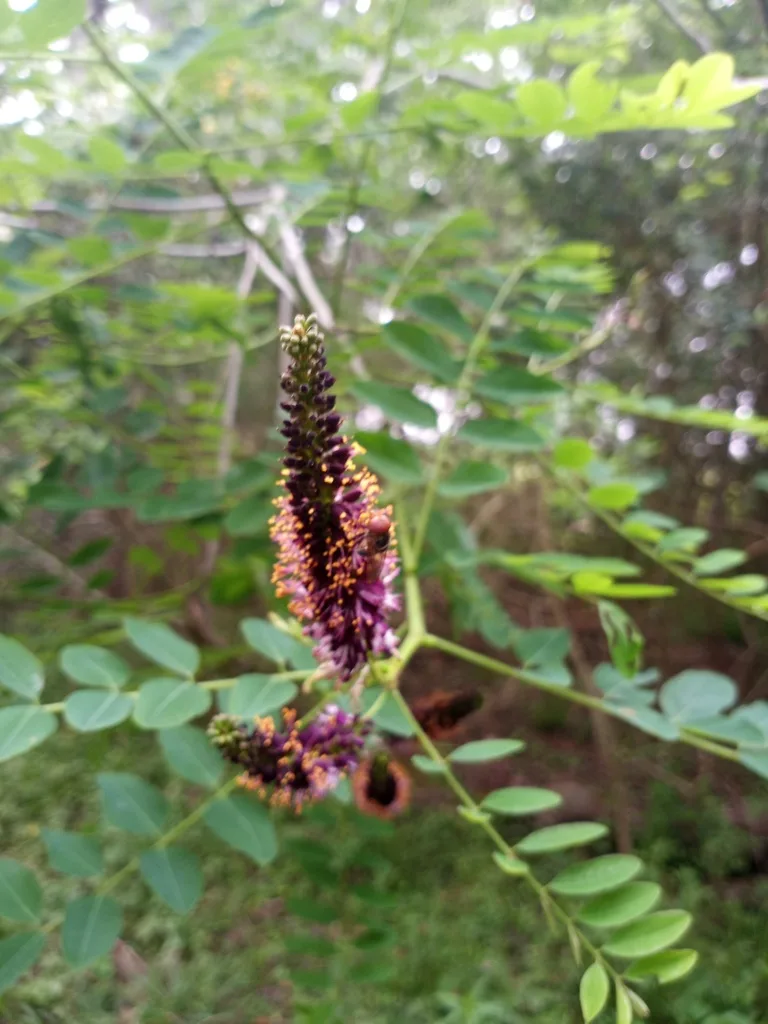
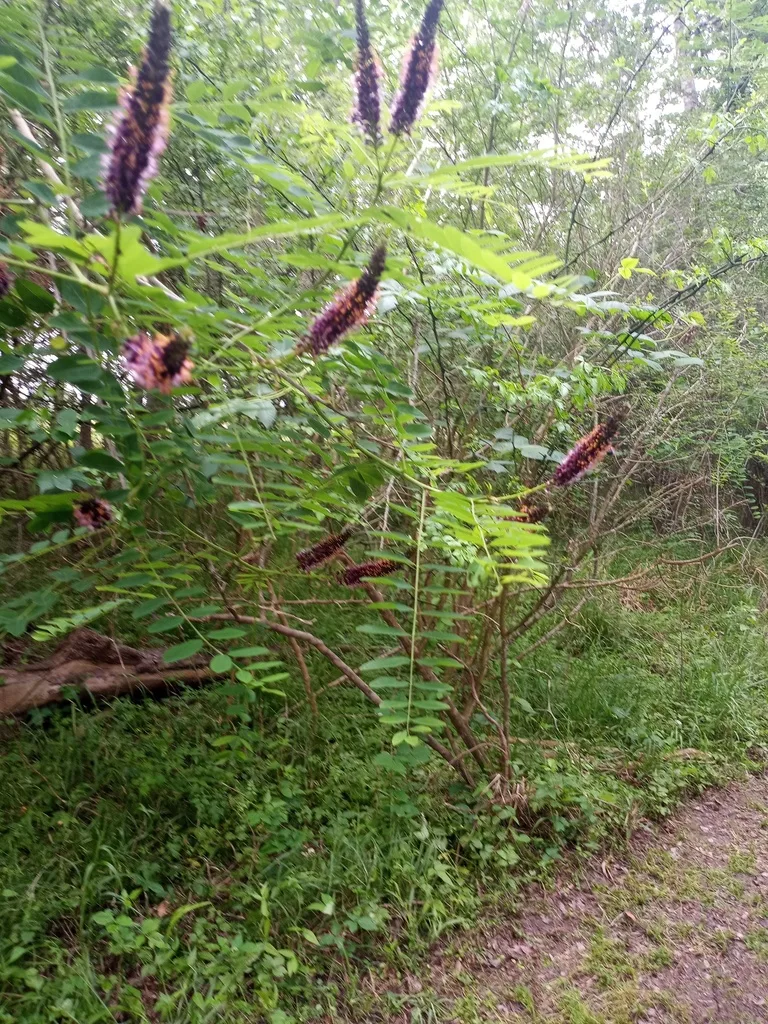
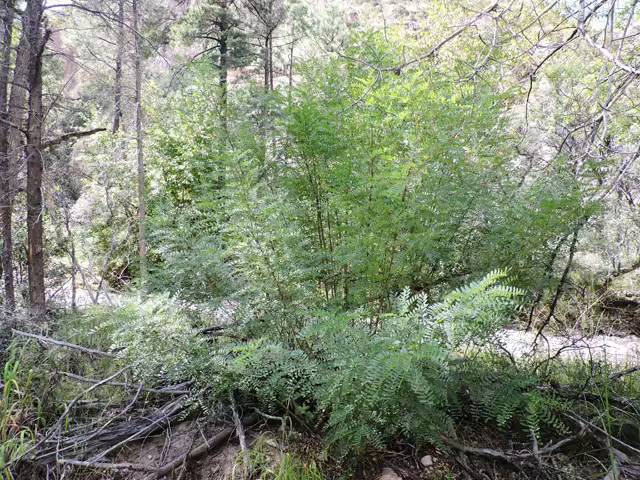
Blooms April-June. A loose, airy shrub which often forms dense thickets. The compound leaves are velvety with small oval leaflets. Flowers, unlike others in the pea family, are small, purple to dark blue, with yellow stamens growing on long spikes. The fruit is a small, resinous, legume pod that can contain one or two seeds. Larval host: Silver Spotted Skipper, Southern Dogface, California Dogface, Gray Hairstreak, Hoary Edge.
Previous Scientific Name(s): Amorpha angustifolia, Amorpha bushii, Amorpha croceolanata, Amorpha curtissii, Amorpha dewinkeleri, Amorpha fruticosa var. angustifolia, Amorpha fruticosa var. croceolanata, Amorpha fruticosa var. emarginata, Amorpha fruticosa var. oblongifolia, Amorpha fruticosa var. occidentalis, Amorpha fruticosa var. tennesseensis, Amorpha occidentalis, Amorpha occidentalis var. arizonica, Amorpha occidentalis var. emarginata, Amorpha tennesseensis, Amorpha virgata
Material Treatment Method Collection References
Seed Scarification Mechanically nick the seed, soak in hot water for 10 minutes, or scarify in concentrated sulfuric acid five to eight minutes. Collect in late summer or early fall when the pod turns yellowish brown and begins to dry. Air dry and store in sealed, refrigerated containers for three to five years. https://www.wildflower.org/plants/result.php?id_plant=AMFR

About the Region

2026 Fall Symposium Logo

This low-elevations region of Texas extends inland from the barrier islands, about 60 or so miles, and stretches from Brownsville to Louisiana. In total, it covers about 9.5 million acres, with a high point of 150 feet in elevation. More than 1000 species of plants can be found in this region. On the southern end, species more common in Mexico (such as Sabal mexicana) and Central America occur.

The barrier islands provide us with dune systems, and clay flats to the inland side, which have species found in these areas alone. Many plants here, such as Ipomoea pes-caprae (beach morning glory), can be found throughout tropical regions of the globe. I’ve encountered the same species on the beaches of Guam.

Once inland, vast marshes and wet prairies occur. Occasionally, oak (Quercus fusiformis) groves can be found. Common grasses include species of Bothriochloa, Paspalum, and Sporobolus; eastern gamagrass (Tripsacum dactyloides); and switchgrass (Panicum species). Many rivers and creeks cut through the Gulf Prairies, and along these riparian areas various species of trees, Sabal minor, and other plants adapted to clay soils can be found. Due to overgrazing, farming, and fire suppression, woody species such as mesquite (Prosopis glandulosa) and huisache (Acacia farnesiana), and invasive species such as chinaberry (Melia azedarach), Brazilian pepper (Schinus terebinthifolius), and Chinese tallow (Sapium sebiferum) have increased and displaced our native flora.

Source: Wildflowers of Texas by Michael Eason