

Texas Redbud

Cercis canadensis var. texensis

Other common name(s):

Family:

Fabaceae (Pea Family)

Plant Ecoregion Distribution Map

This map uses data from the US EPA. EPA  servers have been offline frequently so maps may not display. We are working on a solution.

Cross Timbers, Edwards Plateau, Southern Texas Plains, Texas Blackland Prairies
Eastern Cross Timbers, Grand Prairie, Limestone Cut Plain, Western Cross Timbers
Balcones Canyonlands, Edwards Plateau Woodland, Llano Uplift, Semiarid Edwards Plateau
Northern Nueces Alluvial Plains, Semiarid Edwards Bajada
Floodplains and Low Terraces1, Northern Blackland Prairie

Plant Characteristics

Growth Form

Tree

Height

15
to
20
ft.

Spread

10
to
15
ft.

Leaf Retention

Deciduous

Lifespan

Perennial

Habitat and Care Requirements

Soil Type(s)

Dry, Limestone, Well Drained

Light Requirement

Sun, Part Shade

Water Requirement

Low, Medium

Native Habitat

Disturbed Areas, Riparian, Woodland

Bloom and Attraction

Bloom Color

Pink, Purple

Bloom Season

Spring

Seasonal Interest

Forage, Larval Host, Nectar, Pollen, Seeds

Wildlife Benefit

Bees, Birds, Butterflies, Deer, Moths

Maintenance

Slow growing. Low maintenance and drought tolerant. One of the first to bloom in spring. Provide well drained soil. Refrain from pruning late in winter as blooms form on old wood in spring. Remove suckers from the ground if desired. Borers can be found in this tree; use natural controls – predatory wasps, sticky tape around base of tree or treating soil and bore holes with beneficial nematodes. Native habitat: forest understory, moist rich woods, along the banks of streams, ravines, bluffs, open rocky woods, and abandoned farmlands.

Description

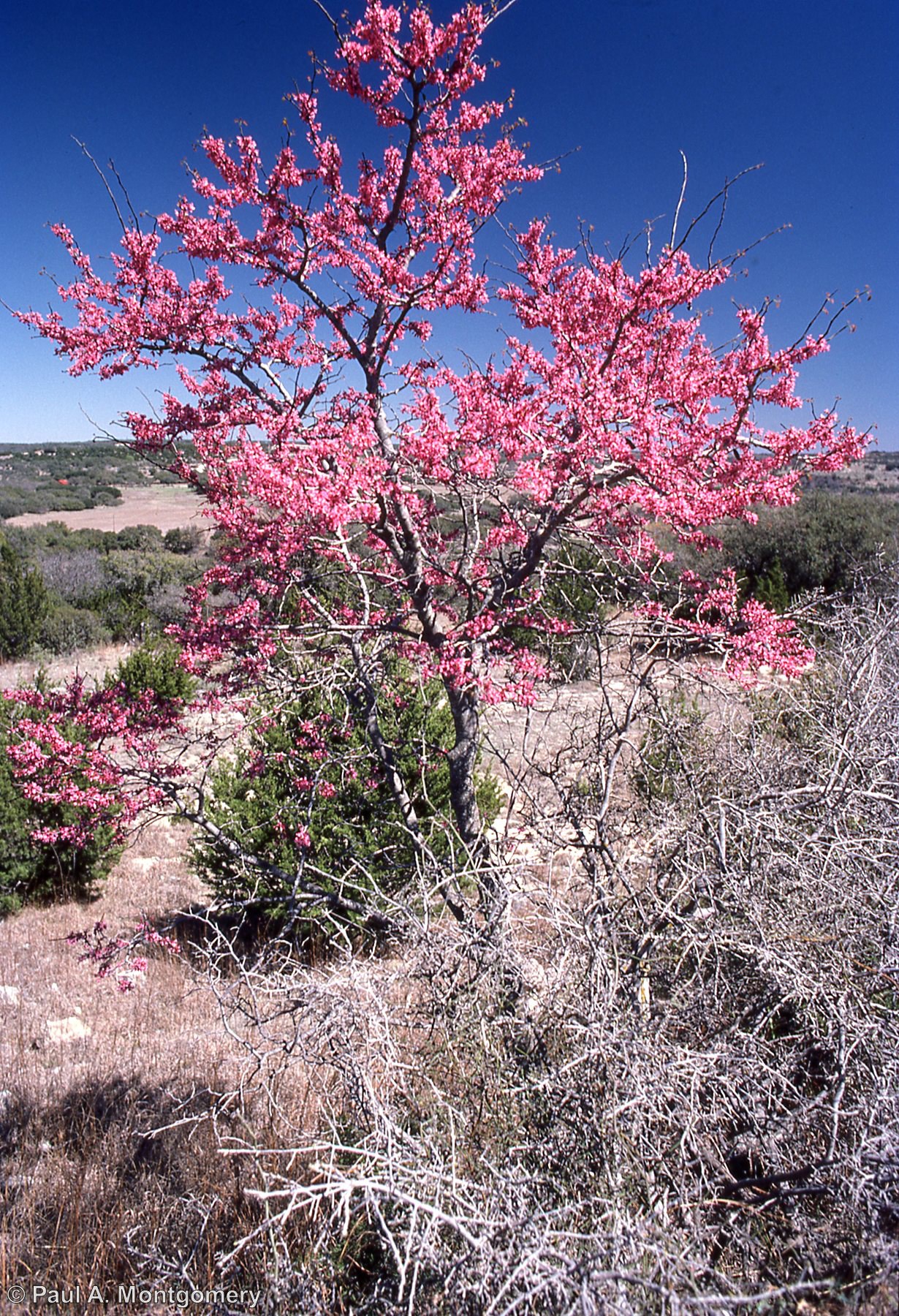
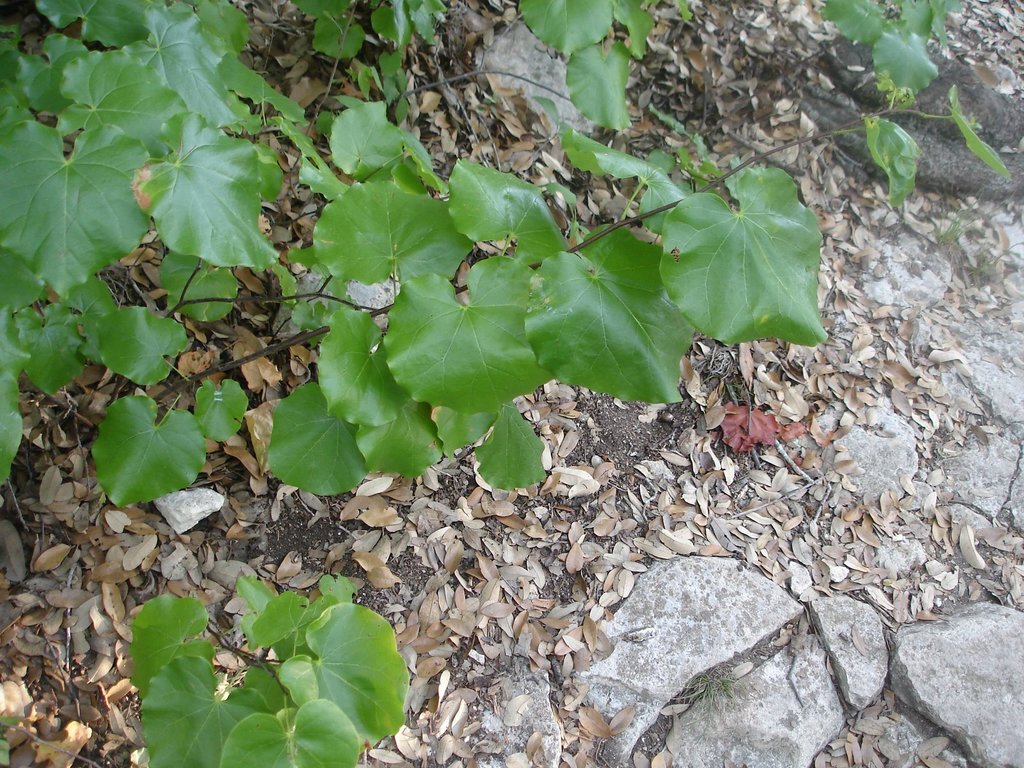
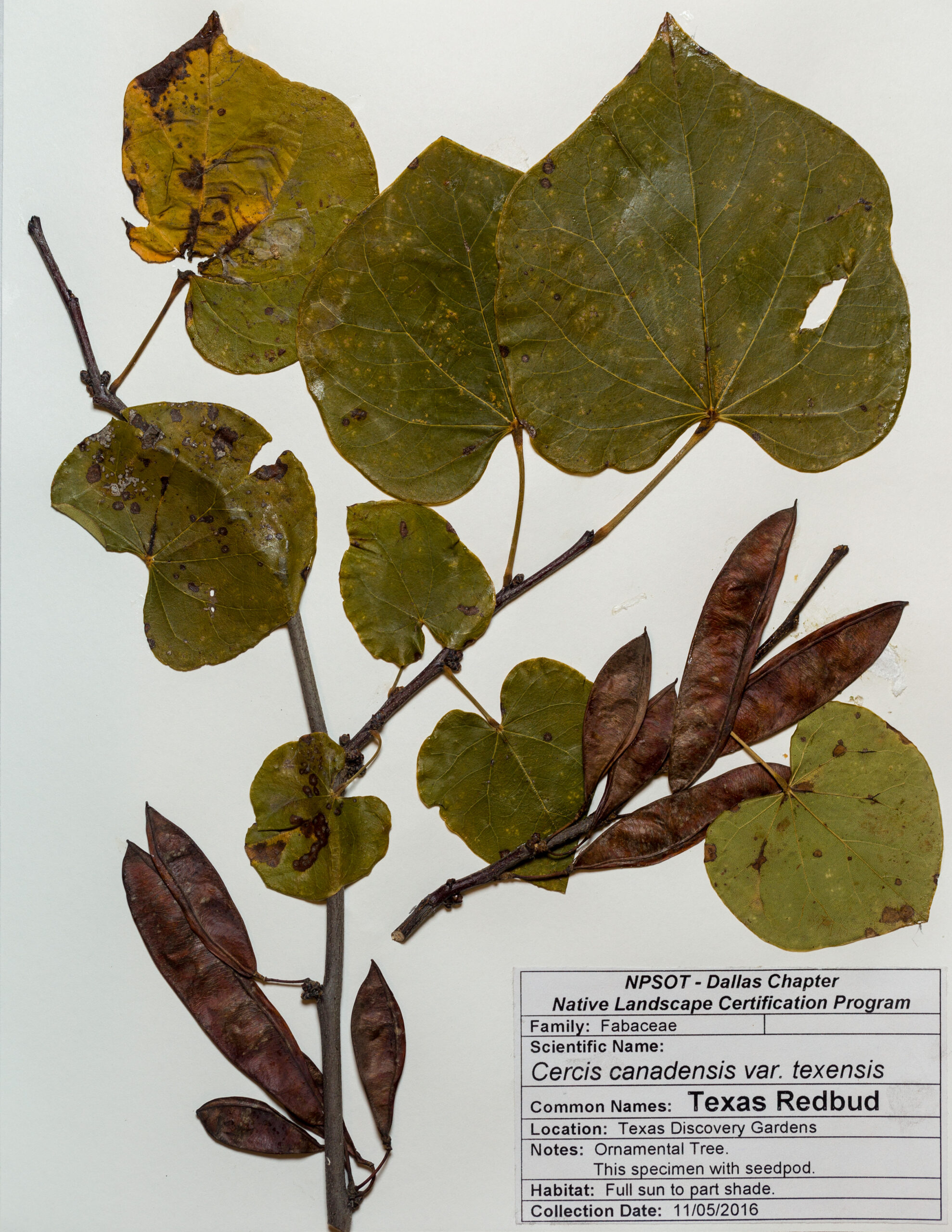
Blooms March-April. A mostly multi-trunked tree, with thick leathery leaves (less wavy than the Mexican variety). The waxy upper surface of the leaf helps retard transpiration. Foliage is red in fall. Pink-Purple flowers are pea-shaped. Small, flattened pod and seeds are purple. Mexican Redbud, with smaller, wavy edged leaves, is the drought tolerant alternative. Eastern Redbud is not recommended for Central Texas. Larval host: Henry’s Elfin Butterfly. Replaces non-natives: Chinese Tallow Tree, Golden Rain Tree, Salt Cedar.
Previous Scientific Name(s): Cercis canadensis ssp. texensis, Cercis occidentalis

References

1) https://www.wildflower.org/plants/result.php?id_plant=CECAT. 2) http://bonap.net/TDC/Image/Map?taxonType=Species&taxonId=27176&locationType=County&mapType=Normal. 3) Miller, George O., Landscaping with Native Plants of Texas 2nd Ed., 2013, pg 48. 4) Wasowski and Wasowski, Native Texas Plants Landscaping Region by Region, 1991, pg. 282. 5) https://www.itis.gov/servlet/SingleRpt/SingleRpt?search_topic=TSN&search_value=527243#null, 6) Native and Adapted Landscape Plants, City of Austin and Texas A&M, 2014. 7) https://plants.usda.gov/DocumentLibrary/plantguide/pdf/cs_ceca4.pdf, 8) https://aggie-hort.tamu.edu/ornamentals/natives/CERCISCANADENSISVAR.TEXENS.HTM
Material Treatment Method Collection References
Stem Cutting Remove the lower leaves from the cuttings, leaving two or three at the top. Optionally, dip the cut end of the cutting in a rooting hormone powder to encourage root development and protect against fungal infections. Fill a pot with a sterile, well-draining potting mix, such as a mix of peat and perlite. Make holes in the potting medium with a stick or your finger, then insert the bottom end of the cuttings into the holes. Gently firm the soil around the cuttings to provide support and eliminate air pockets. Cover the pot with a clear plastic bag or place it in a humidity dome to maintain high humidity around the cuttings. Ensure the plastic does not touch the leaves by supporting it with sticks or a frame. Place the setup in indirect light. Keep the soil moist but not waterlogged. In about 4-6 weeks, check for root growth by gently tugging on the cuttings. Once the roots are established, gradually acclimate the young plants to normal conditions before transplanting them into larger pots or permanent locations outdoors. Choose healthy, non-flowering stems from the current year's growth of texas redbud. The cuttings should be about 4-6 inches in length with several leaf nodes. Use a clean, sharp pruning shear to make the cuts just below a node. https://www.picturethisai.com/care/propagate/Cercis_canadensis_var._texensis.html
Seed No Treatment Grow in deep, fertile, moist but well-drained soil in full sun or dappled shade.Propagate by sowing seed in containers in a cold frame in autumn. Harvest pods as soon as they begin to dry to reduce insect damage. 1) https://www.rhs.org.uk/plants/309065/cercis-canadensis-var-texensis-texas-white/details 2) https://www.wildflower.org/plants/result.php?id_plant=CECAT

About the Region

2026 Fall Symposium Logo

This low-elevations region of Texas extends inland from the barrier islands, about 60 or so miles, and stretches from Brownsville to Louisiana. In total, it covers about 9.5 million acres, with a high point of 150 feet in elevation. More than 1000 species of plants can be found in this region. On the southern end, species more common in Mexico (such as Sabal mexicana) and Central America occur.

The barrier islands provide us with dune systems, and clay flats to the inland side, which have species found in these areas alone. Many plants here, such as Ipomoea pes-caprae (beach morning glory), can be found throughout tropical regions of the globe. I’ve encountered the same species on the beaches of Guam.

Once inland, vast marshes and wet prairies occur. Occasionally, oak (Quercus fusiformis) groves can be found. Common grasses include species of Bothriochloa, Paspalum, and Sporobolus; eastern gamagrass (Tripsacum dactyloides); and switchgrass (Panicum species). Many rivers and creeks cut through the Gulf Prairies, and along these riparian areas various species of trees, Sabal minor, and other plants adapted to clay soils can be found. Due to overgrazing, farming, and fire suppression, woody species such as mesquite (Prosopis glandulosa) and huisache (Acacia farnesiana), and invasive species such as chinaberry (Melia azedarach), Brazilian pepper (Schinus terebinthifolius), and Chinese tallow (Sapium sebiferum) have increased and displaced our native flora.

Source: Wildflowers of Texas by Michael Eason