
Illinois Bundleflower

Desmanthus illinoensis

Other common name(s):

Bundleflower, Prairie Bundle Flower, Prickleweed, Illinois Desmanthus, Prairie Mimosa

Family:

Fabaceae (Pea Family)

Plant Ecoregion Distribution Map

This map uses data from the US EPA. EPA  servers have been offline frequently so maps may not display. We are working on a solution.

Central Great Plains, Chihuahuan Deserts, Cross Timbers, East Central Texas Plains, Edwards Plateau, Gulf Coast Prairies and Marshes, High Plains, Southwestern Tablelands, Texas Blackland Prairies, Western Gulf Coastal Plain
Broken Red Plains, Limestone Plains, Red Prairie
Low Mountains and Bajadas
Carbonate Cross Timbers, Eastern Cross Timbers, Grand Prairie, Limestone Cut Plain, Western Cross Timbers
Bastrop Lost Pines, Floodplains and Low Terraces2, Northern Post Oak Savanna, Northern Prairie Outliers, San Antonio Prairie, Southern Post Oak Savanna
Balcones Canyonlands, Edwards Plateau Woodland, Llano Uplift, Semiarid Edwards Plateau
Northern Humid Gulf Coastal Prairies
Canadian/Cimarron High Plains
Canadian/Cimarron Breaks, Caprock Canyons Badlands Breaks, Flat Tablelands and Valleys, Semiarid Canadian Breaks
Floodplains and Low Terraces1, Northern Blackland Prairie, Southern Blackland Prairie
Flatwoods, Southern Tertiary Uplands

Plant Characteristics

Growth Form

Shrub

Height

1
to
3
ft.

Spread

1
to
3
ft.

Leaf Retention

Deciduous

Lifespan

Perennial

Habitat and Care Requirements

Soil Type(s)

Caliche, Clay, Moist, Sand

Light Requirement

Sun

Water Requirement

Medium

Native Habitat

Disturbed Areas, Grassland, Riparian, Woodland

Bloom and Attraction

Bloom Color

White

Bloom Season

Spring, Summer

Seasonal Interest

Forage, Nectar, Pollen, Seeds

Wildlife Benefit

Birds, Browsers, Butterflies, Small Mammals

Maintenance

Easily grown. Legumes enrich soil through nitrogen fixation. Considered one of the most important prairie legumes. Tends to bloom after rains. Deep-rooted and drought tolerant. Native habitat: open areas, wooded slopes, rocky prairies, stream banks, roadsides, waste places.

Description

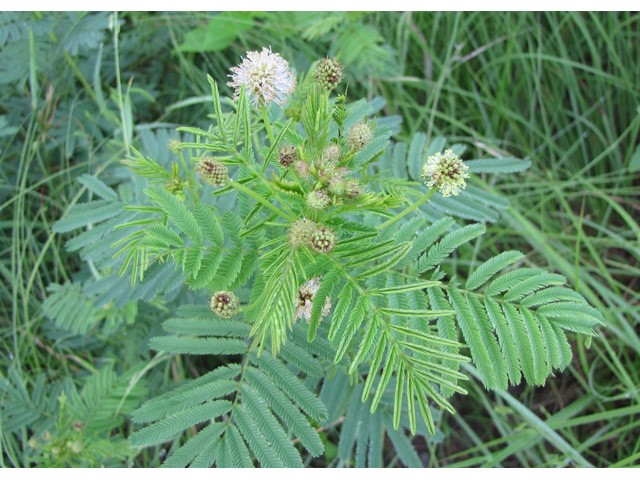
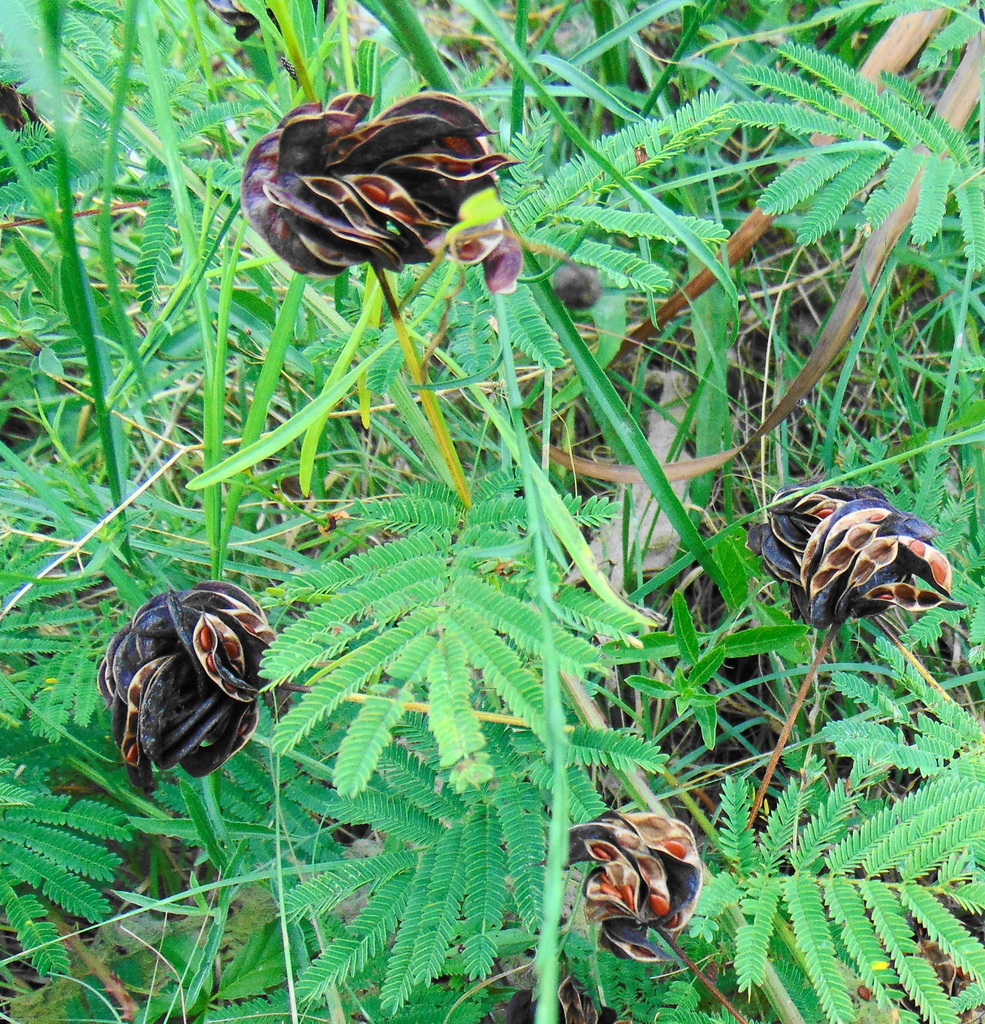
Blooms May-September. An erect, multi-branched plant. Fern-like leaves are twice pinnately compound; they fold in strong sunlight and when touched. Ball-shaped clusters of small whitish or greenish flowers are followed by flat, leathery, twisted seedpods.
Previous Scientific Name(s): Acuan illinoense, Mimosa illinoensis
Material Treatment Method Collection References
Seed Scarification First scarify the seed. Rub the seed between two pieces of sandpaper, make a small nick through the seedcoat, or tumble or shake it with coarse sand and then sow the mixture into your prepared seed bed. Bundleflower may be seeded alone at a depth of ½ inch on heavier moister soils or up to 1 inch deep on dryer sandier soil types. Planting into a prepared seed bed with mulch would increase the chance of establishment. Planting in the early to mid spring time would provide optimum moisture conditions for the seedlings. Broadcast planting would require a 50 to 100 percent increase in the amount of seed used. The seed should also be inoculated with the correct inoculant to cause nodulation of the plants root system. 1) mhttps://sharpseed.com/illinois-bundleflower/#:~:text=Establishment,of%20the%20plants%20root%20system. 2) https://www.grandprismaticseed.com/natives/illinois-bundleflower#:~:text=Bundleflower%20is%20also%20a%20good,bean%20family%20plants%20have%20grown. 3) https://warcapps.usgs.gov/PlantID/Species/Details/1846#:~:text=Propagation%20by%20seed%20is%20best,be%20harvested%20with%20a%20combine. 4) https://www.electricveg.com/fabaceae/desmanthus-illinoensis.html
Seed No Treatment Direct sow seeds into prepared soil in late fall once soil temps are below 50 degrees (usually mid to late November). Can also be planted in winter during natural freeze/thaw cycles and early spring. Plant shallow, no deeper than 1/8 to 1/4 inch deep and lightly rake to work seed in. Plant in full sun to partial shade. Can take 3 growing seasons to fully establish. Direct sow seeds into prepared soil in late fall once soil temps are below 50 degrees (usually mid to late November). Can also be planted in winter during natural freeze/thaw cycles and early spring. Plant shallow, no deeper than 1/8 to 1/4 inch deep and lightly rake to work seed in. Plant in full sun to partial shade. Can take 3 growing seasons to fully establish.

About the Region

2026 Fall Symposium Logo

This low-elevations region of Texas extends inland from the barrier islands, about 60 or so miles, and stretches from Brownsville to Louisiana. In total, it covers about 9.5 million acres, with a high point of 150 feet in elevation. More than 1000 species of plants can be found in this region. On the southern end, species more common in Mexico (such as Sabal mexicana) and Central America occur.

The barrier islands provide us with dune systems, and clay flats to the inland side, which have species found in these areas alone. Many plants here, such as Ipomoea pes-caprae (beach morning glory), can be found throughout tropical regions of the globe. I’ve encountered the same species on the beaches of Guam.

Once inland, vast marshes and wet prairies occur. Occasionally, oak (Quercus fusiformis) groves can be found. Common grasses include species of Bothriochloa, Paspalum, and Sporobolus; eastern gamagrass (Tripsacum dactyloides); and switchgrass (Panicum species). Many rivers and creeks cut through the Gulf Prairies, and along these riparian areas various species of trees, Sabal minor, and other plants adapted to clay soils can be found. Due to overgrazing, farming, and fire suppression, woody species such as mesquite (Prosopis glandulosa) and huisache (Acacia farnesiana), and invasive species such as chinaberry (Melia azedarach), Brazilian pepper (Schinus terebinthifolius), and Chinese tallow (Sapium sebiferum) have increased and displaced our native flora.

Source: Wildflowers of Texas by Michael Eason