

Obedient Plant

Physostegia virginiana

Other common name(s):

Fall Obedient Plant, False Dragonhead

Family:

Lamiaceae (Mint Family)

Plant Ecoregion Distribution Map

This map uses data from the US EPA. EPA  servers have been offline frequently so maps may not display. We are working on a solution.

Chihuahuan Deserts, Gulf Coast Prairies and Marshes, Texas Blackland Prairies, Western Gulf Coastal Plain
Chihuahuan Desert Grasslands
Northern Humid Gulf Coastal Prairies
Floodplains and Low Terraces1, Northern Blackland Prairie, Southern Blackland Prairie
Flatwoods, Southern Tertiary Uplands

Plant Characteristics

Growth Form

Herbaceous

Height

2
to
4
ft.

Spread

0.5
to
1
ft.

Leaf Retention

Deciduous

Lifespan

Perennial

Habitat and Care Requirements

Soil Type(s)

Clay, Limestone, Moist, Poor Drainage, Sand

Light Requirement

Sun, Part Shade, Shade

Water Requirement

Medium, High

Native Habitat

Grassland, Riparian, Wetland

Bloom and Attraction

Bloom Color

Pink, Purple

Bloom Season

Summer, Fall

Seasonal Interest

Nectar

Wildlife Benefit

Butterflies, Hummingbirds

Maintenance

A very easy, low maintenance plant. Less water needed if planted in shade or part shade. Frequently grows in clumps and colonizes easily from stolons. Give lots of room or thin and transplant in spring as needed for space. Tolerates both drought and poor drainage. Native habitat: river banks, wet thickets, prairies, swamps, and low grounds.

Description

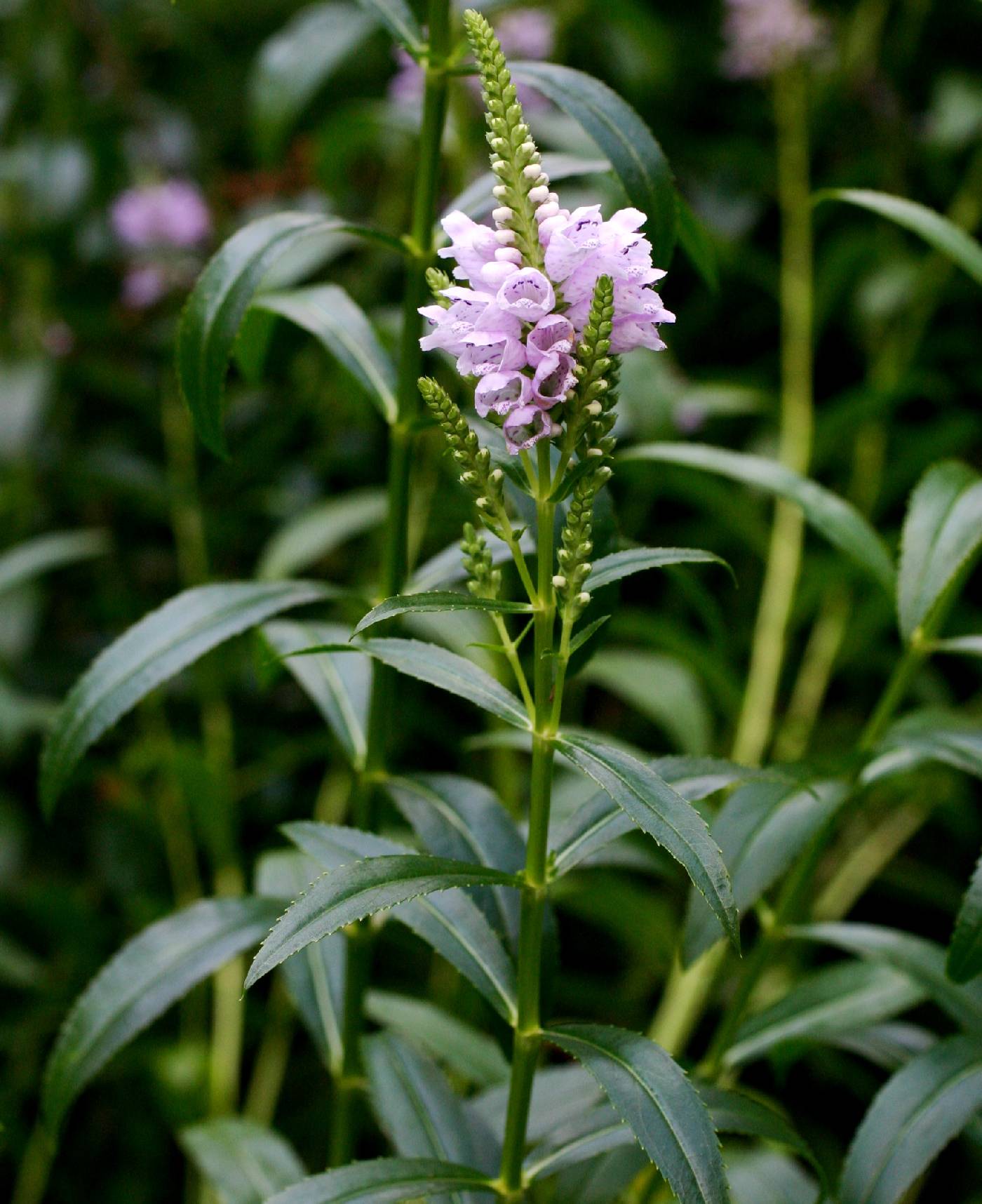
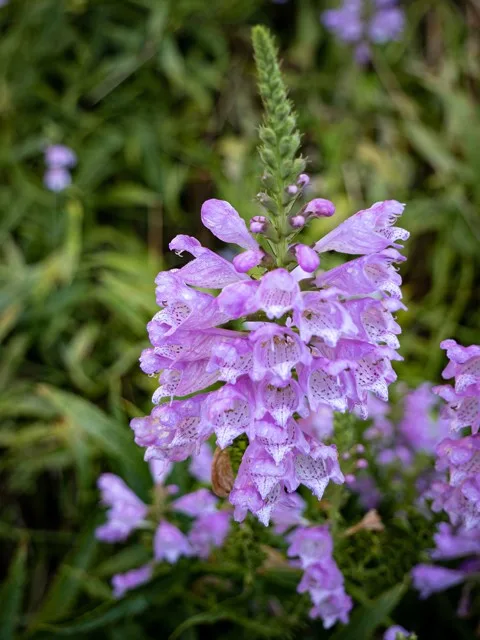
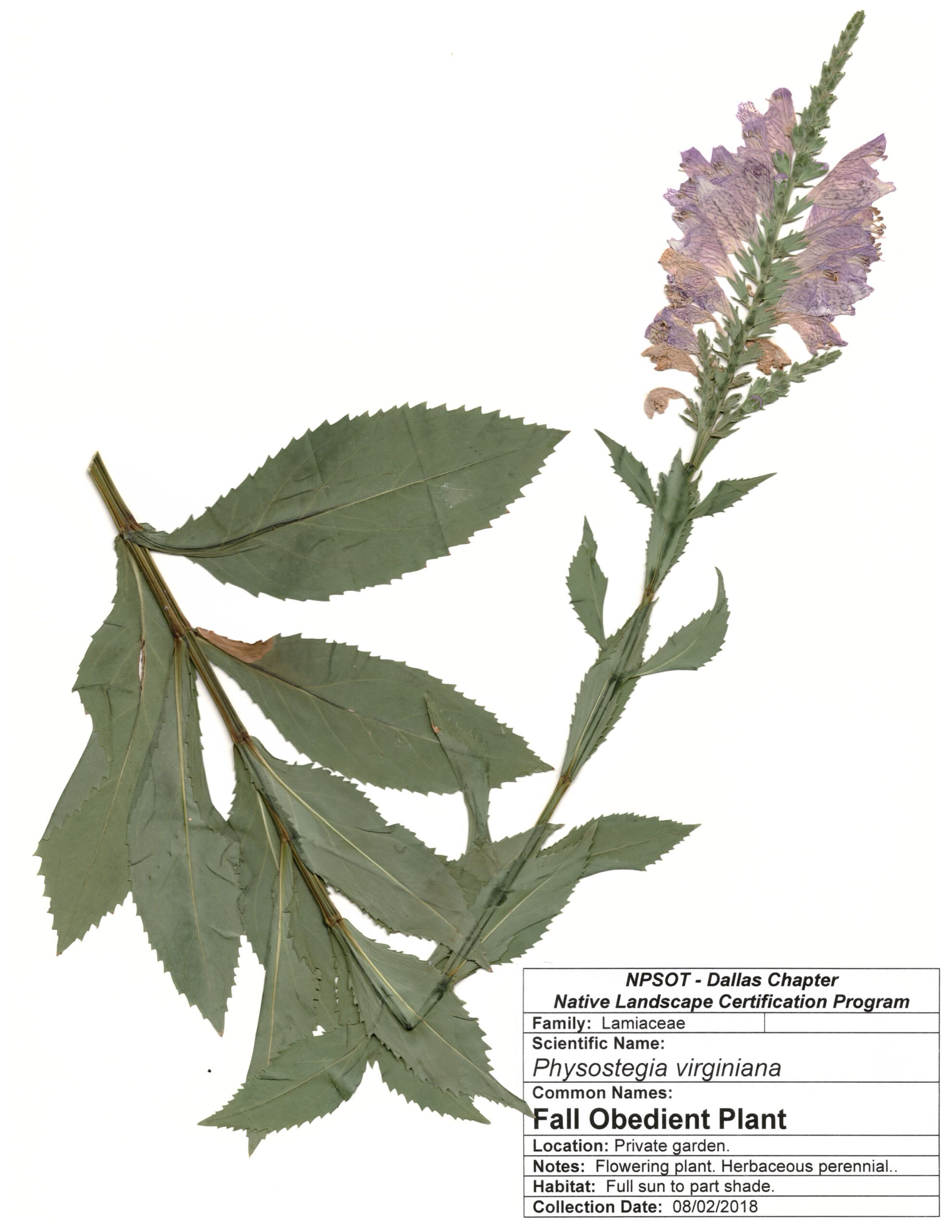
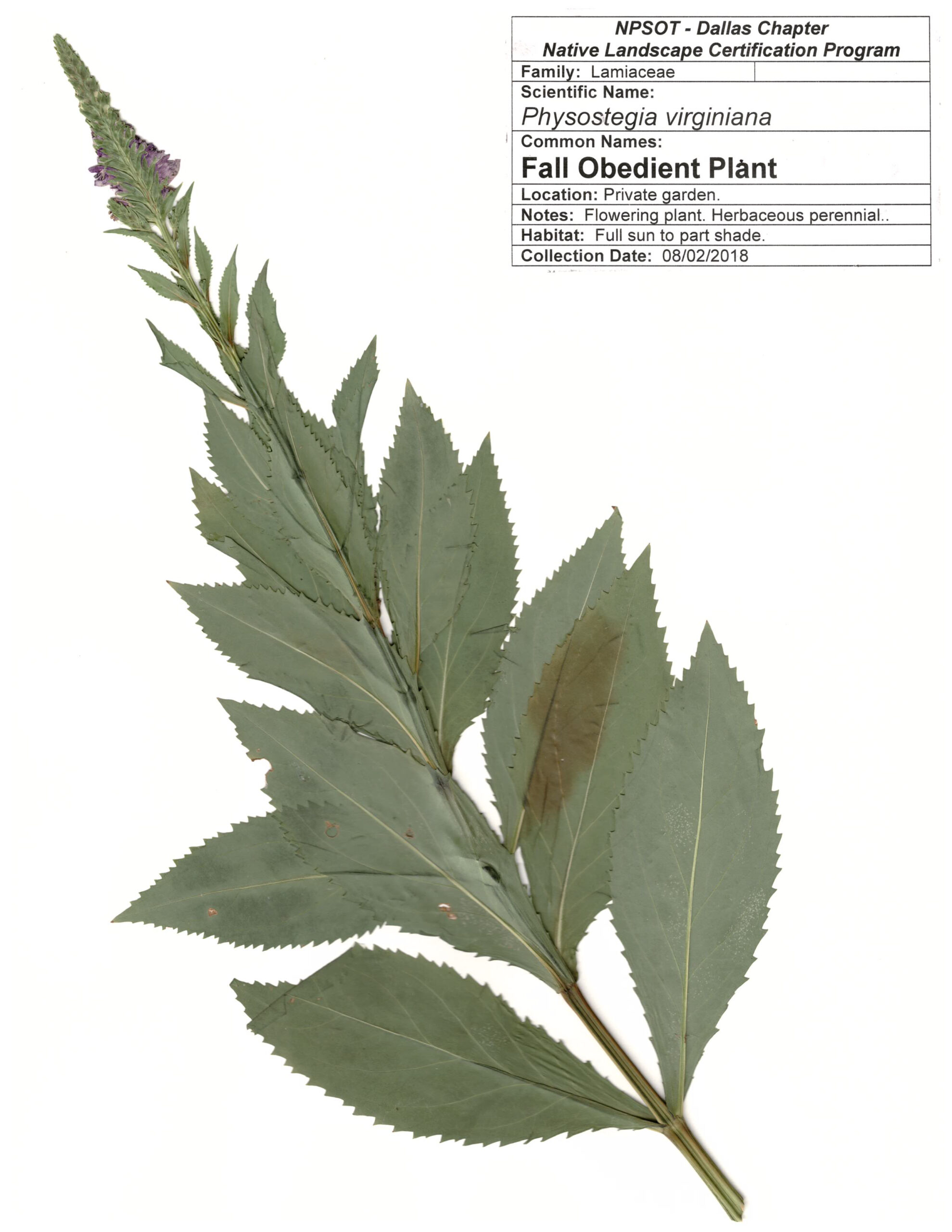
Blooms August-November. Upright form, with square stems, typical of the mint family. Produces long, lance-shaped leaves. Snapdragon-like, pink to lavender flowers are clustered on terminal spikes. The fruit is a nutlet.

References

1) Griffith, Bryce, Omernick & Rodgers (2007). Ecoregions of Texas. 2) Wasowski and Wasowski, Native Texas Plants Landscaping Region by Region, 1991, pg. 203, 3) https://www.wildflower.org/plants/result.php?id_plant=PHVI8. 4) https://portal.torcherbaria.org/portal/taxa/index.php?taxon=Physostegia+virginiana&formsubmit=Search+Terms. 5) http://bonap.net/TDC/Image/Map?taxonType=Species&taxonId=13572&locationType=County&mapType=Normal. 6) https://www.itis.gov/servlet/SingleRpt/SingleRpt?search_topic=TSN&search_value=32391#null, 7) Native and Adapted Landscape Plants, City of Austin and Texas A&M, 2014.
Material Treatment Method Collection References
Clump Division Divide the clump into two to three new clumps. Place clumps in individual pots with potting soil. Put the pots into a shady place for a few days to recover. Transfer the new clumps into their permanent spots in full sun. Clumps that form from spreading stolons can be divided in early spring or late fall. 1) https://www.wildflower.org/plants/result.php?id_plant=PHVI8 2) https://www.thespruce.com/obedient-plant-1402852#:~:text=Light,twice%20a%20week%20once%20established.
Seed Stratification Damp stratify seeds 3 months at 40 degrees. Plant the seeds just below the surface of the soil in groups of about two to three seeds. Space groups of seeds about 18 to 24 inches apart. It will take about a week for seeds to germinate. Once the plants are a few inches tall in pots, they can be transplanted into your garden a few weeks after the last frost. Seeds are 1/8", dull-brown nutlets. Harvest the seeds from the seed heads two months after blooming when the flowers are faded and dried. 1) https://www.wildflower.org/plants/result.php?https://www.thespruce.com/obedient-plant-1402852#:~:text=Light,twice%20a%20week%20once%20established.id_plant=PHVI8 2) https://farmhouseandblooms.com/how-to-grow-obedient-plant-physostegia-virginiana/#:~:text=sowing%20directly%20into%20the%20garden
Stem Cutting Remove the shoot's lower leaves and plant it in a small container filled with potting soil. Keep the soil moTransplant the young plant into the ground or container when new leaves have formed. You can also wait until the early fall to place them in the ground. ist but not soggy. Cut off a 5 to 6-inch long young, tender shoot with a sterile cutting tool. Cut below a leaf node. https://www.thespruce.com/obedient-plant-1402852#:~:text=Light,twice%20a%20week%20once%20established.

About the Region

2026 Fall Symposium Logo

This low-elevations region of Texas extends inland from the barrier islands, about 60 or so miles, and stretches from Brownsville to Louisiana. In total, it covers about 9.5 million acres, with a high point of 150 feet in elevation. More than 1000 species of plants can be found in this region. On the southern end, species more common in Mexico (such as Sabal mexicana) and Central America occur.

The barrier islands provide us with dune systems, and clay flats to the inland side, which have species found in these areas alone. Many plants here, such as Ipomoea pes-caprae (beach morning glory), can be found throughout tropical regions of the globe. I’ve encountered the same species on the beaches of Guam.

Once inland, vast marshes and wet prairies occur. Occasionally, oak (Quercus fusiformis) groves can be found. Common grasses include species of Bothriochloa, Paspalum, and Sporobolus; eastern gamagrass (Tripsacum dactyloides); and switchgrass (Panicum species). Many rivers and creeks cut through the Gulf Prairies, and along these riparian areas various species of trees, Sabal minor, and other plants adapted to clay soils can be found. Due to overgrazing, farming, and fire suppression, woody species such as mesquite (Prosopis glandulosa) and huisache (Acacia farnesiana), and invasive species such as chinaberry (Melia azedarach), Brazilian pepper (Schinus terebinthifolius), and Chinese tallow (Sapium sebiferum) have increased and displaced our native flora.

Source: Wildflowers of Texas by Michael Eason