

White Prairie Rose

Rosa foliolosa

Other common name(s):

Leafy Rose

Family:

Rosaceae (Rose Family)

Plant Ecoregion Distribution Map

This map uses data from the US EPA. EPA  servers have been offline frequently so maps may not display. We are working on a solution.

Cross Timbers, Edwards Plateau, Texas Blackland Prairies
Eastern Cross Timbers, Grand Prairie, Limestone Cut Plain, Western Cross Timbers
Balcones Canyonlands
Northern Blackland Prairie

Plant Characteristics

Growth Form

Subshrub

Height

.5
to
1
ft.

Spread

1
to
2
ft.

Leaf Retention

Deciduous

Lifespan

Perennial

Habitat and Care Requirements

Soil Type(s)

Calcareous, Clay, Dry, Limestone, Sand

Light Requirement

Sun, Part Shade

Water Requirement

Low, Medium

Native Habitat

Disturbed Areas, Grassland, Woodland

Bloom and Attraction

Bloom Color

Pink, White

Bloom Season

Spring

Seasonal Interest

Berry, Fall Color, Nectar, Pollen

Wildlife Benefit

Bees, Birds, Butterflies

Maintenance

Rosa foliolosa is the only white rose native to North America. High heat tolerance. The individual stems are short-lived and the oldest of them should be regularly removed. Can be used for beds and borders, hedge, rock garden, shrub or specimen. It grows by rhizomes, but remains relatively compact. Normally a small bush but will grow taller with more water. Native habitat: prairies, sandy oak woodlands, roadsides, Native habitat: Blackland prairies, dry hillsides and woods, roadside and railroad verges, slopes and ravines, limestone and sandstone hills;

Description

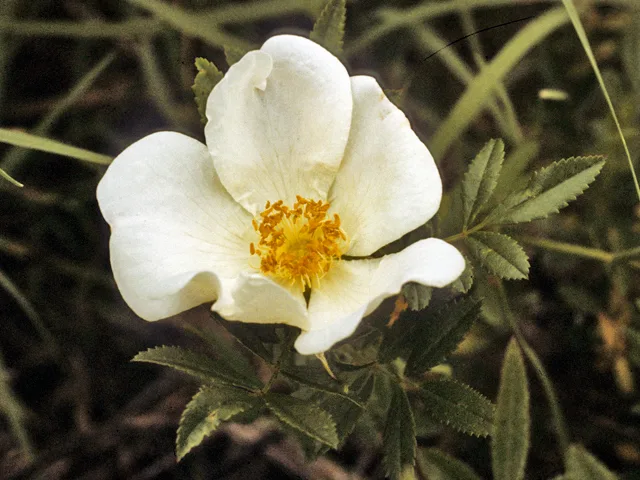
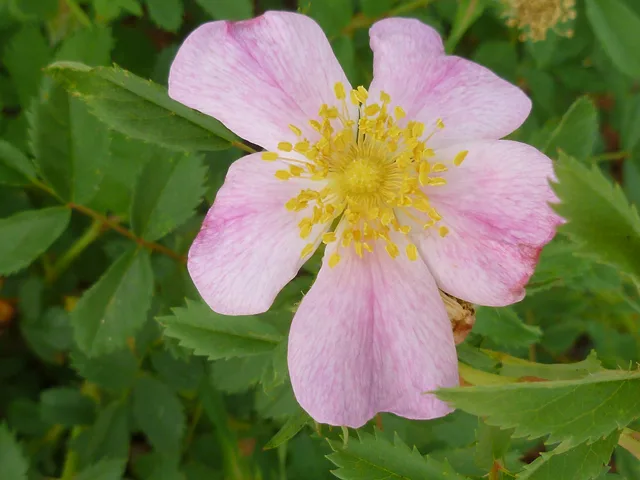
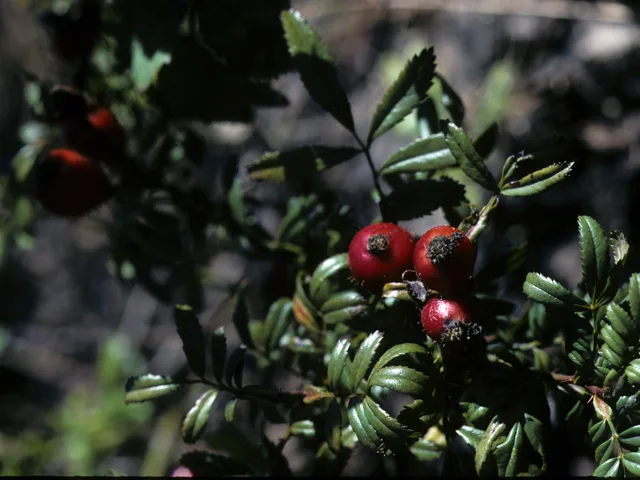
Blooms March-June. Unlike other roses, stems have few to no prickles. Five-petalled blossoms are white to pink. Foliolosa means profusely leafed. Leaves are divided into nine tiny leaflets, that provide fall color. The red fruit is call a “hip” and persists summer through fall.
Previous Scientific Name(s): Rosa ignota
Material Treatment Method Collection References
Root Division It can be planted deeper and filled with soil to the roots so that new roots can grow at the bottom of each branch. At the same time, prune the branches on the ground to reduce the evaporation of water and improve the survival rate of transplanting. In the early spring or late autumn, the whole plant can be dug out with soil to be divided into ramets. Select a stem with 1-2 branches and some fibrous roots, and then separate it from the whole plant https://www.picturethisai.com/care/Rosa_foliolosa.html
Stem Cutting The substrate for cutting can be a mix of river sand, rice chaff ash, or vermiculite, etc. Insert the branches into the substrate, shade it properly, and spray to maintain humidity. The branches will take root 20-30 days after cutting, and the survival rate is 70-80%. If the branches are dipped in rooting powder and then inserted into the substrate, the survival rate will be higher. Additionally, the cuttings can be immersed in water for cutting; the cutting temperature is 20 to 25 ℃, and new roots will grow after 20 days. Take cutting in spring and autumn. Branches with 3-4 buds can be cut off to use. https://www.picturethisai.com/care/Rosa_foliolosa.html

About the Region

2026 Fall Symposium Logo

This low-elevations region of Texas extends inland from the barrier islands, about 60 or so miles, and stretches from Brownsville to Louisiana. In total, it covers about 9.5 million acres, with a high point of 150 feet in elevation. More than 1000 species of plants can be found in this region. On the southern end, species more common in Mexico (such as Sabal mexicana) and Central America occur.

The barrier islands provide us with dune systems, and clay flats to the inland side, which have species found in these areas alone. Many plants here, such as Ipomoea pes-caprae (beach morning glory), can be found throughout tropical regions of the globe. I’ve encountered the same species on the beaches of Guam.

Once inland, vast marshes and wet prairies occur. Occasionally, oak (Quercus fusiformis) groves can be found. Common grasses include species of Bothriochloa, Paspalum, and Sporobolus; eastern gamagrass (Tripsacum dactyloides); and switchgrass (Panicum species). Many rivers and creeks cut through the Gulf Prairies, and along these riparian areas various species of trees, Sabal minor, and other plants adapted to clay soils can be found. Due to overgrazing, farming, and fire suppression, woody species such as mesquite (Prosopis glandulosa) and huisache (Acacia farnesiana), and invasive species such as chinaberry (Melia azedarach), Brazilian pepper (Schinus terebinthifolius), and Chinese tallow (Sapium sebiferum) have increased and displaced our native flora.

Source: Wildflowers of Texas by Michael Eason