
Esperanza

Tecoma stans

Other common name(s):

Yellow Bells

Family:

Bignoniaceae (Trumpet Creeper Family)

Plant Ecoregion Distribution Map

This map uses data from the US EPA. EPA  servers have been offline frequently so maps may not display. We are working on a solution.

Chihuahuan Deserts, Southern Texas Plains
Chihuahuan Basins and Playas, Chihuahuan Desert Grasslands, Chihuahuan Montane Woodlands, Low Mountains and Bajadas, Stockton Plateau
Balcones Canyonlands
Rio Grande Floodplain and Terraces, Texas-Tamaulipan Thornscrub

Plant Characteristics

Growth Form

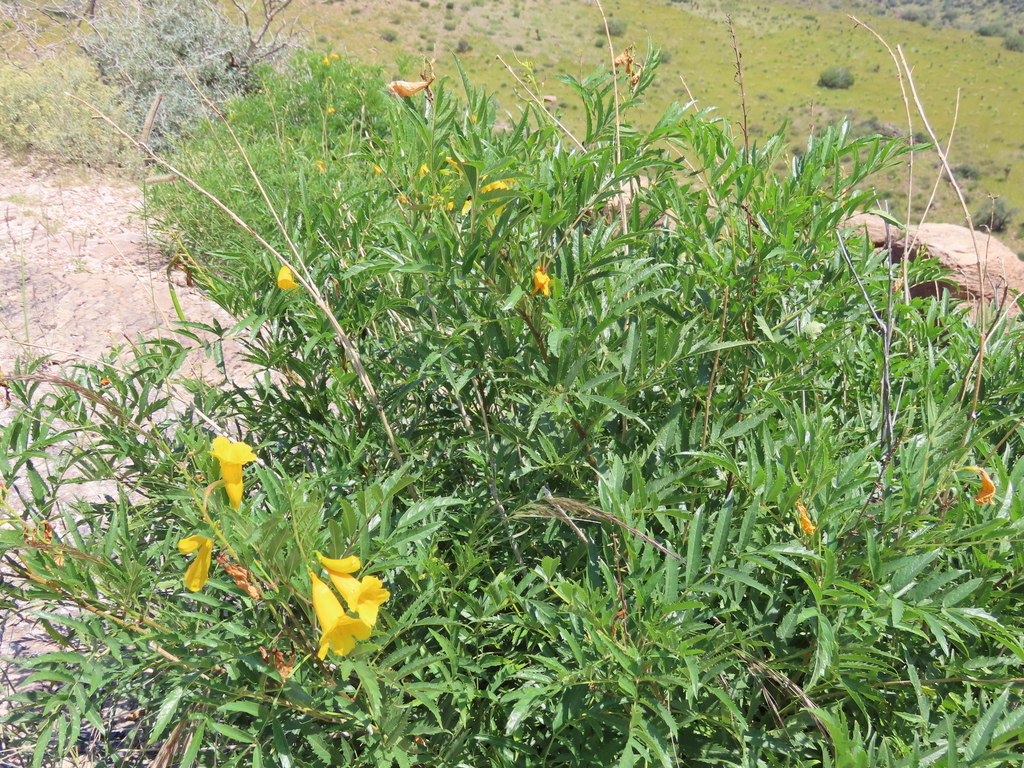
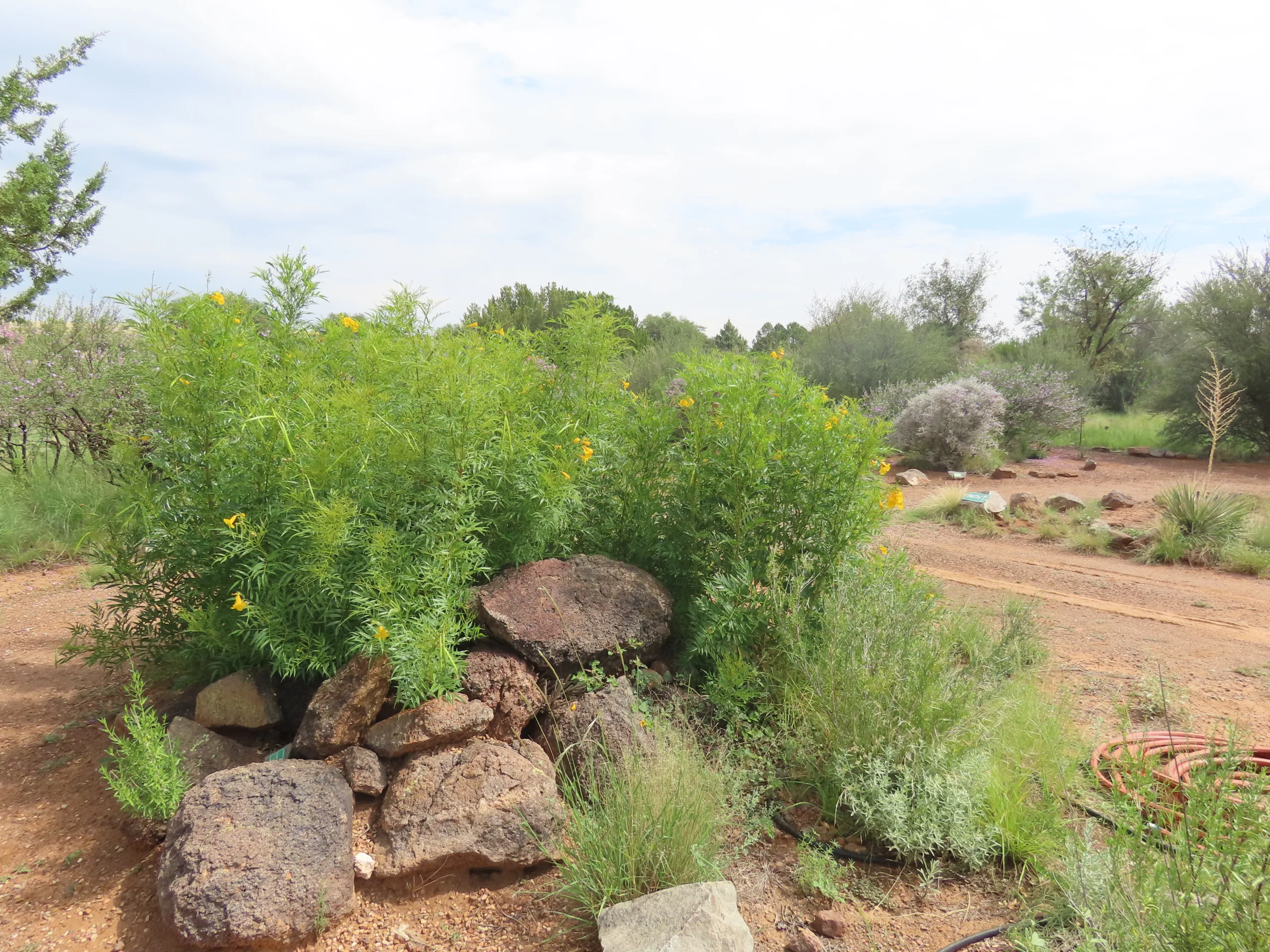
Shrub

Height

4
to
8
ft.

Spread

3
to
5
ft.

Leaf Retention

Deciduous

Lifespan

Perennial

Habitat and Care Requirements

Soil Type(s)

Clay, Dry, Limestone, Loam, Well Drained

Light Requirement

Sun

Water Requirement

Low, Medium

Native Habitat

Desert, Grassland, Woodland

Bloom and Attraction

Bloom Color

Orange, Yellow

Bloom Season

Spring, Summer, Fall

Seasonal Interest

Forage, Larval Host, Nectar, Seeds

Wildlife Benefit

Browsers, Butterflies, Hummingbirds, Moths, Small Mammals

Maintenance

Does well in hot, dry weather. Cut back dead stems after cold damage, but before new spring growth. Plants native to the southwestern U.S. and adjacent Mexico are shorter, more drought-tolerant, and more cold-tolerant than some of the commercial cultivars. Although it is native to the south and western regions of Texas, it has become a popular landscaping plant across the state. Extra care may be needed to grow it outside of its native range. Native habitat: high elevations, hillsides, slopes, desert grasslands, oak woodlands.

Description

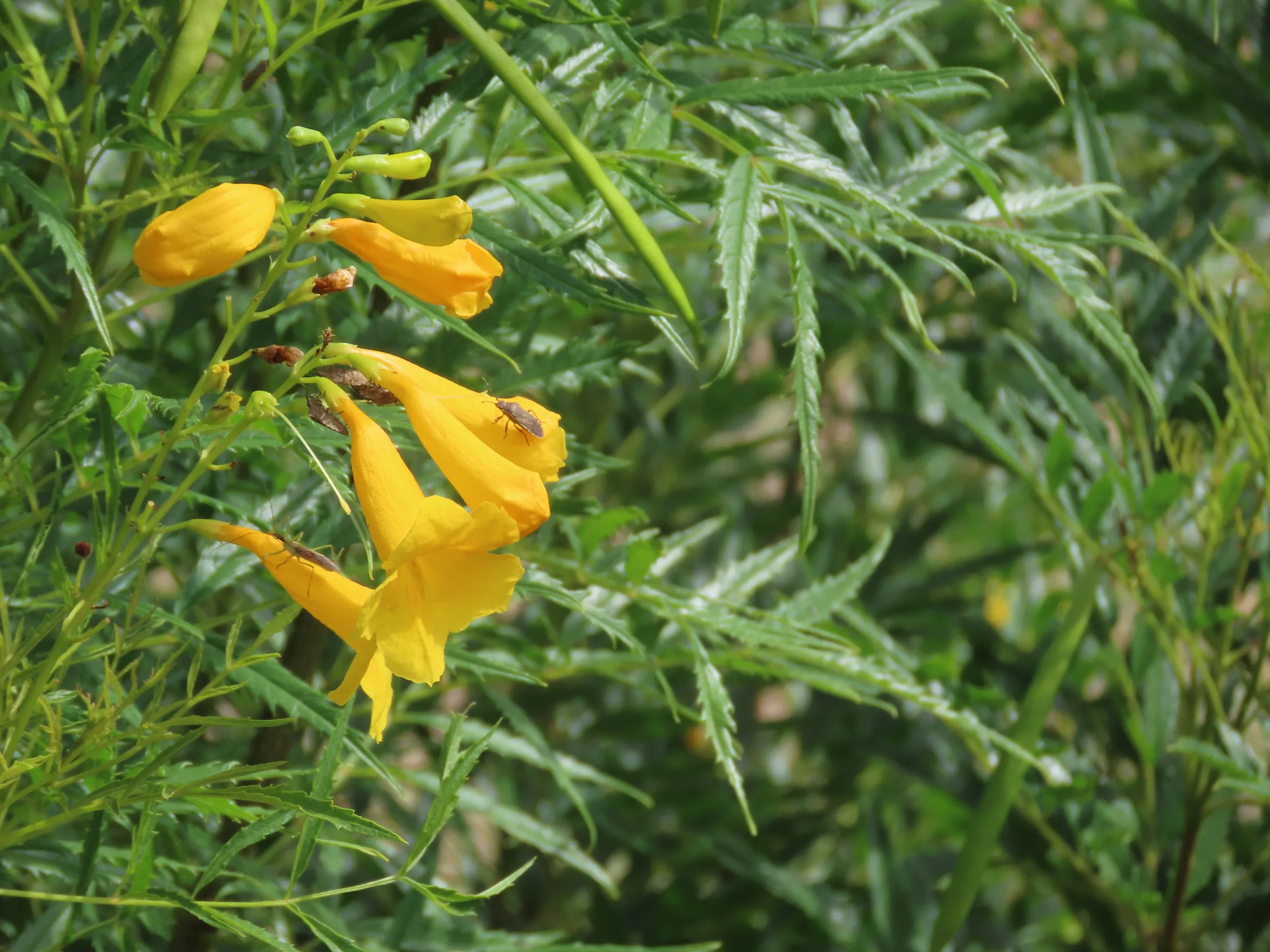
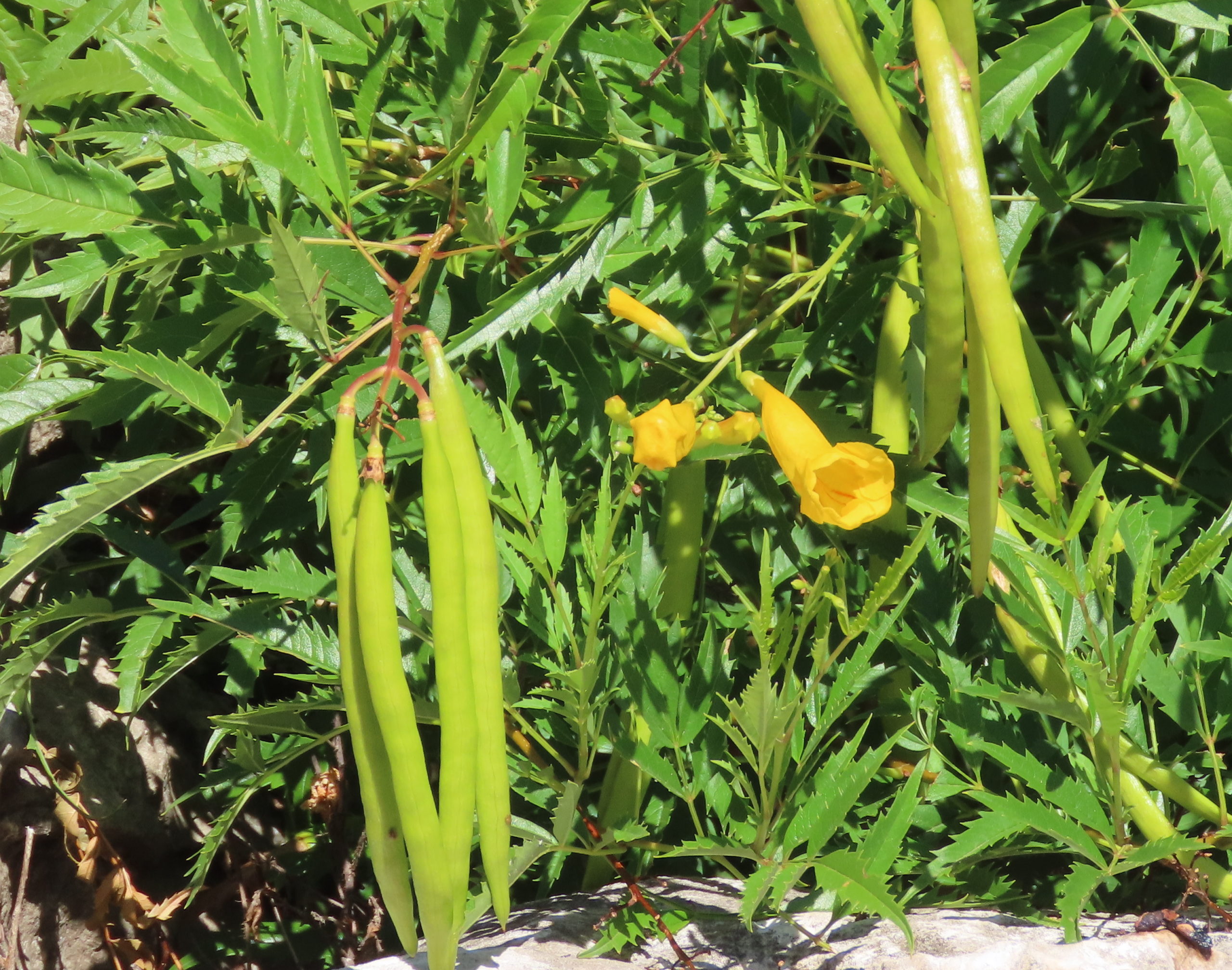
Blooms April-November. An irregular shaped shrub. Compound leaves are divided into 5–13 elliptic to lanceolate leaflets, with serrated margins, with lighter in color below. Trumpet-shaped, yellow flowers occur in clusters in terminal racemes. The fruit is a long, thin legume pod. There are many cultivars that vary in leaf shape and flower color not covered in this database. Larval host: Dogface Butterfly. .
Previous Scientific Name(s): Bignonia stans, Stenolobium stans, Tecoma stans var. angustata
Material Treatment Method Collection References
Seed No Treatment Plant the seeds a quarter inch deep in a small plant pot with fresh potting mix amended with coarse sand or perlite. You can also use seed starting mix. Water the soil lightly to moisten it. Put the container in a warm place with bright light and keep the soil evenly moist. The yellow bell seeds should sprout within around two weeks. Collect late summer to fall after pods are no longer green. Air dry and store or sow soon after collection. 1) https://www.wildflower.org/plants/result.php?id_plant=TEST 2) https://www.thespruce.com/yellow-bells-tecoma-stans-guide-5198061#toc-propagating-yellow-bells 3) https://plants.ces.ncsu.edu/plants/tecoma-stans/ 4) https://www.weekand.com/home-garden/article/propagate-tecoma-stans-18066144.php
Stem Cutting Fill a plant pot with rich, well-drained potting mix. Plant the cutting in the potting mix and water to moisten. Tent a plastic bag around the cutting to create a more humid environment and hold in moisture. Use a rubber band to secure the bag in place. Put the cutting in a warm place with lots of bright, indirect light. Monitor the cutting and keep the soil moist but not soggy. When a few inches of new growth have appeared, the cutting is ready to repot into a larger container or outdoors in the ground. Be sure to harden off the cutting before relocating it outside. Select a stem tip from a healthy branch on the mother plant. Use clean, sterilized pruners to take a cutting that's several inches in length. 1) https://www.thespruce.com/yellow-bells-tecoma-stans-guide-5198061#toc-propagating-yellow-bells 2) https://www.weekand.com/home-garden/article/propagate-tecoma-stans-18066144.php

About the Region

2026 Fall Symposium Logo

This low-elevations region of Texas extends inland from the barrier islands, about 60 or so miles, and stretches from Brownsville to Louisiana. In total, it covers about 9.5 million acres, with a high point of 150 feet in elevation. More than 1000 species of plants can be found in this region. On the southern end, species more common in Mexico (such as Sabal mexicana) and Central America occur.

The barrier islands provide us with dune systems, and clay flats to the inland side, which have species found in these areas alone. Many plants here, such as Ipomoea pes-caprae (beach morning glory), can be found throughout tropical regions of the globe. I’ve encountered the same species on the beaches of Guam.

Once inland, vast marshes and wet prairies occur. Occasionally, oak (Quercus fusiformis) groves can be found. Common grasses include species of Bothriochloa, Paspalum, and Sporobolus; eastern gamagrass (Tripsacum dactyloides); and switchgrass (Panicum species). Many rivers and creeks cut through the Gulf Prairies, and along these riparian areas various species of trees, Sabal minor, and other plants adapted to clay soils can be found. Due to overgrazing, farming, and fire suppression, woody species such as mesquite (Prosopis glandulosa) and huisache (Acacia farnesiana), and invasive species such as chinaberry (Melia azedarach), Brazilian pepper (Schinus terebinthifolius), and Chinese tallow (Sapium sebiferum) have increased and displaced our native flora.

Source: Wildflowers of Texas by Michael Eason