
Powdery Thalia

Thalia dealbata

Other common name(s):

Powdery Alligator-flag, Water Canna

Family:

Marantaceae (Arrowroot Family)

Plant Ecoregion Distribution Map

This map uses data from the US EPA. EPA  servers have been offline frequently so maps may not display. We are working on a solution.

East Central Texas Plains, Gulf Coast Prairies and Marshes, Western Gulf Coastal Plain
Northern Post Oak Savanna, Southern Post Oak Savanna
Northern Humid Gulf Coastal Prairies
Flatwoods, Floodplains and Low Terraces3, Pleistocene Fluvial Terraces, Red River Bottomlands, Southern Tertiary Uplands

Plant Characteristics

Growth Form

Herbaceous, Wetland

Height

3
to
8
ft.

Spread

1
to
2
ft.

Leaf Retention

Deciduous

Lifespan

Perennial

Habitat and Care Requirements

Soil Type(s)

Moist, Mud, Poor Drainage, Saline, Shallow

Light Requirement

Part Shade

Water Requirement

High

Native Habitat

Wetland

Bloom and Attraction

Bloom Color

Purple, White

Bloom Season

Spring, Summer, Fall

Seasonal Interest

Larval Host

Wildlife Benefit

Butterflies

Maintenance

Good in water gardens, bogs, or pond areas. It prefers shallow water typically ranging from a few inches to a foot deep. Set up a water collection tank near a downspout to supplement water. Native habitat: Cypress swamps, marshes, and ponds.

Description

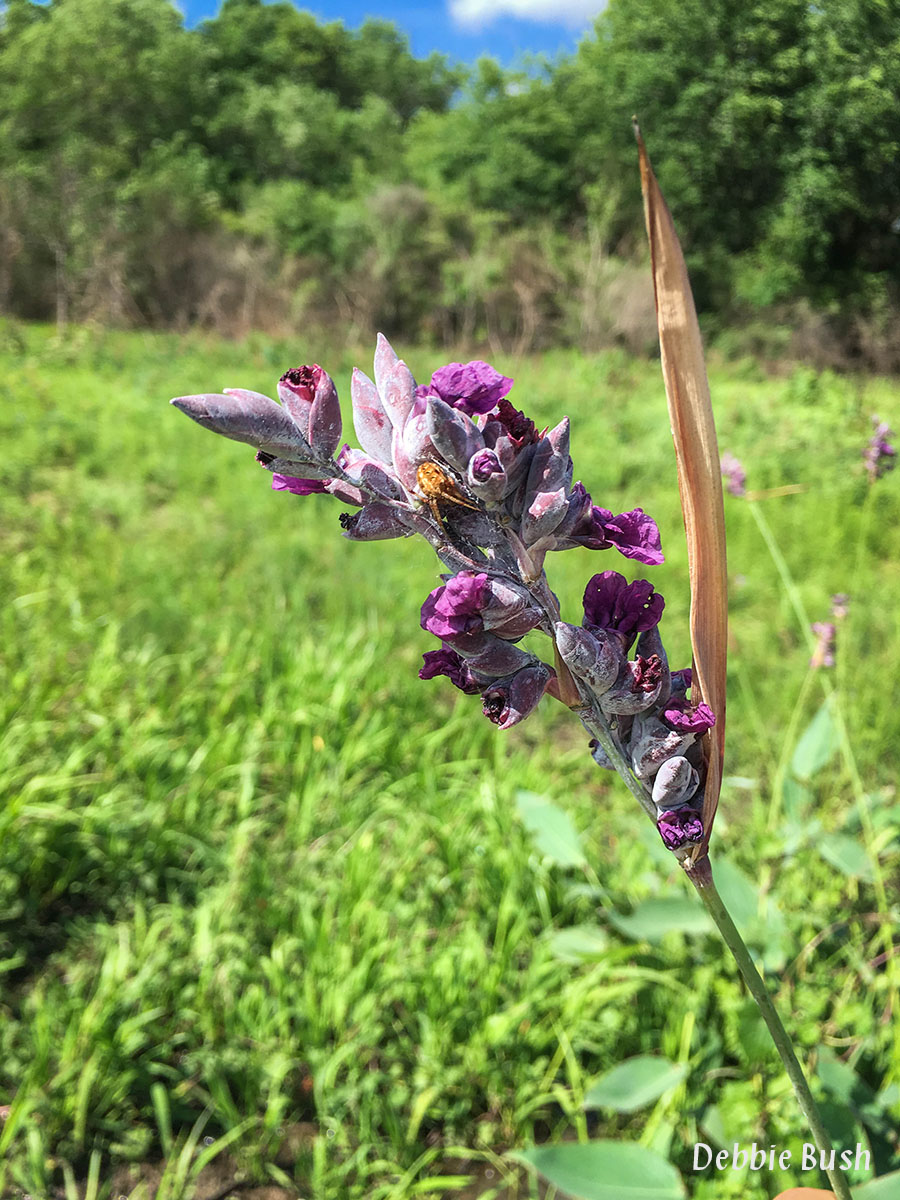
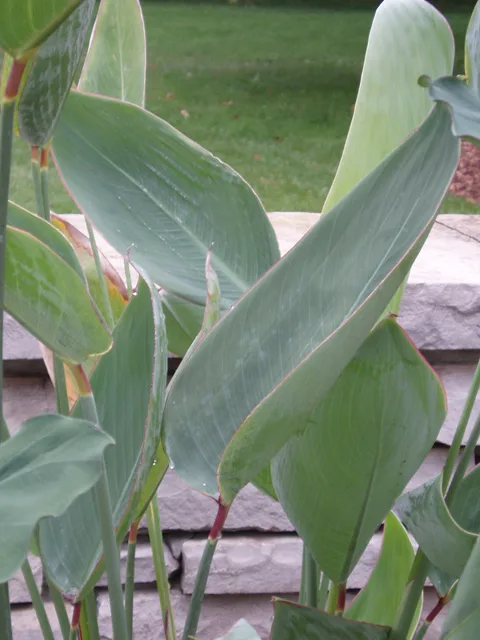
Blooms May-October. Large, broadly lance-shaped, long-stemmed leaves. All parts of plant covered with a white powdery coating. The flowers are crowded in an open panicle. The fruit is a capsule. Larval host: Brazilian Skipper.
Previous Scientific Name(s): Thalia barbata
Material Treatment Method Collection References
Clump Division Carefully separate the rhizomes into smaller sections, ensuring each section has roots and shoots, and replant them in moist or submerged conditions. Can be done in early spring or autumn. 1) https://www.lincsplants.com/products/thalia-dealbata-powdery-alligator-flag-or-hardy-water-canna-marginal-pond-plants-pond-plants-water-plants-mp114#:~:text=Propagation%20and%20Care,the%20soil%20remains%20consistently%20wet. 2) https://earthone.io/plant/thalia%20dealbata
Seed Stratification Seeds can be sown in spring, but germination may be slow. Clean seeds by rubbing them over a roughened surface (use an old radiator screen from a tractor) to remove the papery fruit coverings, which are then blown away. Seeds can be stored dry in zip-lock-type plastic bags for at least 6 mo. Post-harvest storage in a moist medium (a wet paper towels and sphagnum peat moss for experimental purposes, however, other media would probably be acceptable) at 5.5 øC (42 øF) works well. The cool temperatures and moist conditions serve as a stratification process. best germination (15% to 35% after 9 to 12 wk) on moist growing medium after either stratifying dry-stored seeds or keeping seeds in moist storage. Greenhouse temperatures range from 13 to 38 øC (55 to 100 øF) during the germination period. I maintained moist medium by regularly watering containers situated on normal greenhouse benches. Collect seeds when fully mature and before any significant shattering occurs, usually late August through mid September. Shake the fruit clusters over a container. 1) https://www.lincsplants.com/products/thalia-dealbata-powdery-alligator-flag-or-hardy-water-canna-marginal-pond-plants-pond-plants-water-plants-mp114#:~:text=Propagation%20and%20Care,the%20soil%20remains%20consistently%20wet. 2) https://npn.rngr.net/renderNPNProtocolDetails?selectedProtocolIds=marantaceae-thalia-467&referer=wildflower#:~:text=Propagule%20Collection:,serve%20as%20a%20stratification%20process.

About the Region

2026 Fall Symposium Logo

This low-elevations region of Texas extends inland from the barrier islands, about 60 or so miles, and stretches from Brownsville to Louisiana. In total, it covers about 9.5 million acres, with a high point of 150 feet in elevation. More than 1000 species of plants can be found in this region. On the southern end, species more common in Mexico (such as Sabal mexicana) and Central America occur.

The barrier islands provide us with dune systems, and clay flats to the inland side, which have species found in these areas alone. Many plants here, such as Ipomoea pes-caprae (beach morning glory), can be found throughout tropical regions of the globe. I’ve encountered the same species on the beaches of Guam.

Once inland, vast marshes and wet prairies occur. Occasionally, oak (Quercus fusiformis) groves can be found. Common grasses include species of Bothriochloa, Paspalum, and Sporobolus; eastern gamagrass (Tripsacum dactyloides); and switchgrass (Panicum species). Many rivers and creeks cut through the Gulf Prairies, and along these riparian areas various species of trees, Sabal minor, and other plants adapted to clay soils can be found. Due to overgrazing, farming, and fire suppression, woody species such as mesquite (Prosopis glandulosa) and huisache (Acacia farnesiana), and invasive species such as chinaberry (Melia azedarach), Brazilian pepper (Schinus terebinthifolius), and Chinese tallow (Sapium sebiferum) have increased and displaced our native flora.

Source: Wildflowers of Texas by Michael Eason