





By Meg Inglis, Executive Director, Native Plant Society of Texas
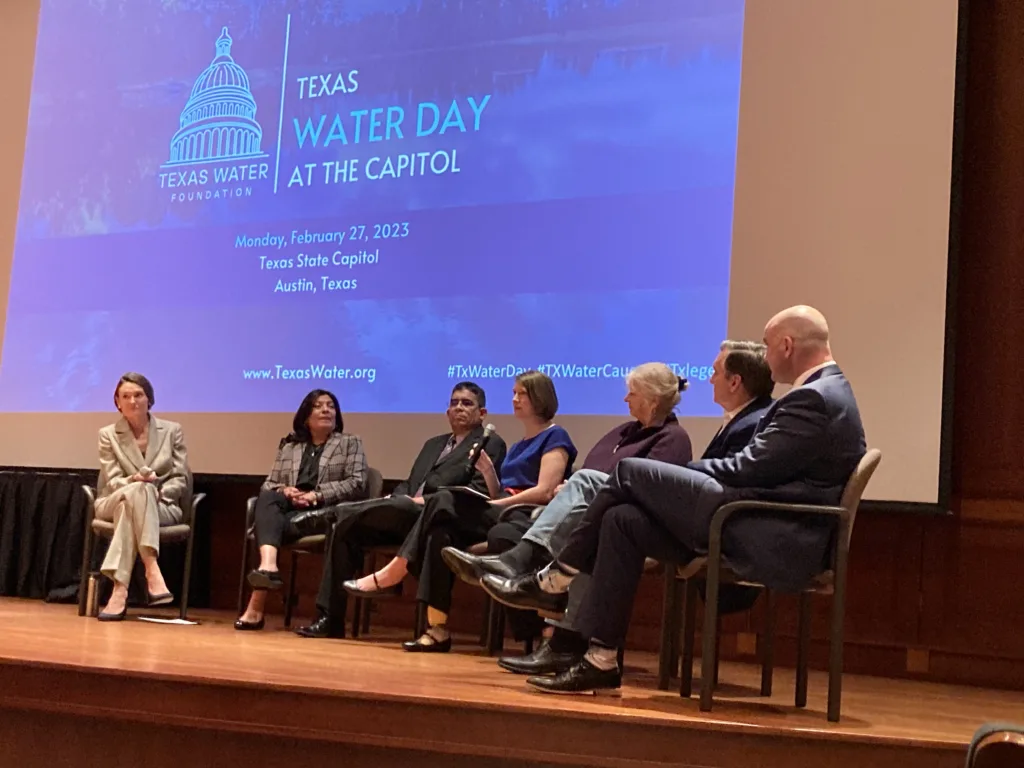
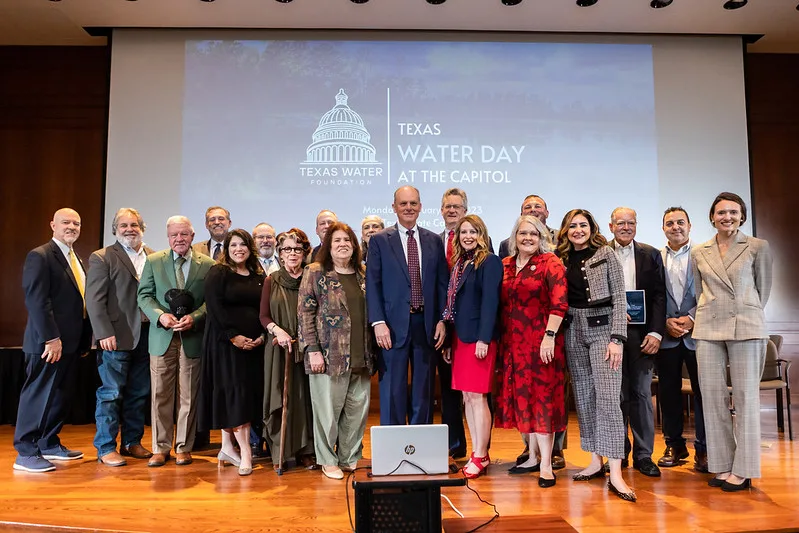
On February 27th Clarence Reed, VP Affiliations and Advocacy and I represented the Society at “Texas Water Day at the Capitol.” The event was sponsored by the Texas Water Foundation – “a nonprofit working to lead Texas toward a resilient water future by investing in the next generation of water champions, equipping decision makers and building a statewide water campaign.” Watch the event recording: https://www.dropbox.com/s/ugnuhhq3sjlx1y1/IMG_0005.MOV?dl=0
The 2022 State Water Plan “Water for Texas” created by the Texas Water Development Board provided focus for the event, describing the main contributors driving the state’s water needs – drought, population increase and crumbling infrastructure.
We quickly learned that the state is in a similar position to the rest of the nation – its water infrastructure was installed in the early 1970’s and is in desperate need of updating. Two panel discussions centered around this issue. How bad is the problem? Who are the players that may fix the problem? What are the impediments to fixing the problem? How can we overcome those impediments? The word “collaboration” came up a lot. Collaboration between water agencies, rural water districts, municipal water systems, state and national organizations. Many of these organizations were represented at the event.
Finding solutions to our water problems is made more urgent due to fact that we are a rapidly growing population in a state that regularly experiences drought. Water management strategies written about in the water plan vary from conserving what water we have to “finding more water.” One of the easier strategies included fixing current leaks in water systems, which could save 572 thousand acre-feet of water/year, more than the annual water demand of Fort Worth, Austin, El Paso, Laredo and Lubbock combined. Senator Charles Perry spoke to us about his priority of finding more sources of water through desalinization of gulf waters and reclamation of wastewater used in fracking petroleum products. The Native Plant Society of Texas plays an important role in implementing the 2022 State Water Plan – our members are stewards of conservation. Native plants are more important than ever in the water equation – they save Texans 40 – 60% of their household water use! We must continue our education and outreach activities – holding plant sales, creating and maintaining demonstration gardens, doing plant tours and field trips, rescuing native plants and removing invasive plants. What we provide is critical – we are “water champ
