

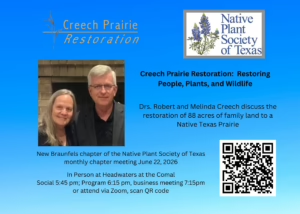
Creech Prairie Restoration
Drs. Robert and Melinda Creech discuss the restoration of 88 acres of family land to a Native Texas Prairie.
For the Love of Flies – Praise for the forgotten pollinators and unsung allies
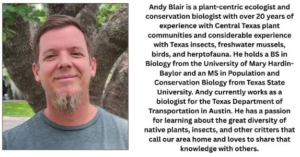
Andy Blair is a plant-centric ecologist and conservation biologist with 20 years of experience with central Texas plant communities and considerable experience with Texas insects, freshwater mussels, birds and herpetofauna. He has a passion for learning about the great diversity of native plants, insects, and other critters that call our area home and loves to share that knowledge with others.

Rooted in Nature: Composting and Native Flora of Texas
Peter is a Guadalupe County Master Gardener and Master Composter with the State of Texas Alliance of Recycling. He focuses on Earth-Kind practices which help plants thrive while conserving water and caring for the environment. Peter is actively engaged in environmental stewardship and conservation efforts with multiple groups in the greater San Antonio area. He has served on the board of the San Antonio Chapter of NPSOT, is an Alamo Area Master Naturalist, a member of the Audubon Society, and serves on the Environmental Advisory Committee for the San Antonio River Authority among other roles.

The Texas Native PLant Primer by Andrea DeLong-Amaya
Horticulture Educator, Lady Bird Johnson Wildflower Center
For over three decades, Andrea DeLong-Amaya has been living her life’s mission to honor the natural world through presenting and teaching
classes about the horticulture, ecology, and importance of native plants in planned landscapes. Her regionally best-selling book, the Texas Native Plant Primer (Timber Press), was released in March of 2025.

Land and Plant Restoration at the Weston Ranch
The Weston Ranch Foundation is a suburban sanctuary where prairie and wildlife thrive through habitat conservation and sustainable agriculture to benefit our community in Central Texas. The foundation was formed in 2003 to foster relationships with higher education institutions, non-profits, inspirational groups, and the community. We are currently working together with Texas Lutheran University, The University of Texas at San Antonio, and Texas State University to better understand our natural capital and to support the teaching missions of the universities.

The Plants of the Fall Plant Sale 2026
Deedy Wright, our resident expert, describes the plants that will be for sale at the Fall Plant Sale.
