Chapter Meeting, March 5
As usual, the meeting will start with a social time at 6:00pm, at the Cibolo Nature Center Auditorium. Announcement will begin at 6:45pm, followed by the presentation. For the social time, please bring any snacks/appetizers/desserts that you would like to share.
Speakers: Jan Wrede and Rufus Stephens.
Topic: “Land Stewardship for Birds and the Importance of Native Plant Communities”
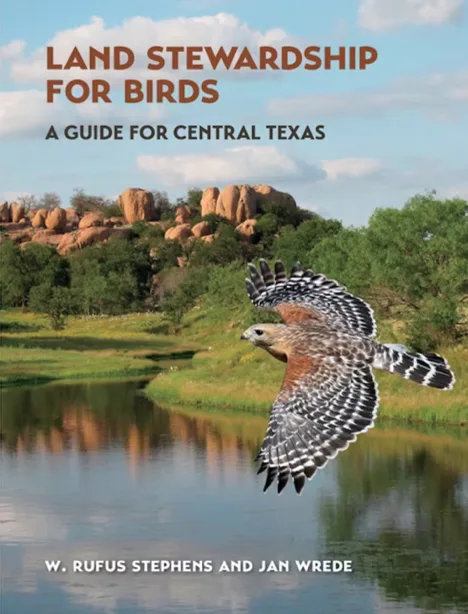
Materials: Jan and Rufus will also bring their new book “Land Stewardship for Birds and the Importance of Native Plant Communities” in addition to “Trees, Shrubs, and Vines of the Texas Hill Country.” Both books will be for sale prior to their presentation.
Program Synopsis: Fifty years of data indicate that bird populations are declining at alarming rates. Birds have declined in all major habitats most often because of habitat destruction or degradation. Fortunately, with thoughtful practices land stewards can be agents of change. What you do with your land can restore and enhance native plant communities needed to produce the cover, food, and water needed for thriving bird populations. Our presentation will focus on why native plant communities are key to healthy bird populations and what you can do to help.
Bio: Rufus Stephens and Jan Wrede are co-authors of the new edition Land Stewardship for Birds: A Guide for Central Texas published by Texas A&M Press. In addition, Jan is author of Trees, Shrubs, and Vines of the Texas Hill Country.
Rufus is a Certified Wildlife Biologist and educator. He has worked as a wildlife biologist for 35 years, 23 years with TPWD. Rufus is one of the founders of the Texas Master Naturalist program and in recognition for this accomplishment was a corecipient of the Wildlife Management Institute’s award for Innovation.
Jan is a non-fiction writer and environmental educator. She worked for 19 years as the director of education and citizen science at the Cibolo Nature Center and wrote weekly nature columns for the local newspapers. She also was a secondary science teacher for 15 years.