
Desert Yaupon

Schaefferia cuneifolia

Other common name(s):

Family:

Celastraceae (Bittersweet Family)

Plant Ecoregion Distribution Map

This map uses data from the US EPA. EPA  servers have been offline frequently so maps may not display. We are working on a solution.

Gulf Coast Prairies and Marshes, Southern Texas Plains
Lower Rio Grande Alluvial Floodplain, Lower Rio Grande Valley
Northern Nueces Alluvial Plains, Rio Grande Floodplain and Terraces, Semiarid Edwards Bajada, Texas-Tamaulipan Thornscrub

Plant Characteristics

Growth Form

Tree

Height

3
to
6
ft.

Spread

3
to
4
ft.

Leaf Retention

Evergreen

Lifespan

Perennial

Habitat and Care Requirements

Soil Type(s)

Caliche, Clay, Dry, Loam, Sand, Well Drained

Light Requirement

Sun, Part Shade, Shade

Water Requirement

Low

Native Habitat

Grassland, Shrubland

Bloom and Attraction

Bloom Color

Green, Orange, White

Bloom Season

Spring, Summer

Seasonal Interest

Forage, Fruit, Nectar, Pollen

Wildlife Benefit

Bees, Birds, Browsers, Butterflies, Small Mammals

Maintenance

Low maintenance and drought tolerant. Remove dead or damaged branches to encourage new growth and improve air circulation. Thinning crowded areas enhances sunlight exposure and reduces disease risk, while maintaining shape and size for landscape management. Watch for common problems like aphids, scale, and root rot if the soil is poorly drained. Native habitat: chaparral, brush country, hillsides and slopes.

Description

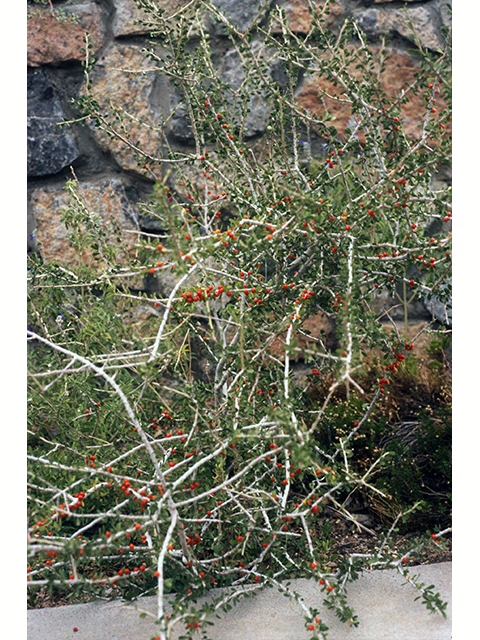
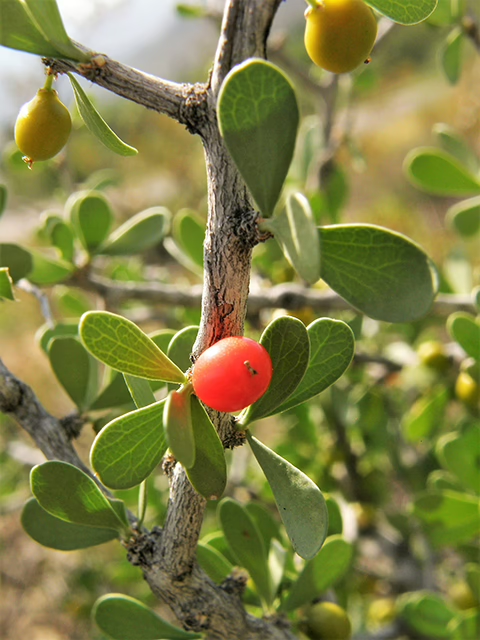
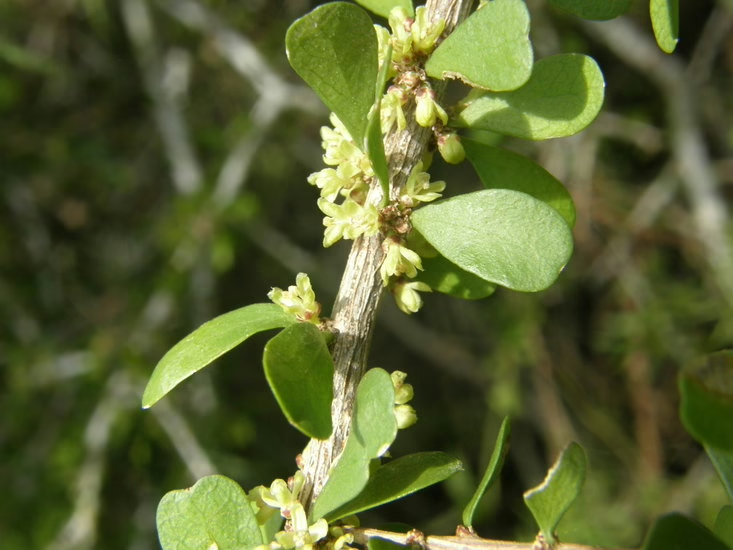
Blooms February-September. Features smooth, grey stems and pale green, tear-drop shaped leaves that are clustered along the stem. It produces tiny, greenish, inconspicuous flowers and small, roundish, orange to bright red berries that grow close to the stem.

References

Material Treatment Method Collection References
Seed Stratification Schaefferia cuneifolia seeds benefit from a period of cold stratification to simulate natural winter conditions and break dormancy. Place the cleaned seeds between moist paper towels in a sealed plastic bag and refrigerate them for 6-8 weeks. After stratification, sow the seeds in a well-draining seed starting mix. Press the seeds gently into the surface without burying them deeply. Keep the soil consistently moist but not waterlogged. With optimal conditions, germination can take anywhere from a few weeks to a couple of months. Be patient and provide consistent care. Though hardy once established, young plants might require protection from frost in colder regions. The best time to collect Schaefferia cuneifolia seeds is in the fall from female plants when the small, red berries ripen. Extract the seeds from the fruit and rinse them thoroughly to remove any pulp. https://propagate.one/how-to-propagate-schaefferia-cuneifolia/
Semi-harwood Cutting Select healthy stems free from disease or damage. Using a sharp, sterilized knife or pruning shears, make a clean cut just below a leaf node. Remove the lower leaves, leaving 2-3 pairs at the top. While not strictly necessary, dipping the cut end of the cutting in a rooting hormone can significantly improve the chances of success. Plant the cuttings in a well-draining potting mix, burying the bottom node. Maintain consistent moisture and humidity. It can take several weeks for the cuttings to develop roots. You can test for root development by gently tugging on the cutting; resistance indicates root formation. Though hardy once established, young plants might require protection from frost in colder regions. Take semi-hardwood cuttings – sections of stem that are partially mature – during the late spring or early summer. 1) https://propagate.one/how-to-propagate-schaefferia-cuneifolia/ 2) https://www.picturethisai.com/care/Schaefferia_cuneifolia.html#:~:text=How%20to%20Propagate%20Desert%20Yaupon?&text=Desert%20Yaupon%2C%20renowned%20for%20its,roots%20develop%20steadily%20over%20time.

About the Region

2026 Fall Symposium Logo

This low-elevations region of Texas extends inland from the barrier islands, about 60 or so miles, and stretches from Brownsville to Louisiana. In total, it covers about 9.5 million acres, with a high point of 150 feet in elevation. More than 1000 species of plants can be found in this region. On the southern end, species more common in Mexico (such as Sabal mexicana) and Central America occur.

The barrier islands provide us with dune systems, and clay flats to the inland side, which have species found in these areas alone. Many plants here, such as Ipomoea pes-caprae (beach morning glory), can be found throughout tropical regions of the globe. I’ve encountered the same species on the beaches of Guam.

Once inland, vast marshes and wet prairies occur. Occasionally, oak (Quercus fusiformis) groves can be found. Common grasses include species of Bothriochloa, Paspalum, and Sporobolus; eastern gamagrass (Tripsacum dactyloides); and switchgrass (Panicum species). Many rivers and creeks cut through the Gulf Prairies, and along these riparian areas various species of trees, Sabal minor, and other plants adapted to clay soils can be found. Due to overgrazing, farming, and fire suppression, woody species such as mesquite (Prosopis glandulosa) and huisache (Acacia farnesiana), and invasive species such as chinaberry (Melia azedarach), Brazilian pepper (Schinus terebinthifolius), and Chinese tallow (Sapium sebiferum) have increased and displaced our native flora.

Source: Wildflowers of Texas by Michael Eason