
Sweet Coneflower

Rudbeckia subtomentosa

Other common name(s):

Sweet Black-eyed Susan

Family:

Asteraceae (Aster Family)

Plant Ecoregion Distribution Map

This map uses data from the US EPA. EPA  servers have been offline frequently so maps may not display. We are working on a solution.

Western Gulf Coastal Plain
Flatwoods

Plant Characteristics

Growth Form

Herbaceous

Height

3
to
6
ft.

Spread

1
to
2
ft.

Leaf Retention

Deciduous

Lifespan

Perennial

Habitat and Care Requirements

Soil Type(s)

Clay, Loam, Moist, Well Drained

Light Requirement

Part Shade

Water Requirement

Medium

Native Habitat

Grassland, Woodland Edge

Bloom and Attraction

Bloom Color

Yellow

Bloom Season

Summer

Seasonal Interest

Nectar, Pollen, Seeds

Wildlife Benefit

Bees, Birds, Butterflies, Beetles

Maintenance

Tolerates hot and humid summers and some drought. Landscape uses include rain gardens and cut flower gardens, Powdery mildew may appear. Taller plants may need some support, particularly if grown in part shade. Uncommon in the wild and commercially, but may be offered at chapter NPSOT plant sales in East Texas. Native habitat: wet prairies; woodland edges, roadsides.

Description

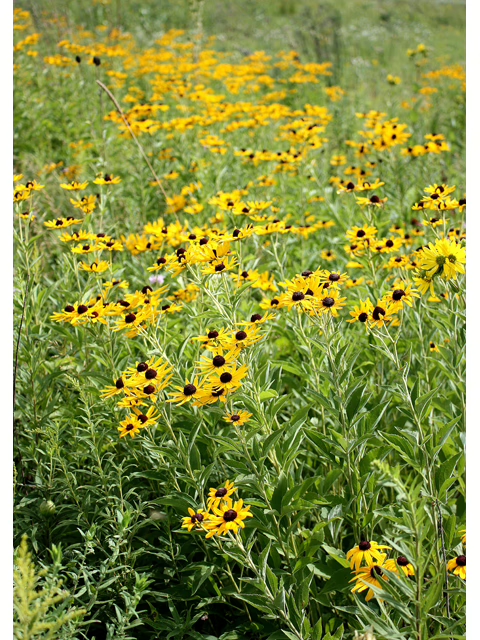
Blooms July-August. Will grow as biennial or short-lived perennial depending on the region. Upright stems covered in toothed gray-green leaves that are downy underneath. Bright-yellow ray flowers surround a center of dark disc flowers. They have a mild aroma of anise, hence the common name.
Material Treatment Method Collection References
Stem Cutting Dip the cut end in a rooting hormone to encourage root growth. Plant the cutting in a pot filled with a mix of perlite and peat moss. Ensure the pot has adequate drainage holes. Water the substrate lightly to keep it moist but not waterlogged. Place the pot in a location where the cutting can receive indirect sunlight. A humidity dome or plastic bag can be placed over the plant to maintain humidity, which is crucial for root development. Clean, sharp tools are needed to reduce the risk of introducing diseases. Choose a healthy stem from a mature plant. The cutting should be about 4-6 inches long and include several sets of leaves. Remove the leaves from the lower half of the cutting to prevent rotting when planted. https://www.picturethisai.com/care/propagate/Rudbeckia_subtomentosa.html
Seed Stratification If starting indoors, use cold, moist stratification. Start at least 5 weeks before outdoor night temperatures are reliably in the 10 C (50 F) range. Mix the seed with a slightly moistened, sterile, growing mix. Put this in a labelled, sealed plastic bag and store in a refrigerator for one day. The next day place this in the freezer for one day. Repeat this for one week, alternating between the fridge and the freezer. After stratifying, plant seed 1/8 inch deep in pots. Keep moist but not soggy and very warm (70 F). When seedlings are 5 cm (2 inches) tall or more, transplant into the garden, spaced 1 foot apart. 1) https://www.wildflowerfarm.com/rudbeckia-subtomentosa-sweet-black-eyed-susan.html#:~:text=You%20can%20germinate%20Rudbeckia%20subtomentosa%20seeds%20indoors,Makes%20great%20cut%20flowers%20*%20Juglone%20tolerant 2) https://www.finegardening.com/plant/sweet-coneflower-rudbeckia-subtomentosa?srsltid=AfmBOoqMTajZeHh6lw0tN8oomqk8HuRilqh6UDK9yWs3nazYSUM5rV5d
Seed No Treatment In late fall through to mid-winter fill plastic pots with a slightly moistened, sterile, growing mix. Plant seed 1/8 inch deep in pots and label the pots. Place them outdoors in an area where they will experience the snow and cold of winter. The seed will germinate in the pots in spring as the weather warms up. Be sure to water the pots regularly in spring and once the plants are 2 inches tall, transplant them into your garden. 1) https://www.wildflowerfarm.com/rudbeckia-subtomentosa-sweet-black-eyed-susan.html#:~:text=You%20can%20germinate%20Rudbeckia%20subtomentosa%20seeds%20indoors,Makes%20great%20cut%20flowers%20*%20Juglone%20tolerant 2) https://www.finegardening.com/plant/sweet-coneflower-rudbeckia-subtomentosa?srsltid=AfmBOoqMTajZeHh6lw0tN8oomqk8HuRilqh6UDK9yWs3nazYSUM5rV5d

About the Region

2026 Fall Symposium Logo

This low-elevations region of Texas extends inland from the barrier islands, about 60 or so miles, and stretches from Brownsville to Louisiana. In total, it covers about 9.5 million acres, with a high point of 150 feet in elevation. More than 1000 species of plants can be found in this region. On the southern end, species more common in Mexico (such as Sabal mexicana) and Central America occur.

The barrier islands provide us with dune systems, and clay flats to the inland side, which have species found in these areas alone. Many plants here, such as Ipomoea pes-caprae (beach morning glory), can be found throughout tropical regions of the globe. I’ve encountered the same species on the beaches of Guam.

Once inland, vast marshes and wet prairies occur. Occasionally, oak (Quercus fusiformis) groves can be found. Common grasses include species of Bothriochloa, Paspalum, and Sporobolus; eastern gamagrass (Tripsacum dactyloides); and switchgrass (Panicum species). Many rivers and creeks cut through the Gulf Prairies, and along these riparian areas various species of trees, Sabal minor, and other plants adapted to clay soils can be found. Due to overgrazing, farming, and fire suppression, woody species such as mesquite (Prosopis glandulosa) and huisache (Acacia farnesiana), and invasive species such as chinaberry (Melia azedarach), Brazilian pepper (Schinus terebinthifolius), and Chinese tallow (Sapium sebiferum) have increased and displaced our native flora.

Source: Wildflowers of Texas by Michael Eason