

Ashe Juniper

Juniperus ashei

Other common name(s):

Ashe Juniper, Mountain Cedar, Rock Cedar, Post Cedar, Texas Cedar, Brake Cedar, Mexican Juniper, Blueberry Juniper, Ozark White Cedar, Sabino, Enebro

Family:

Cupressaceae (Cypress Family)

Plant Ecoregion Distribution Map

This map uses data from the US EPA. EPA  servers have been offline frequently so maps may not display. We are working on a solution.

Central Great Plains, Chihuahuan Deserts, Cross Timbers, East Central Texas Plains, Edwards Plateau, Southern Texas Plains, Texas Blackland Prairies
Broken Red Plains, Limestone Plains, Red Prairie
Stockton Plateau
Carbonate Cross Timbers, Eastern Cross Timbers, Grand Prairie, Limestone Cut Plain, Western Cross Timbers
Bastrop Lost Pines
Balcones Canyonlands, Edwards Plateau Woodland, Llano Uplift, Semiarid Edwards Plateau
Northern Nueces Alluvial Plains, Semiarid Edwards Bajada
Floodplains and Low Terraces1, Northern Blackland Prairie

Plant Characteristics

Growth Form

Tree

Height

5
to
50
ft.

Spread

5
to
30
ft.

Leaf Retention

Evergreen

Lifespan

Perennial

Habitat and Care Requirements

Soil Type(s)

Caliche, Limestone, Sand, Shallow, Well Drained

Light Requirement

Sun, Part Shade

Water Requirement

Very Low, Low

Native Habitat

Woodland

Bloom and Attraction

Bloom Color

Brown, White

Bloom Season

Spring

Seasonal Interest

Fruit, Larval Host, Nectar, Nesting Material

Wildlife Benefit

Birds, Butterflies, Deer, Small Mammals

Maintenance

Low maintenance, drought tolerant. It may be desired to remove seedlings if space is an issue. Slow growing, but have the ability to spread as pioneer species into degraded areas to help improve the soil and underlying limestone karst. Trees make a great “green screen” for privacy. Remove trees from perimeter of house for fire control. Leave lower branches for wildlife habitat and to protect emerging native plants from deer. Can be pruned to a single trunk if desired. Plant a female to avoid pollen and provide berries for birds. Native habitat: canyons;, hillsides, arroyos, and limestone outcrops.

Description

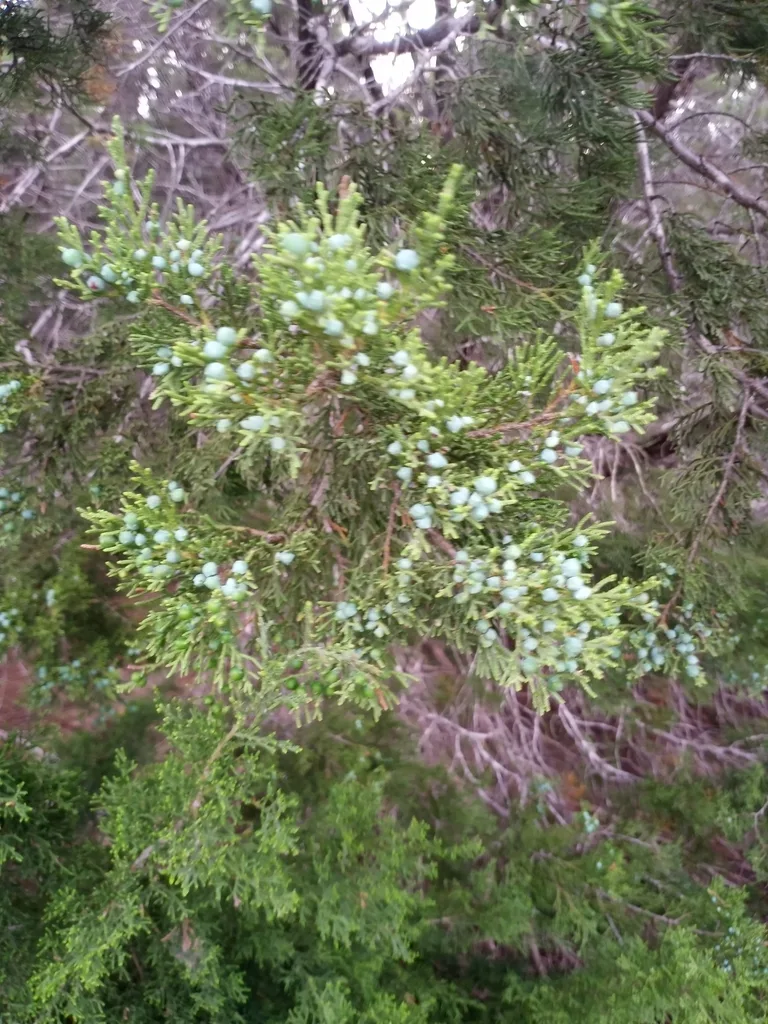
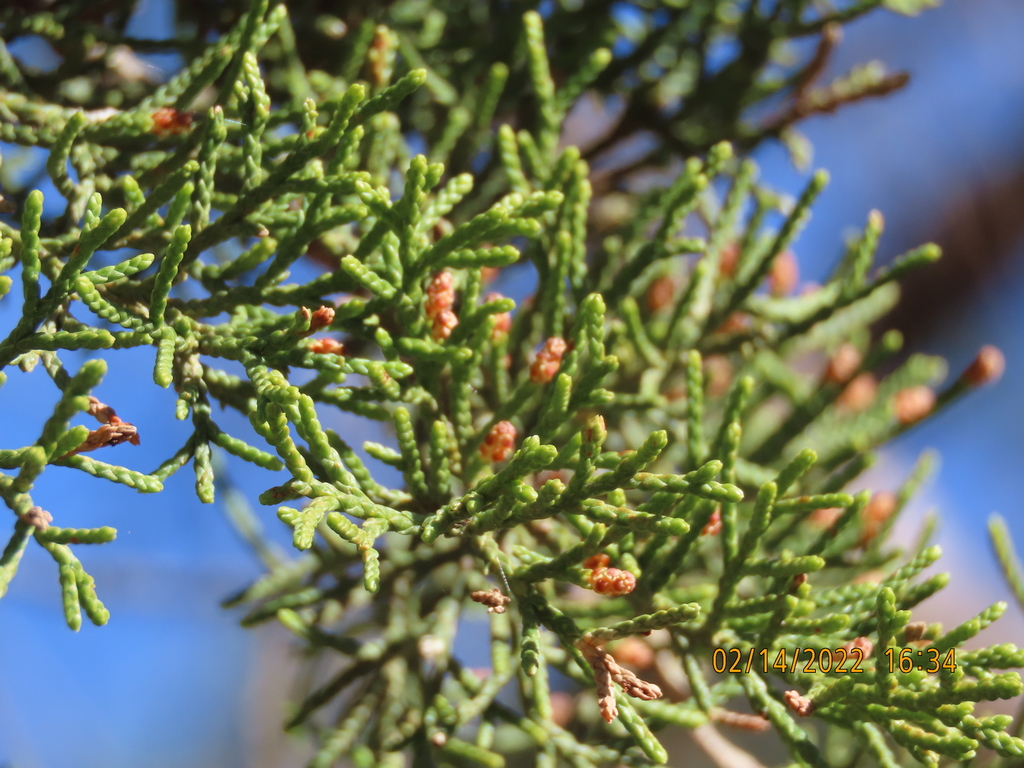
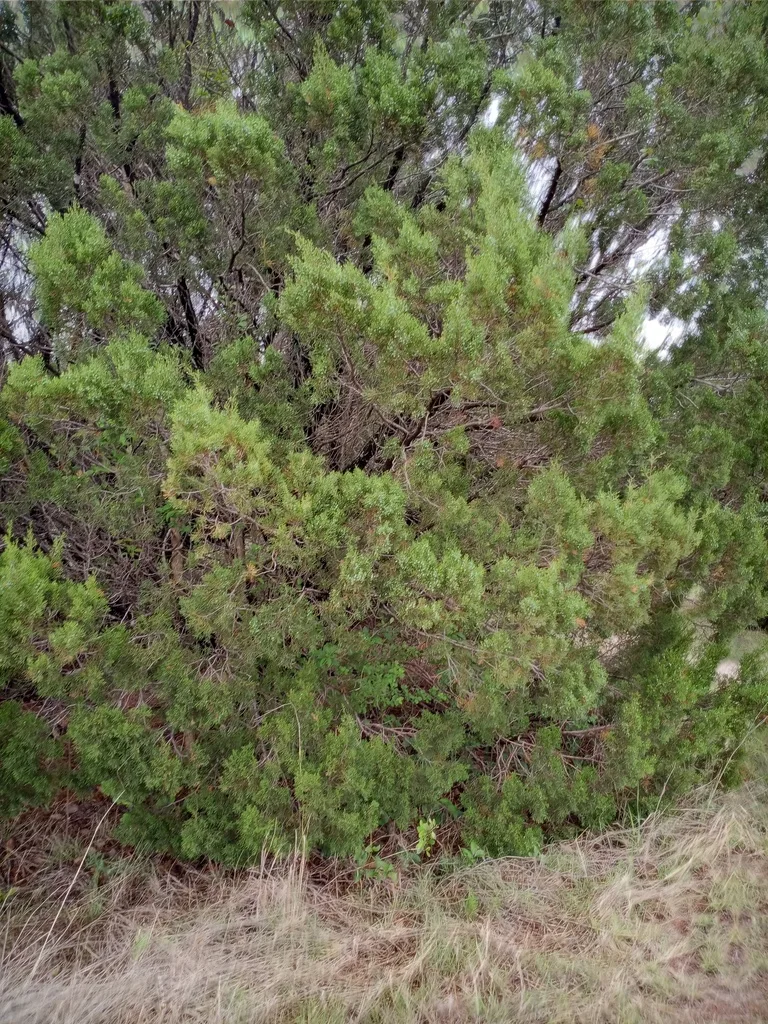
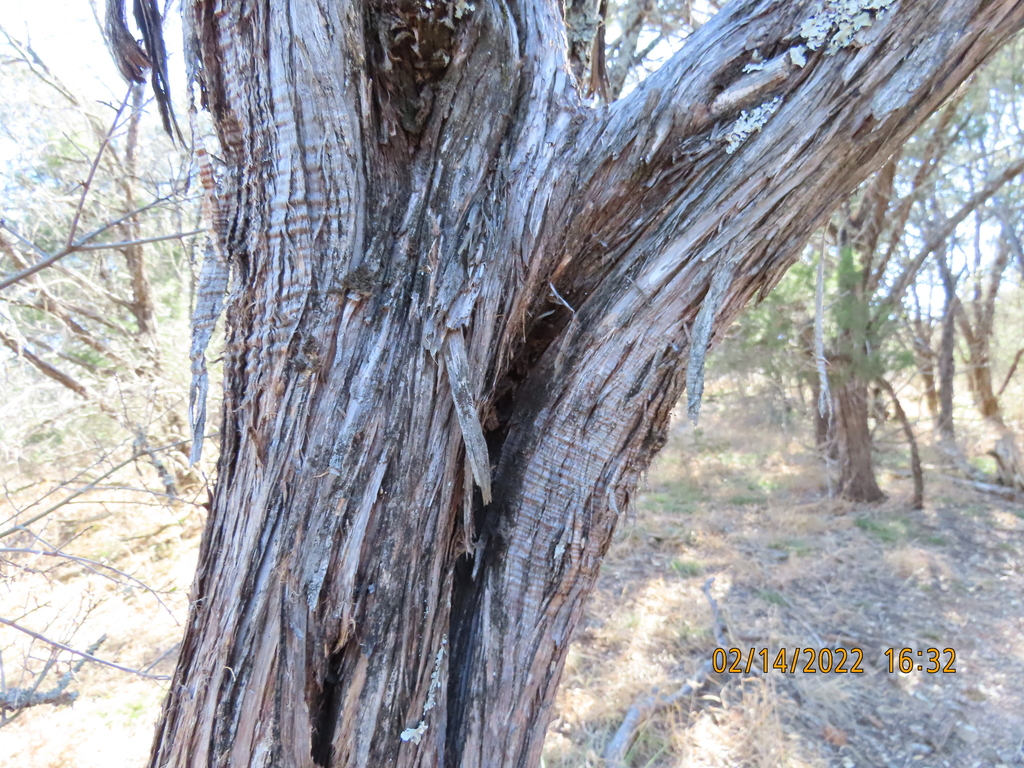
Blooms December-February. A single or multi-trunked tree with characteristic shaggy bark and fragrant, dark-green, scaly foliage. Flowers are inconspicuous. Female trees produce blue berry-like cones. Male trees produce cream to reddish brown pollen cones. Branches show a burnt gold appearance in winter due to pollen. The bark is used for nesting material, especially the rare golden-cheeked warbler. Larval host: Juniper Hairstreak and Olive butterflies.
Previous Scientific Name(s): Juniperus ashei var. ovata, Juniperus ashei x ovata, Juniperus occidentalis var. conjungens, Juniperus occidentalis var. texana, Juniperus sabinoides, Juniperus ovata

References

1) Griffith, Bryce, Omernick & Rodgers (2007). Ecoregions of Texas, 2) Miller, George O., Landscaping with Native Plants of Texas 2nd Ed., 2013, pg 48, 3) Wasowski and Wasowski, Native Texas Plants Landscaping Region by Region, 1991, pg. 314-315. 4) https://www.wildflower.org/plants/result.php?id_plant=JUAS. 5) https://portal.torcherbaria.org/portal/taxa/index.php?taxon=Juniperus+ashei&formsubmit=Search+Terms. 6) http://bonap.net/TDC/Image/Map?taxonType=Species&taxonId=8234&locationType=County&mapType=Normal, 7) https://www.itis.gov/servlet/SingleRpt/SingleRpt?search_topic=TSN&search_value=194812#null, 8) Elizabeth McGreevy, 2021, "Wanted! Mountain Cedars: Dead and Alive". 608 pgs.
Material Treatment Method Collection References
Seed No Treatment Seed can be sown outdoors in fall. Germination is poor, sow a large number of seeds. Seedlings will grow quite slowly, and it may take two more full years before a seedling is sufficiently large to plant in the landscape. Harvest the seed 'green' (when the embryo has fully formed but before the seedcoat has hardened. Collect seeds from late summer through fall when it has turned its ripe color. Seed can be extracted by running the fruits through a macerator. Thoroughly dry and clean seeds to avoid mold and overheating. 1) https://pfaf.org/user/Plant.aspx?LatinName=Juniperus+ashei 2) https://www.wildflower.org/plants/result.php?id_plant=JUAS
Seed Scarification, Stratification The seed has a hard seedcoat and can be very slow to germinate, requiring a cold period followed by a warm period and then another cold spell, each of 2 - 3 months duration. Soaking the seed for 3 - 6 seconds in boiling water may speed up the germination process. The seed is best sown as soon as it is ripe in a cold frame. Some might germinate in the following spring, though most will take another year. The seedlings can be potted up into individual pots when they are large enough to handle. Grow on in pots until large enough, then plant out in early summer. Seedlings will grow quite slowly, and it may take two more full years before a seedling is sufficiently large to plant in the landscape. When stored dry, the seed can remain viable for several years. https://pfaf.org/user/Plant.aspx?LatinName=Juniperus+ashei
Stem Cutting Rooting hormone encourages root development in cuttings of ashe juniper. The application of rooting hormone increases the success rate of propagation by stimulating root growth at the cut site, which is especially important for woody plants like Ashe Juniper. A medium such as perlite, vermiculite, or a sand and peat mix supports the cuttings while draining excess water, which helps prevent rot and supports the development of healthy roots. A Propagator or Humidity Dome Maintains high humidity around the cuttings of ashe juniper, which helps prevent water loss through the leaves while the cutting is developing roots. A stable environment is key for successful propagation. A misting bttle allows for gentle watering of ashe juniper's cuttings without disturbing the rooting medium. Keeping the cuttings moist is essential, but overwatering can lead to rot, making controlled misting ideal. After the cutting of ashe juniper has successfully rooted, usually noticed by new growth, gradually acclimate it to normal conditions over the course of a week by increasing ventilation. Subsequently, provide regular care consistent with mature ashe juniper, which includes placing it in a site with full sun to partial shade and watering when the top inch of soil becomes dry. During the growing season, feed with a balanced, slow-release fertilizer. Ensure good drainage to prevent root rot and prune annually to maintain size and shape. this can require anywhere from six to 12 weeks. Essential for taking cuttings from ashe juniper, sharp pruning shears ensure clean cuts that minimize damage to the parent plant and improve the cuttings' chances of rooting. A clean cut reduces the risk of infection and encourages quicker healing. 1) https://www.thespruce.com/how-to-grow-and-care-for-common-juniper-5080172 2) https://www.picturethisai.com/care/propagate/Juniperus_ashei.html

About the Region

2026 Fall Symposium Logo

This low-elevations region of Texas extends inland from the barrier islands, about 60 or so miles, and stretches from Brownsville to Louisiana. In total, it covers about 9.5 million acres, with a high point of 150 feet in elevation. More than 1000 species of plants can be found in this region. On the southern end, species more common in Mexico (such as Sabal mexicana) and Central America occur.

The barrier islands provide us with dune systems, and clay flats to the inland side, which have species found in these areas alone. Many plants here, such as Ipomoea pes-caprae (beach morning glory), can be found throughout tropical regions of the globe. I’ve encountered the same species on the beaches of Guam.

Once inland, vast marshes and wet prairies occur. Occasionally, oak (Quercus fusiformis) groves can be found. Common grasses include species of Bothriochloa, Paspalum, and Sporobolus; eastern gamagrass (Tripsacum dactyloides); and switchgrass (Panicum species). Many rivers and creeks cut through the Gulf Prairies, and along these riparian areas various species of trees, Sabal minor, and other plants adapted to clay soils can be found. Due to overgrazing, farming, and fire suppression, woody species such as mesquite (Prosopis glandulosa) and huisache (Acacia farnesiana), and invasive species such as chinaberry (Melia azedarach), Brazilian pepper (Schinus terebinthifolius), and Chinese tallow (Sapium sebiferum) have increased and displaced our native flora.

Source: Wildflowers of Texas by Michael Eason