
Lizard Tail

Saururus cernuus

Other common name(s):

Lizard's Tail, Breastweed, Water Dragon

Family:

Saururaceae (Lizard's Tail Family)

Plant Ecoregion Distribution Map

This map uses data from the US EPA. EPA  servers have been offline frequently so maps may not display. We are working on a solution.

East Central Texas Plains, Gulf Coast Prairies and Marshes, Texas Blackland Prairies, Western Gulf Coastal Plain
Bastrop Lost Pines, Floodplains and Low Terraces2, Northern Post Oak Savanna, Northern Prairie Outliers, San Antonio Prairie, Southern Post Oak Savanna
Floodplains and Low Terraces4, Northern Humid Gulf Coastal Prairies, Texas-Louisiana Coastal Marshes
Floodplains and Low Terraces1, Northern Blackland Prairie, Southern Blackland Prairie
Flatwoods, Floodplains and Low Terraces3, Pleistocene Fluvial Terraces, Red River Bottomlands, Southern Tertiary Uplands, Tertiary Uplands

Plant Characteristics

Growth Form

Herbaceous, Wetland

Height

1
to
3
ft.

Spread

1
to
3
ft.

Leaf Retention

Deciduous

Lifespan

Perennial

Habitat and Care Requirements

Soil Type(s)

Brackish, Moist, Mud, Wet

Light Requirement

Sun, Part Shade

Water Requirement

High

Native Habitat

Riparian, Wetland

Bloom and Attraction

Bloom Color

White

Bloom Season

Spring, Summer

Seasonal Interest

Forage, Seeds

Wildlife Benefit

Aquatic Wildlife, Birds

Maintenance

Can also be grown in containers or as a spreading groundcover in moist soils. Colonizes large areas so give lots of space or thin as needed for smaller areas. The common name refers to the long, finger-like flowers that appear during the summer months. Crushed foliage has a pleasant, sassafras aroma. Set up a pond or a water collection tank near a downspout to supplement water. Native habitat: shallow water at the edges of ponds, streams, and swamps, typically growing best in water depths of 2-6 inches, fresh or slightly brackish water.

Description

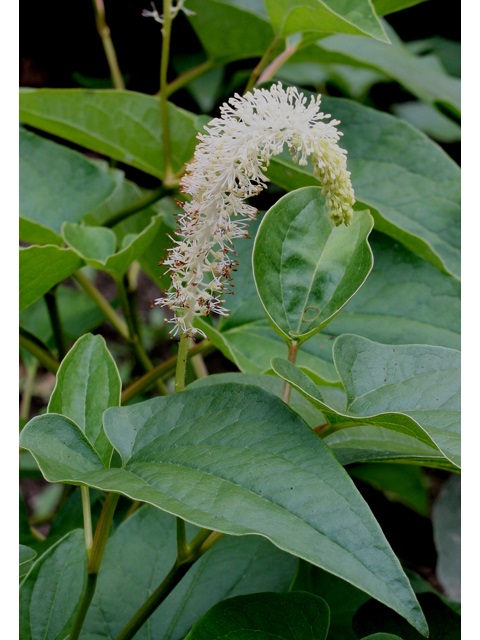
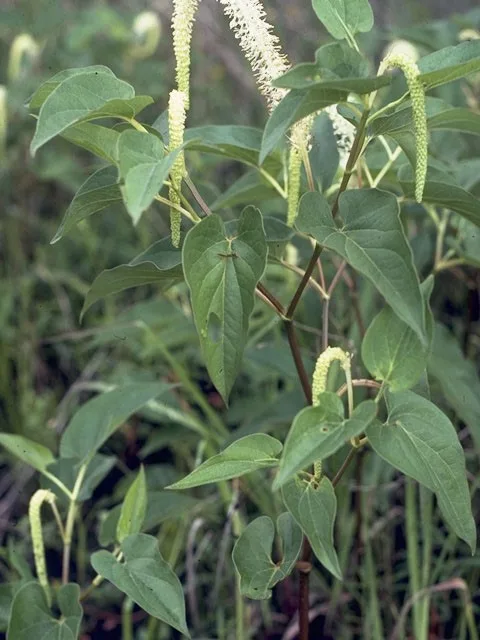
Blooms March-September. An upright form with lance-shaped to nearly triangular leaves, with a heart-shaped base. Slender, nodding, solitary spikes of tiny, white, fragrant flowers occur opposite a leaf. Produces a dry fruit that splits into single-seeded parts when ripe. Wood ducks and other birds eat the seeds. Turtles and beavers eat the foliage. May also be eaten by livestock but can be toxic in large quantities. Larval host: Buffalo Moth.
Material Treatment Method Collection References
Offshoots Division The bare stem can then be planted into the substrate, ensuring the stem remains intact. Over a few weeks, the cutting will develop its own root system and begin to establish itself. In the wild, this plant can also spread by sending out runners, allowing it to colonize small areas of shallow water or wetlands. Take side shoots from the mother plant and carefully remove the lower two pairs of leaves to expose the stem. https://en.aqua-fish.net/plants/saururus-cernuus#:~:text=Saururus%20cernuus%20is%20propagated%20primarily,beauty%20of%20the%20water's%20edge.
Seed Stratification Seeds are stored cold and dry in sealed, airtight plastic bags through the winter in a refrigerator at 2 C (35 F). In January, about 4 weeks prior to seeding, remove seeds from cold storage and soak them in containers of water for 2 weeks. Seeds are covered with twice their volume in water and remain in the same water for the duration of the soaking period. Seeds are then mixed with damp, sterile sand, at a ratio of 1 part seed to 5 parts sand by volume, and subjected to cold, moist stratification (refrigeration at 2 to 4 C [35 to 40 F) for 2 weeks. Stratified seeds are surface sown in open flats (approximately 25 cm wide X 50 cm long X 6 cm deep (10 X 20 X 2.5 in) containing a soilless mix (55% sphagnum, 30% vermiculite, 15% perlite by volume); a variable amount of fine sand is added to the mix to provide aeration. Two hundred to 400 seeds are sown per flat, and covered with a dusting of the germinating mix (applied by sieve over the seeds). Seeded flats are then placed into solid bottom flats filled with water to allow saturation of the planting medium. The flat-in-flats are arranged on bottom-heated greenhouse benches. Medium temperature is maintained at approximately 21 to 23 C (70 to 74 F) during germination. Greenhouse air temperature ranges from a low of 4 C (40 F) to a high of 27 C (80 F). Germination usually occurs within 3 weeks, at which time the flats in their solid-bottom watering trays are moved to a mist bench. The mist cycle is set at 2 to 8 s every 10 min, and the flats continue to be bottom heated. Trays remain under mist for about 2 weeks, or until seedlings have 2 sets of true leaves and are about 2.5 cm (1 in) tall. Seedlings are transplanted from the open flats to 50-cell plug trays, 1 seedling to each cell. Once lizard's tail seedlings have been transplanted, the plug trays are moved outdoors to 4.5 X 30 m (15 X 100 ft) unheated, uncovered huts with overhead irrigation, where they receive 15 min of watering per day to saturate the growing medium. Seedheads are held over paper bags andthe 1-seeded achenes (about 3 mm (0.125 in) in diameter) are stripped into the bags by hand. https://npn.rngr.net/renderNPNProtocolDetails?selectedProtocolIds=saururaceae-saururus-460&referer=wildflower#:~:text=Seeds%20are%20stored%20cold%20and,%C3%B8F%5D)%20for%202%20wk.

About the Region

2026 Fall Symposium Logo

This low-elevations region of Texas extends inland from the barrier islands, about 60 or so miles, and stretches from Brownsville to Louisiana. In total, it covers about 9.5 million acres, with a high point of 150 feet in elevation. More than 1000 species of plants can be found in this region. On the southern end, species more common in Mexico (such as Sabal mexicana) and Central America occur.

The barrier islands provide us with dune systems, and clay flats to the inland side, which have species found in these areas alone. Many plants here, such as Ipomoea pes-caprae (beach morning glory), can be found throughout tropical regions of the globe. I’ve encountered the same species on the beaches of Guam.

Once inland, vast marshes and wet prairies occur. Occasionally, oak (Quercus fusiformis) groves can be found. Common grasses include species of Bothriochloa, Paspalum, and Sporobolus; eastern gamagrass (Tripsacum dactyloides); and switchgrass (Panicum species). Many rivers and creeks cut through the Gulf Prairies, and along these riparian areas various species of trees, Sabal minor, and other plants adapted to clay soils can be found. Due to overgrazing, farming, and fire suppression, woody species such as mesquite (Prosopis glandulosa) and huisache (Acacia farnesiana), and invasive species such as chinaberry (Melia azedarach), Brazilian pepper (Schinus terebinthifolius), and Chinese tallow (Sapium sebiferum) have increased and displaced our native flora.

Source: Wildflowers of Texas by Michael Eason