

Blue Mistflower

Conoclinium coelestinum

Other common name(s):

Blue Boneset, Wild Ageratum

Family:

Asteraceae (Aster Family)

Plant Ecoregion Distribution Map

This map uses data from the US EPA. EPA  servers have been offline frequently so maps may not display. We are working on a solution.

East Central Texas Plains, Edwards Plateau, Gulf Coast Prairies and Marshes, Southern Texas Plains, Texas Blackland Prairies, Western Gulf Coastal Plain
Bastrop Lost Pines, Floodplains and Low Terraces2, Northern Post Oak Savanna, Northern Prairie Outliers, San Antonio Prairie, Southern Post Oak Savanna
Balcones Canyonlands, Llano Uplift
Floodplains and Low Terraces4, Lower Rio Grande Alluvial Floodplain, Northern Humid Gulf Coastal Prairies, Texas-Louisiana Coastal Marshes
Rio Grande Floodplain and Terraces
Floodplains and Low Terraces1, Northern Blackland Prairie, Southern Blackland Prairie
Flatwoods, Floodplains and Low Terraces3, Pleistocene Fluvial Terraces, Red River Bottomlands, Southern Tertiary Uplands, Tertiary Uplands

Plant Characteristics

Growth Form

Herbaceous

Height

.75
to
3
ft.

Spread

1
to
2
ft.

Leaf Retention

Deciduous

Lifespan

Perennial

Habitat and Care Requirements

Soil Type(s)

Calcareous, Clay, Loam, Moist, Sand

Light Requirement

Sun, Part Shade

Water Requirement

Medium

Native Habitat

Grassland, Riparian, Woodland Edge

Bloom and Attraction

Bloom Color

Blue

Bloom Season

Summer, Fall

Seasonal Interest

Nectar, Pollen, Seeds

Wildlife Benefit

Bees, Birds, Butterflies

Maintenance

Low maintenance. Spreads by rhizomes so give lots of room. Roots are shallow and easy to pull out if thinning is needed to fit garden space. Good as a border plant or fill space in front of taller plants. Tolerates poor drainage. Can grow in full sunlight with extra water, but does better if shaded in the afternoon in the heat of summer. Can be grown in container gardens. Native habitat: woodland margins, stream banks, wet meadows.

Description

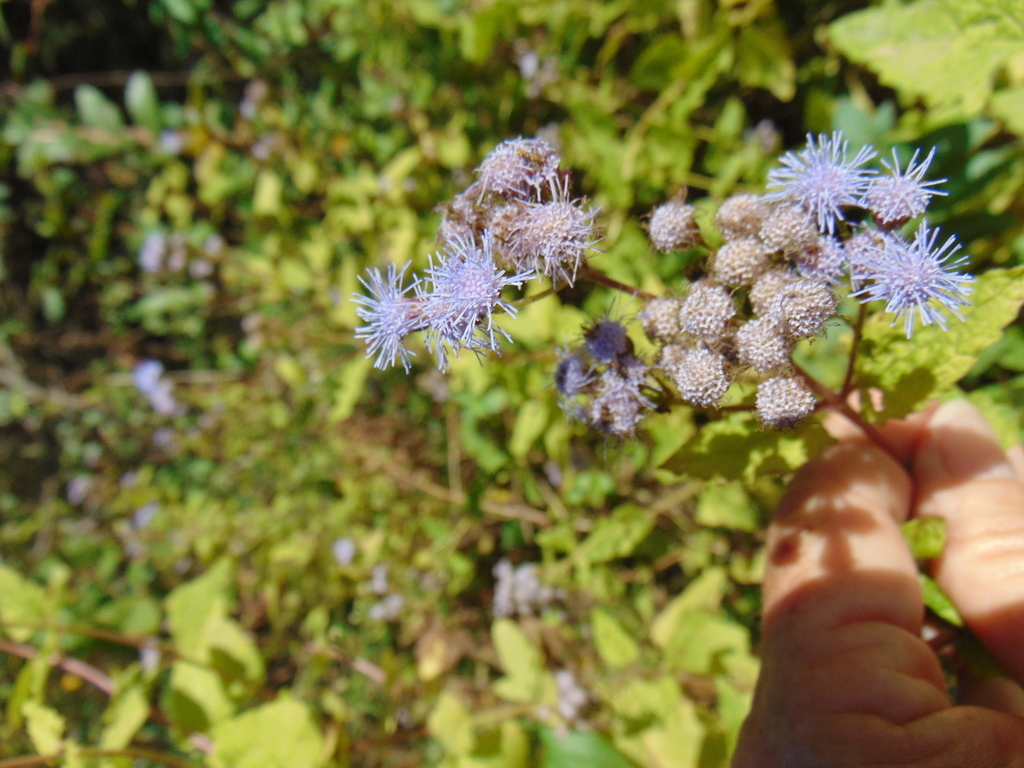
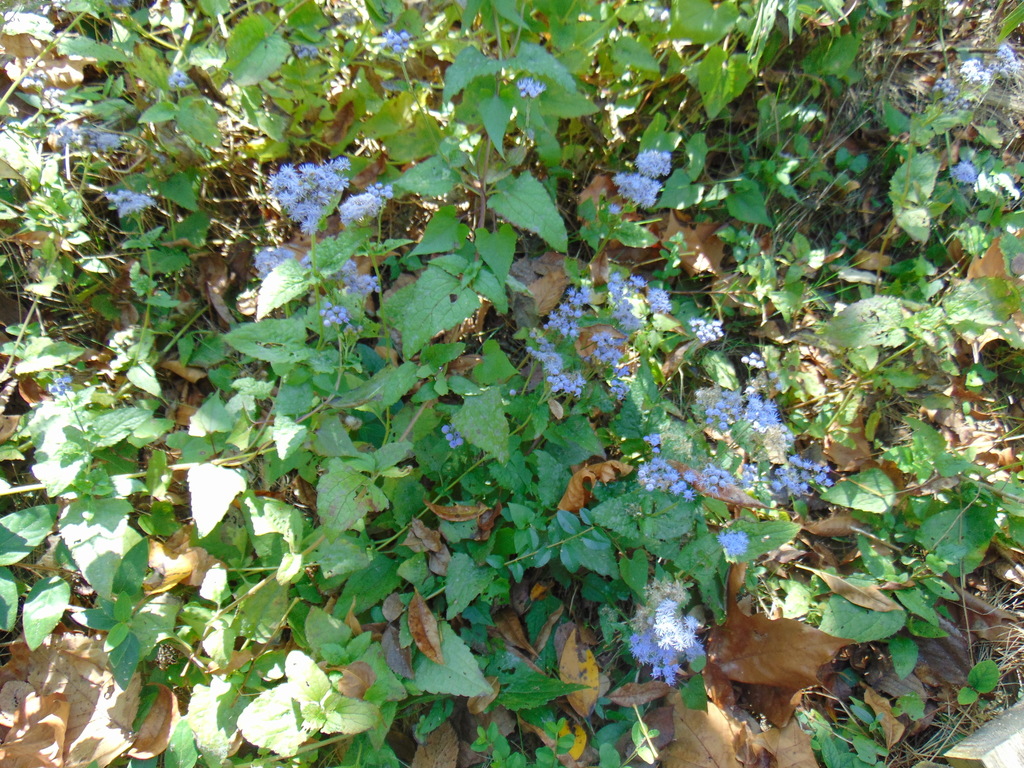
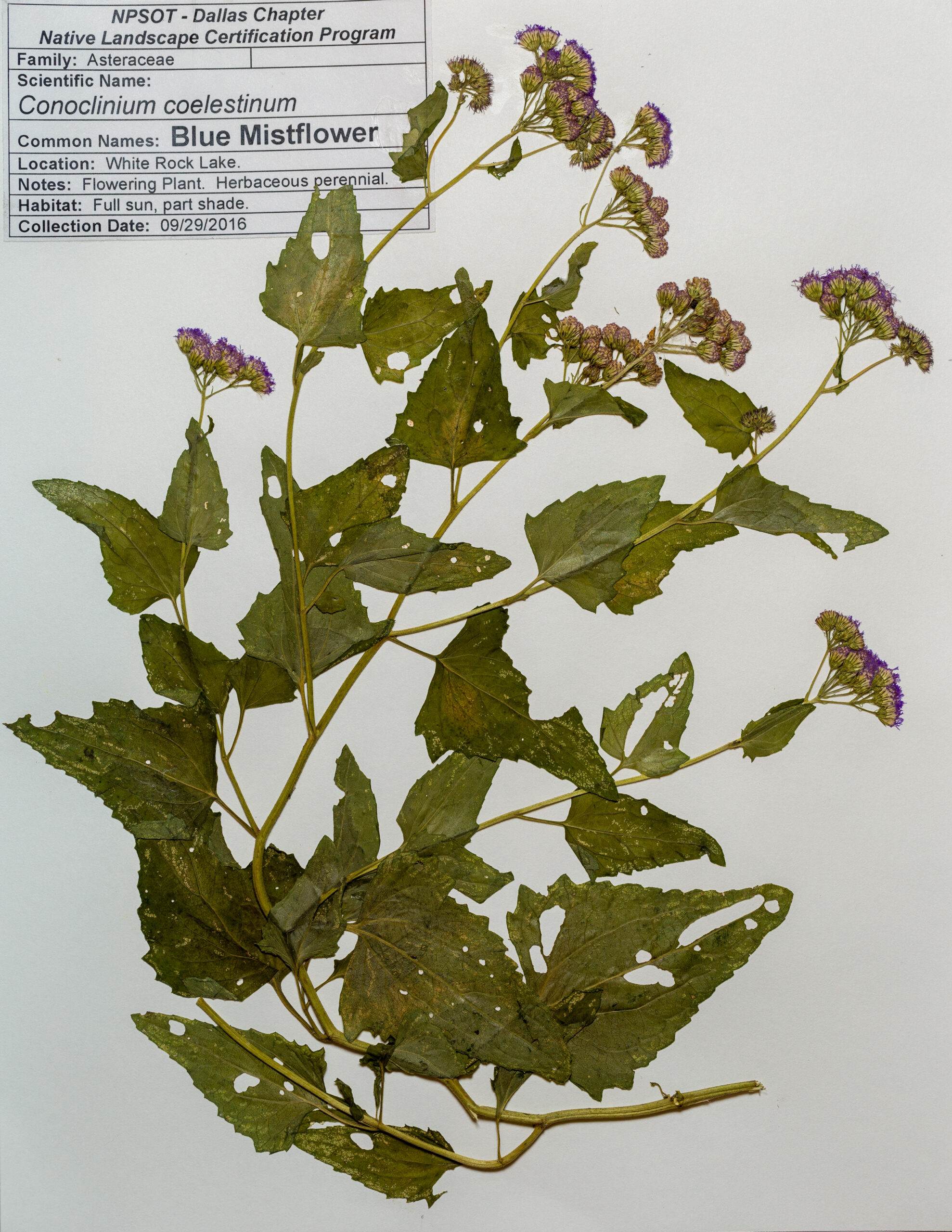
Blooms July-November. Stems are usually erect, with somewhat triangular, bluntly toothed leaves. Fluffy-edged light blue flowers, grow in flat top clusters at the end of stems. The fruit is a cypsela: a dry, one-seeded fruit, usually topped by pappus.
Previous Scientific Name(s): Eupatorium coelestinum

References

1) Griffith, Bryce, Omernick & Rodgers (2007). Ecoregions of Texas. 2) https://www.wildflower.org/plants/result.php?id_plant=COCO13. 3) https://portal.torcherbaria.org/portal/taxa/index.php?taxon=Conoclinium+coelestinum&formsubmit=Search+Terms. 4) http://bonap.net/TDC/Image/Map?taxonType=Species&taxonId=2628&locationType=County&mapType=Normal. 5) https://www.itis.gov/servlet/SingleRpt/SingleRpt. 6) Wasowski, Sally and Andy, 1991, Native Texas Plants, Landscaping Region by Region, pg 188. 7) Nokes, Jill, 2001, How to Grow Native Plants of Texas and the Southwest, pg 266., 8) https://seedsource.com/blue-mistflower/
Material Treatment Method Collection References
Seed Stratification Give them at least three weeks in 35°F (2°C). Then sow them on clean, moist soil and press seeds into the soil surface so they have good soil contact, but don’t bury them. Keep the seeds warm and lightly moist until they germinate in approximately one to two weeks. Alternatively, sow them outdoors in fall in areas with substantial winters. If sowing the seeds indoors, transplant the seedlings to a protected outdoor location once the weather has warmed and continue to keep them moist. When the seedlings are several inches tall, transplant them to their permanent location. Seeds started in early spring are capable of blooming by the fall of their first year. If they don’t have enough time to bloom in their first year, they will certainly bloom in their second year of growth. Seeds can be allowed to dry out before sowing. 1) https://www.epicgardening.com/blue-mistflower/ 2) https://www.joyfulbutterfly.com/product/blue-mistflower-seeds-conoclinium-coelestinum/#:~:text=How%20to%20Start%20Blue%20Mistflower,a%20mature%20plant%20to%20propagate.
Stem Cutting Remove any leaves from the lower third to half of the stem, leaving a few pairs of healthy leaves at the top. Place the cutting into a cup of water so the bare stem (not the leaves) is submerged. Most of your stem cuttings should form roots within a few weeks, and these successful cuttings can then be transplanted into pots or permanent in-ground locations. Take a four to six-inch cutting from a fresh, healthy stem. https://www.epicgardening.com/blue-mistflower/
Clump Division Examine the clump for natural divisions, using your fingers or a sharp knife to separate the blue mistflower into smaller sections. Each section should have a good amount of roots and some top groLook over the roots of each division, trimming away any that are damaged or dead. Aim to create a compact, healthy root system that will establish quickly when replanted. wth. Plant each division at the same depth it was growing at originally, spacing them appropriately for the expected size at maturity. Fill in around the roots with soil amended with compost, and firm the soil gently to remove air pockets. Water the new divisions thoroughly to settle the soil and ensure that there are no air gaps around the roots. The water also provides necessary hydration to help the roots recover and grow. Over the next few weeks, monitor the blue mistflower closely for signs of water stress or sun scorch, adjusting your care routine as necessary to encourage healthy growth. Carefully dig around the perimeter of the blue mistflower's clump, ensuring you are deep enough to avoid cutting through the root system. Gently lift the entire clump out of the ground. https://www.picturethisai.com/care/propagate/Conoclinium_coelestinum.html#:~:text=A%20sharp%20knife%20or%20pruning,Rooting%20hormone
Seed No Treatment Seeds germinate readily without pretreatment and fill plug trays within a few weeks. Seedlings grown in communal flats or multiple seedlings per plug can easily be barerooted for transplanting. Collect seeds when fruit tissue turns dark brown to grey and is dry; avoid collecting when fruits moist and do not dislodge easily from plant to ensure seed maturity. Seeds germinate readily without pretreatment and fill plug trays within a few weeks. Seedlings grown in communal flats or multiple seedlings per plug can easily be barerooted for transplanting. https://longleafpine.fnpschapters.org/data/uploads/propagation-manual-for-fl-panhandle-native-plants/conoclinum-coelestinum.pdf

About the Region

2026 Fall Symposium Logo

This low-elevations region of Texas extends inland from the barrier islands, about 60 or so miles, and stretches from Brownsville to Louisiana. In total, it covers about 9.5 million acres, with a high point of 150 feet in elevation. More than 1000 species of plants can be found in this region. On the southern end, species more common in Mexico (such as Sabal mexicana) and Central America occur.

The barrier islands provide us with dune systems, and clay flats to the inland side, which have species found in these areas alone. Many plants here, such as Ipomoea pes-caprae (beach morning glory), can be found throughout tropical regions of the globe. I’ve encountered the same species on the beaches of Guam.

Once inland, vast marshes and wet prairies occur. Occasionally, oak (Quercus fusiformis) groves can be found. Common grasses include species of Bothriochloa, Paspalum, and Sporobolus; eastern gamagrass (Tripsacum dactyloides); and switchgrass (Panicum species). Many rivers and creeks cut through the Gulf Prairies, and along these riparian areas various species of trees, Sabal minor, and other plants adapted to clay soils can be found. Due to overgrazing, farming, and fire suppression, woody species such as mesquite (Prosopis glandulosa) and huisache (Acacia farnesiana), and invasive species such as chinaberry (Melia azedarach), Brazilian pepper (Schinus terebinthifolius), and Chinese tallow (Sapium sebiferum) have increased and displaced our native flora.

Source: Wildflowers of Texas by Michael Eason