
Lyre Leaf Sage

Salvia lyrata

Other common name(s):

Cancer Weed

Family:

Lamiaceae (Mint Family)

Plant Ecoregion Distribution Map

This map uses data from the US EPA. EPA  servers have been offline frequently so maps may not display. We are working on a solution.

East Central Texas Plains, Gulf Coast Prairies and Marshes, Texas Blackland Prairies, Western Gulf Coastal Plain
Bastrop Lost Pines, Floodplains and Low Terraces2, Northern Post Oak Savanna, Northern Prairie Outliers, San Antonio Prairie, Southern Post Oak Savanna
Northern Humid Gulf Coastal Prairies, Texas-Louisiana Coastal Marshes
Floodplains and Low Terraces1, Northern Blackland Prairie, Southern Blackland Prairie
Flatwoods, Floodplains and Low Terraces3, Pleistocene Fluvial Terraces, Red River Bottomlands, Southern Tertiary Uplands, Tertiary Uplands

Plant Characteristics

Growth Form

Groundcover, Herbaceous

Height

1
to
2
ft.

Spread

.75
to
1
ft.

Leaf Retention

Evergreen

Lifespan

Perennial

Habitat and Care Requirements

Soil Type(s)

Clay, Dry, Loam, Moist, Rocky, Sand, Well Drained

Light Requirement

Sun, Part Shade, Shade

Water Requirement

Low, Medium

Native Habitat

Grassland, Woodland

Bloom and Attraction

Bloom Color

Blue, Purple

Bloom Season

Spring

Seasonal Interest

Nectar, Pollen

Wildlife Benefit

Bees, Butterflies, Hummingbirds

Maintenance

Makes excellent ground cover. It even takes mowing and can be walked on. Great for dry shade, but will grow in full sun. Spreads easily from seed in moist areas. Remove spent flowers if seeding is not desired. Tolerates periodic flooding and drought as well as overwatering. Can be gown in container gardens. Native habitat: rich, rocky, open woods, wet to dry meadows, open woods, and clearings,

Description

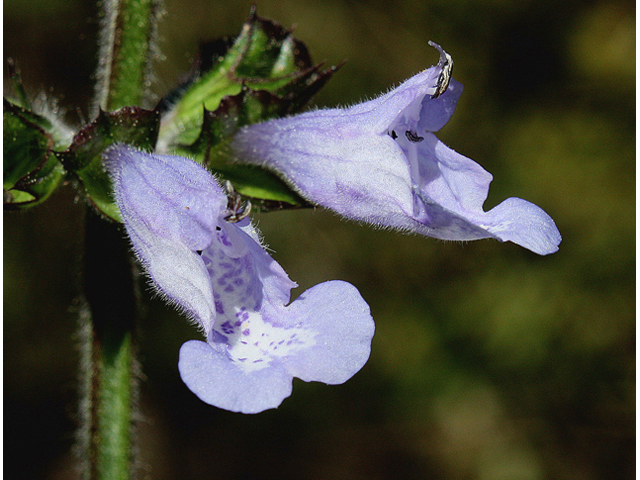
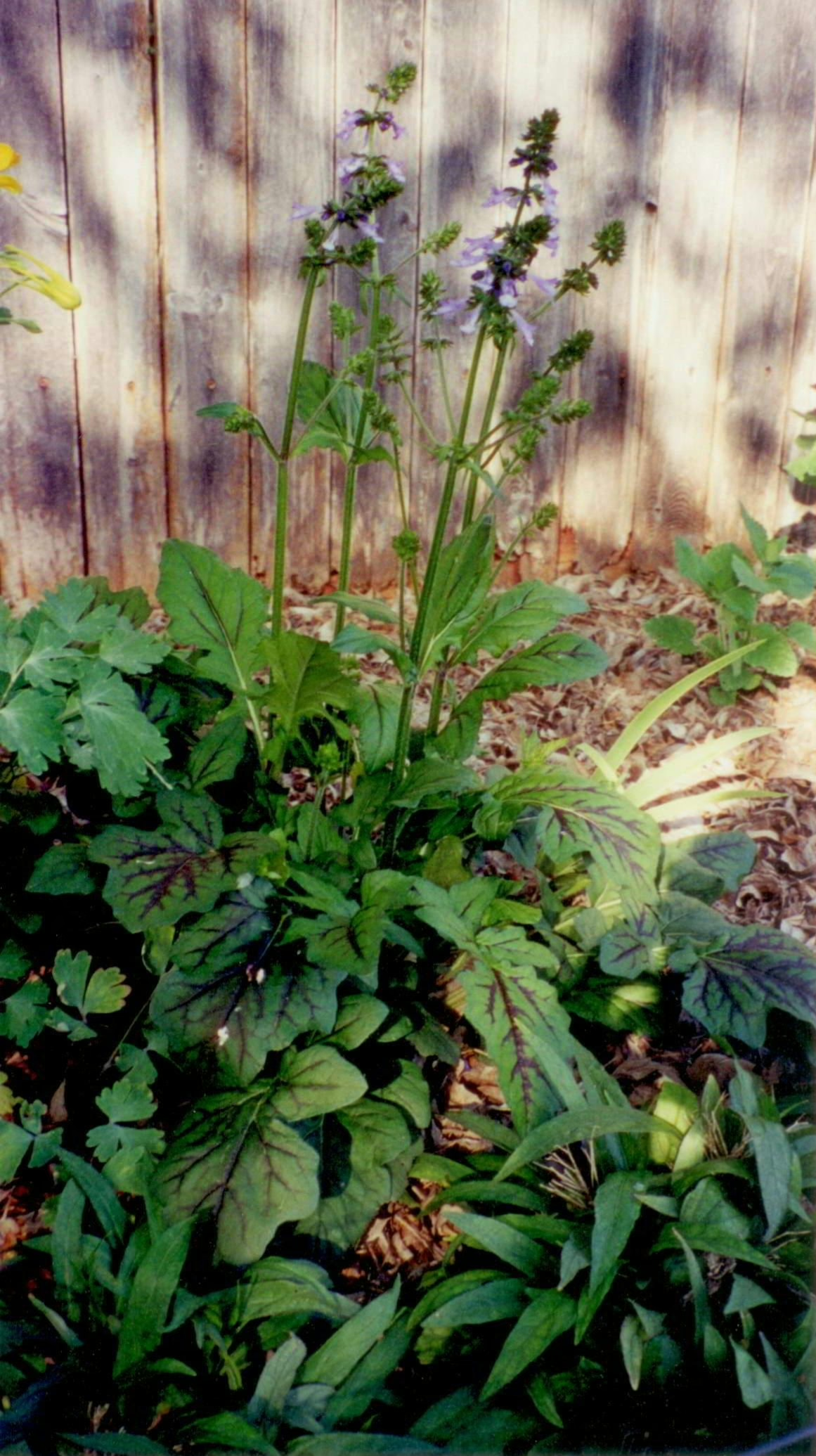
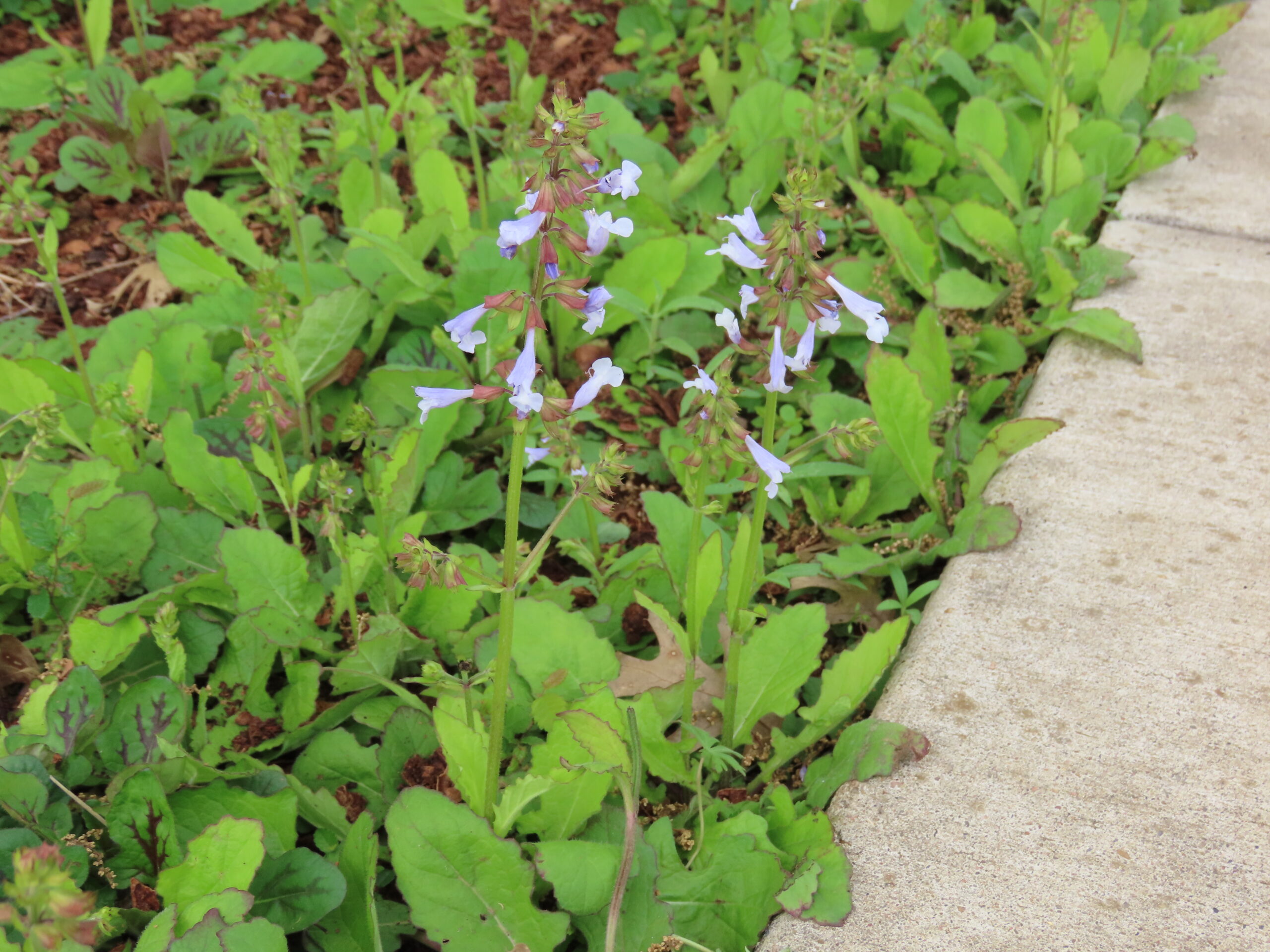
Blooms March-June. Lyreleaf Sage has an upright form with a rosette of basal leaves throughout the year. The leaves are deeply 3-lobed, with a few simple leaves higher up on the stem. It has the typical square stem and 2-lipped blossom of the mints. The tubular flowers are arranged in whorls around a terminal spike. The fruit is a tan nutlet.
Material Treatment Method Collection References
Clump Division To divide, carefully separate the plant into smaller sections, ensuring each section has roots attached, and replant them in suitable soil. Division is best done in early spring or fall. 1) https://www.wildflower.org/plants/result.php?id_plant=SALY2 2) https://earthone.io/plant/salvia%20lyrata
Seed Stratification Cold-moist stratification period is required for germination of Salvia seed. This species does require light for germination so should not be covered with more than 1/8 of an inch. Collect the seeds as the capsules begin to dry but before they have dropped the seeds. Spread seeds in thin layers to dry a few days before storing in sealed, refrigerated containers. 1) https://www.wildflower.org/plants/result.php?id_plant=SALY2 2) https://earthone.io/plant/salvia%20lyrata 3) https://sharonsflorida.com/plants-page/native-wildflowers/lyreleaf-sage/#:~:text=Propagation,watered%20until%20it%20becomes%20established.
Stem Cutting Using a clean, sharp pair of scissors or pruning shears, cut just below a leaf node. Remove the leaves from the lower half of the cutting to prevent rot. Although optional, applying rooting hormone to the cut end can enhance root development. Dip the end of the cutting into a small amount of rooting hormone powder or liquid. Fill a planting container with a well-draining potting mix suitable for lyreleaf sage. Make a hole in the soil with a pencil or your finger, and insert the cutting about 1 to 2 inches deep, ensuring at least one leaf node is below the surface. Water the cuttings gently but thoroughly to settle the soil around them. Make sure the soil is consistently moist, but not waterlogged, to promote root growth. Cover the container with a plastic bag or place it in a propagator to create a humid atmosphere. This mimics a greenhouse effect and helps prevent the cuttings from drying out. Place the container in a bright location with indirect sunlight. Avoid full sun exposure as it can cause the cuttings to overheat and wilt. Check the cuttings every few days for soil moisture and to aerate by briefly removing the cover. Look out for new growth as a sign of rooting, typically within 2-6 weeks. Once the cuttings have developed a good root system, transplant them into individual pots or directly into the garden. Be gentle to avoid damaging the delicate roots. Gradually acclimate the new lyreleaf sage plants to outdoor conditions if they were rooted indoors. This process should take place over 7-10 days before planting in their final location. Choose healthy, non-flowering stems from an established lyreleaf sage plant. Look for stems with new growth that are about 6 to 8 inches long. https://www.picturethisai.com/care/propagate/Salvia_lyrata.html

About the Region

2026 Fall Symposium Logo

This low-elevations region of Texas extends inland from the barrier islands, about 60 or so miles, and stretches from Brownsville to Louisiana. In total, it covers about 9.5 million acres, with a high point of 150 feet in elevation. More than 1000 species of plants can be found in this region. On the southern end, species more common in Mexico (such as Sabal mexicana) and Central America occur.

The barrier islands provide us with dune systems, and clay flats to the inland side, which have species found in these areas alone. Many plants here, such as Ipomoea pes-caprae (beach morning glory), can be found throughout tropical regions of the globe. I’ve encountered the same species on the beaches of Guam.

Once inland, vast marshes and wet prairies occur. Occasionally, oak (Quercus fusiformis) groves can be found. Common grasses include species of Bothriochloa, Paspalum, and Sporobolus; eastern gamagrass (Tripsacum dactyloides); and switchgrass (Panicum species). Many rivers and creeks cut through the Gulf Prairies, and along these riparian areas various species of trees, Sabal minor, and other plants adapted to clay soils can be found. Due to overgrazing, farming, and fire suppression, woody species such as mesquite (Prosopis glandulosa) and huisache (Acacia farnesiana), and invasive species such as chinaberry (Melia azedarach), Brazilian pepper (Schinus terebinthifolius), and Chinese tallow (Sapium sebiferum) have increased and displaced our native flora.

Source: Wildflowers of Texas by Michael Eason