
Poverty Weed

Baccharis neglecta

Other common name(s):

Roosevelt Weed, False Willow, Jara Dulce

Family:

Asteraceae (Aster Family)

Plant Ecoregion Distribution Map

This map uses data from the US EPA. EPA  servers have been offline frequently so maps may not display. We are working on a solution.

Cross Timbers, East Central Texas Plains, Edwards Plateau, Gulf Coast Prairies and Marshes, Southern Texas Plains, Texas Blackland Prairies
Carbonate Cross Timbers, Limestone Cut Plain
Southern Post Oak Savanna
Balcones Canyonlands, Edwards Plateau Woodland, Llano Uplift
Coastal Sand Plain, Floodplains and Low Terraces4, Laguna Madre Barrier Island and Coastal Marshes, Lower Rio Grande Alluvial Floodplain, Lower Rio Grande Valley, Mid-Coast Barrier Islands and Coastal Marshes, Northern Humid Gulf Coastal Prairies, Southern Subhumid Gulf Coastal Prairies, Texas-Louisiana Coastal Marshes
Northern Nueces Alluvial Plains, Rio Grande Floodplain and Terraces, Semiarid Edwards Bajada, Texas-Tamaulipan Thornscrub
Floodplains and Low Terraces1, Northern Blackland Prairie

Plant Characteristics

Growth Form

Shrub

Height

6
to
8
ft.

Spread

4
to
8
ft.

Leaf Retention

Semi Evergreen

Lifespan

Perennial

Habitat and Care Requirements

Soil Type(s)

Dry, Loam, Sand

Light Requirement

Sun, Part Shade

Water Requirement

Low

Native Habitat

Disturbed Areas, Grassland

Bloom and Attraction

Bloom Color

Pink, White

Bloom Season

Summer, Fall

Seasonal Interest

Nectar, Pollen

Wildlife Benefit

Butterflies, Moths, Nectar Insects

Maintenance

A pioneer species that is one of the first plants to populate abandoned fields, roadsides and disturbed habitats. It is extremely drought tolerant, able to grow in wet or dry sites, and can grow in soils high in salt. It has been planted as a fast and easy way to revegetate severely damaged soil. Plant only if you have a large property, since it likes to spread. Thin plants to control if needed. Native habitat: prairie, meadows, disturbed habitats,

Description

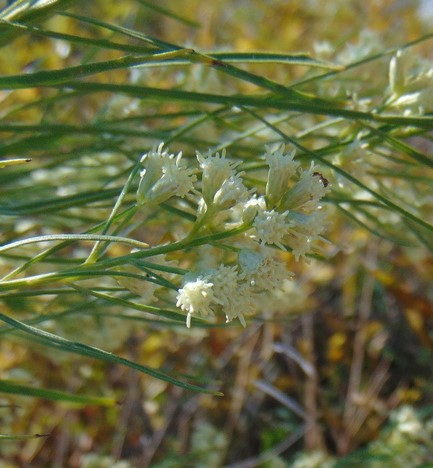
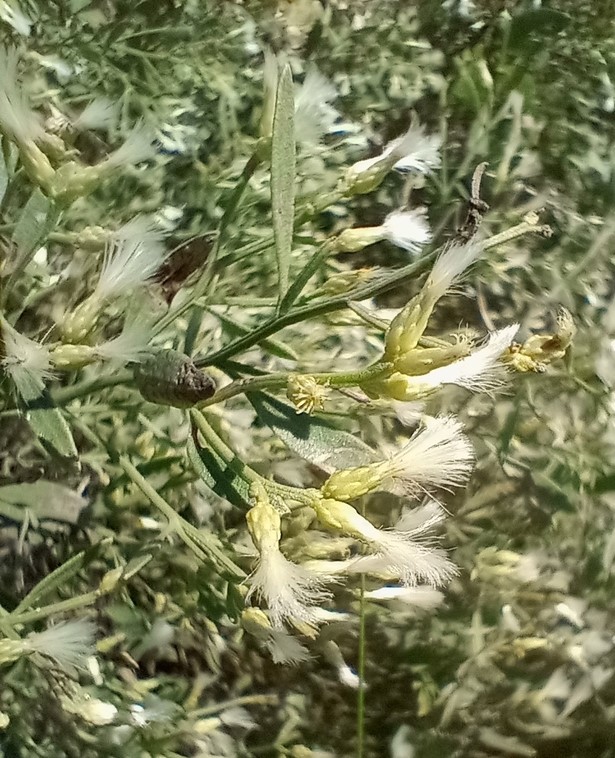
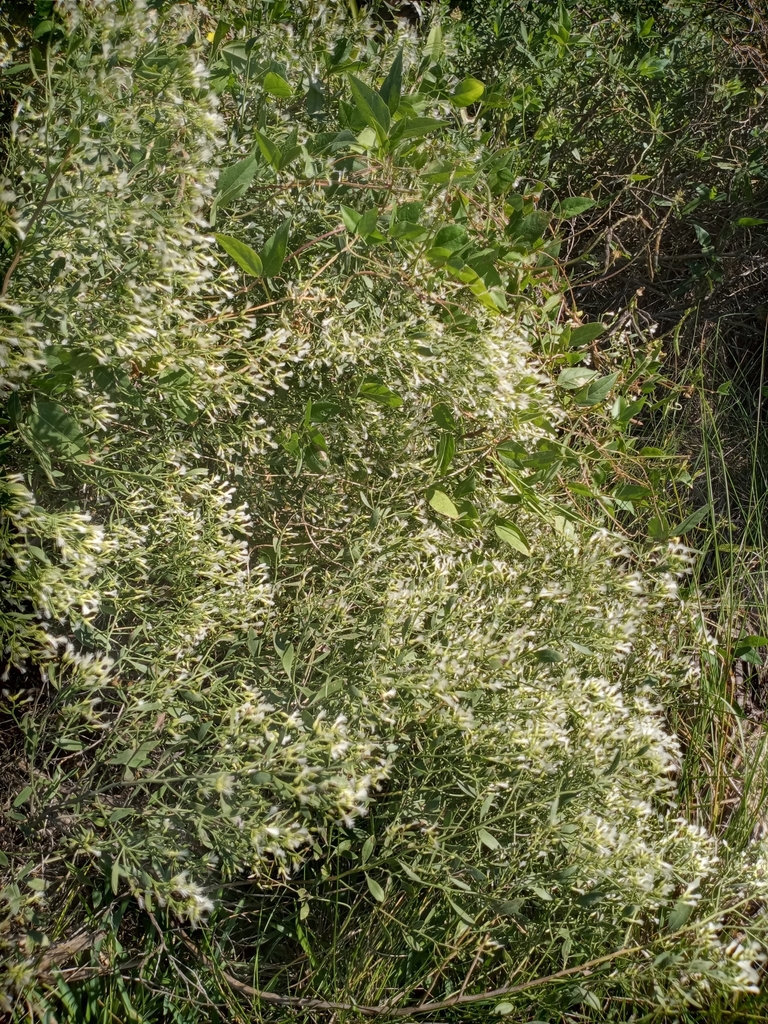
Blooms August-November. A tall shrub with dark green linear leaves. Plants grow in large groupings. Male and female flowers grow on separate plants. Female flowers consist of small silky, greenish white heads that produce silvery plumed seeds.
Material Treatment Method Collection References
Softwood Cutting Remove the leaves from the bottom 2-3 inches of the cutting. Fill a pot or seed tray with a well-draining mix like peat moss or perlite. Dip the cut end of each cutting in rooting hormone powder, make small holes in your rooting medium, then gently place the cuttings inside. Keep them moist and humid by watering them regularly and placing a plastic dome or bag over the pot. Allow the cuttings to root for 4-6 weeks before transplanting. Choose healthy new growth about 4-6 inches long in early summer when the plant is actively growing. Make sure the cuttings are soft and pliable. Make a clean cut just below a node (the point where leaves grow from the stem). https://propagate.one/how-to-propagate-baccharis-neglecta/
Hardwood Cutting Remove the leaves from the bottom ½ inch of the cutting. Use a mix of sand and potting soil or a pre-made rooting mix. Dip the cut ends in rooting hormone powder or a liquid rooting solution. Plant the cuttings in your rooting medium, making sure to leave at least two nodes above the soil line. Keep the cuttings in a cool, bright spot, maintain consistently damp soil, and allow them to root for a couple of months. In late fall or winter when the plant is dormant, choose mature, brown stems from the previous year’s growth. Cut the stems into 6-8 inch lengths, ensuring each piece has at least two nodes. https://propagate.one/how-to-propagate-baccharis-neglecta/
Seed No Treatment Plant the seeds in well-draining soil and cover with a thin layer of soil. Water the seeds regularly and keep them in a warm and well-lit location until they germinate. Collect the seeds from the plant and allow them to dry out completely. https://plantiary.com/plant/baccharis-neglecta_4567.html

About the Region

2026 Fall Symposium Logo

This low-elevations region of Texas extends inland from the barrier islands, about 60 or so miles, and stretches from Brownsville to Louisiana. In total, it covers about 9.5 million acres, with a high point of 150 feet in elevation. More than 1000 species of plants can be found in this region. On the southern end, species more common in Mexico (such as Sabal mexicana) and Central America occur.

The barrier islands provide us with dune systems, and clay flats to the inland side, which have species found in these areas alone. Many plants here, such as Ipomoea pes-caprae (beach morning glory), can be found throughout tropical regions of the globe. I’ve encountered the same species on the beaches of Guam.

Once inland, vast marshes and wet prairies occur. Occasionally, oak (Quercus fusiformis) groves can be found. Common grasses include species of Bothriochloa, Paspalum, and Sporobolus; eastern gamagrass (Tripsacum dactyloides); and switchgrass (Panicum species). Many rivers and creeks cut through the Gulf Prairies, and along these riparian areas various species of trees, Sabal minor, and other plants adapted to clay soils can be found. Due to overgrazing, farming, and fire suppression, woody species such as mesquite (Prosopis glandulosa) and huisache (Acacia farnesiana), and invasive species such as chinaberry (Melia azedarach), Brazilian pepper (Schinus terebinthifolius), and Chinese tallow (Sapium sebiferum) have increased and displaced our native flora.

Source: Wildflowers of Texas by Michael Eason