
Sweetgum

Liquidambar styraciflua

Other common name(s):

American Sweetgum, Red Gum, White Gum, Star-leaved Gum, Starleaf Gum, Alligator Tree, Satin Walnut, Bilsted, Liquidambar

Family:

Altingiaceae (Sweet Gum Family)

Plant Ecoregion Distribution Map

This map uses data from the US EPA. EPA  servers have been offline frequently so maps may not display. We are working on a solution.

Western Gulf Coastal Plain
Flatwoods, Floodplains and Low Terraces3, Pleistocene Fluvial Terraces, Red River Bottomlands, Southern Tertiary Uplands, Tertiary Uplands

Plant Characteristics

Growth Form

Tree

Height

50
to
60
ft.

Spread

20
to
30
ft.

Leaf Retention

Deciduous

Lifespan

Perennial

Habitat and Care Requirements

Soil Type(s)

Clay, Loam, Moist, Saline, Sand, Well Drained

Light Requirement

Sun, Part Shade

Water Requirement

Medium, High

Native Habitat

Grassland, Riparian, Wetland, Woodland

Bloom and Attraction

Bloom Color

Green, White

Bloom Season

Spring

Seasonal Interest

Fall Color, Larval Host, Seeds

Wildlife Benefit

Birds, Butterflies, Small Mammals

Maintenance

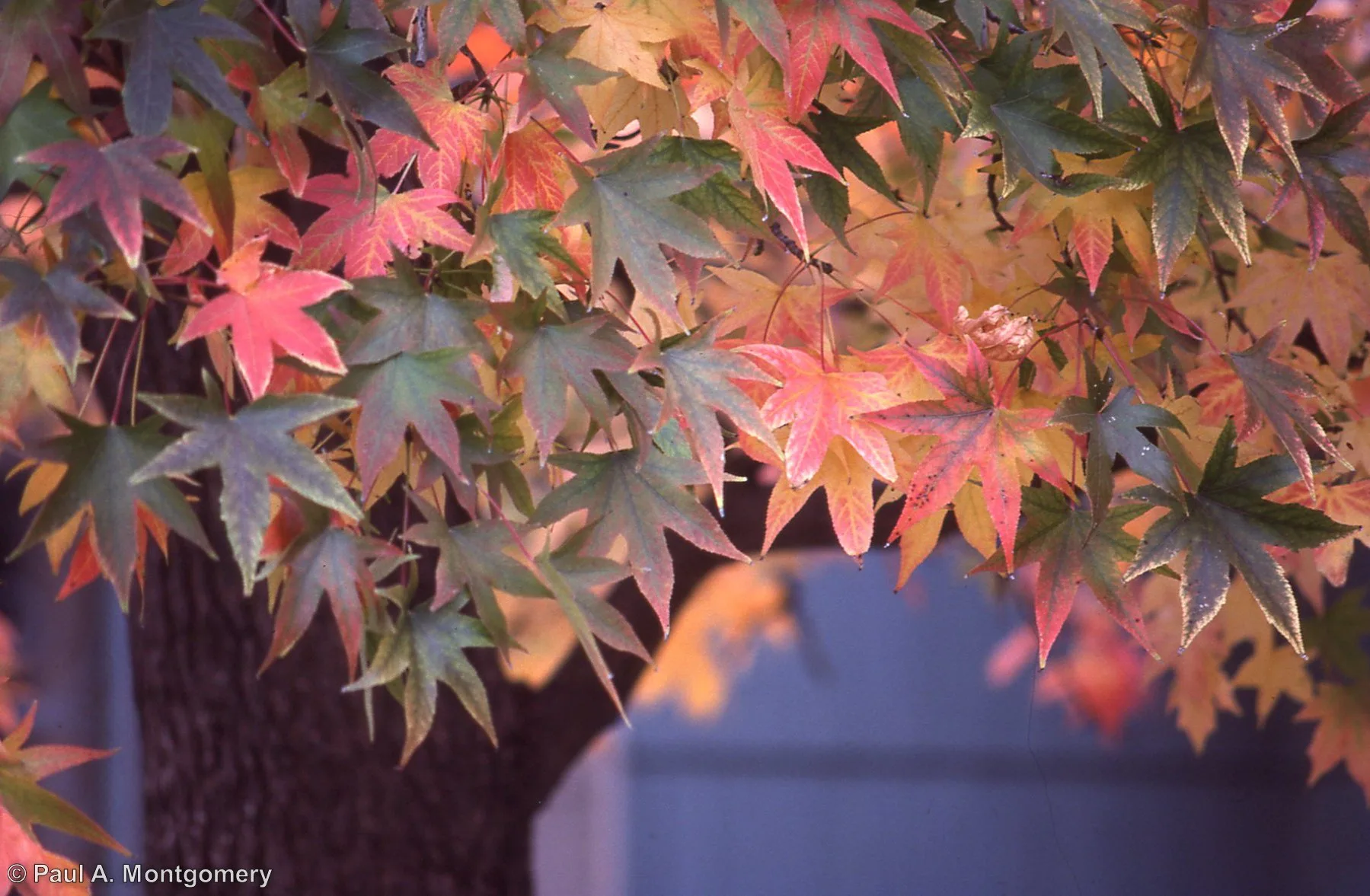
If necessary, prune for shape. It is not drought-tolerant and does not do well in small areas which limit root development. Does not grow well in polluted areas. Fast growth rate and long-lived, adapting to a variety of sites. Vivid fall color is yellow to red and more vivid in warmer falls. Native habitat: low, rich, moist woods, coastal plains, fields, flood plains, low hammocks, swamps, riverbanks.

Description

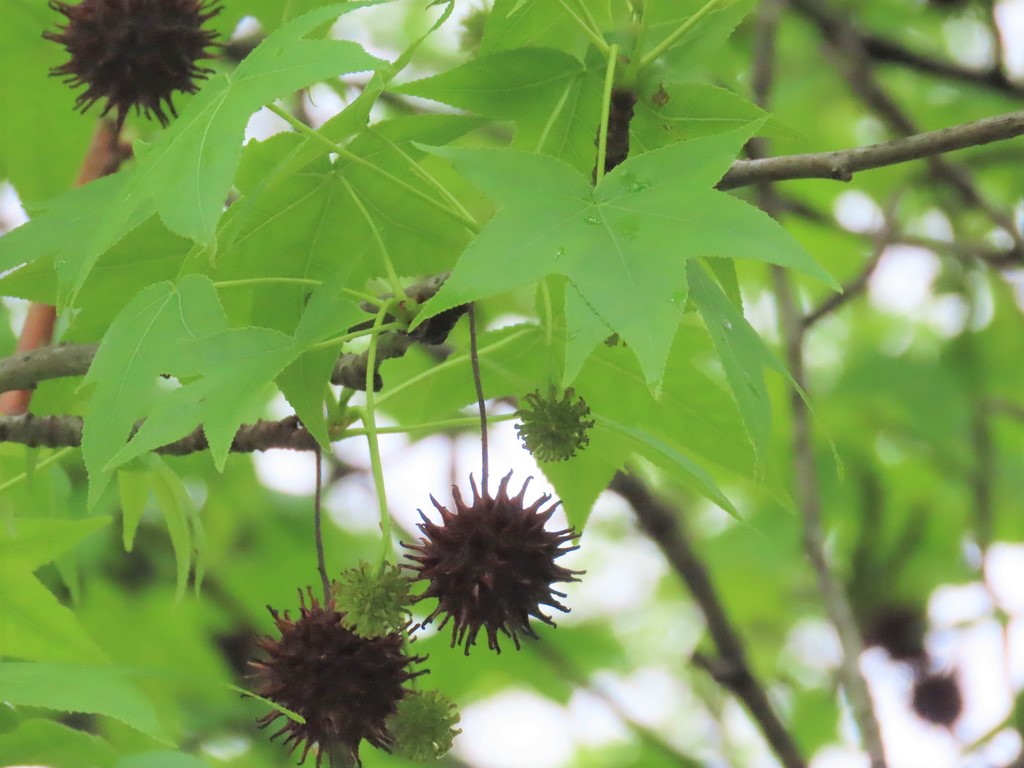
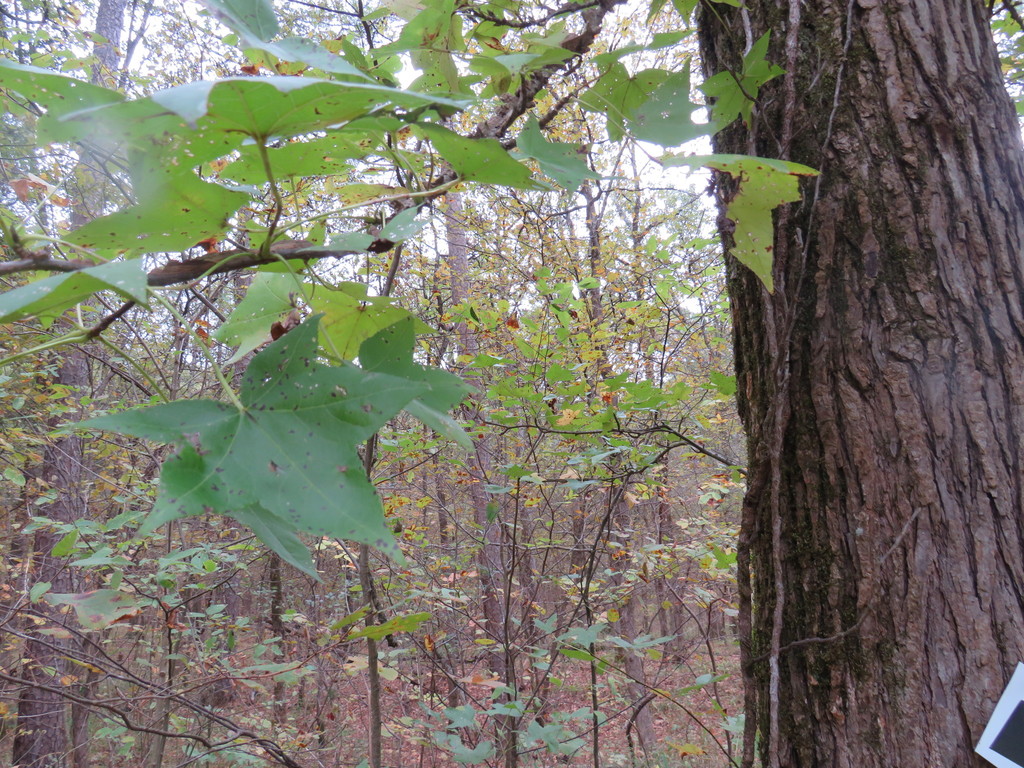
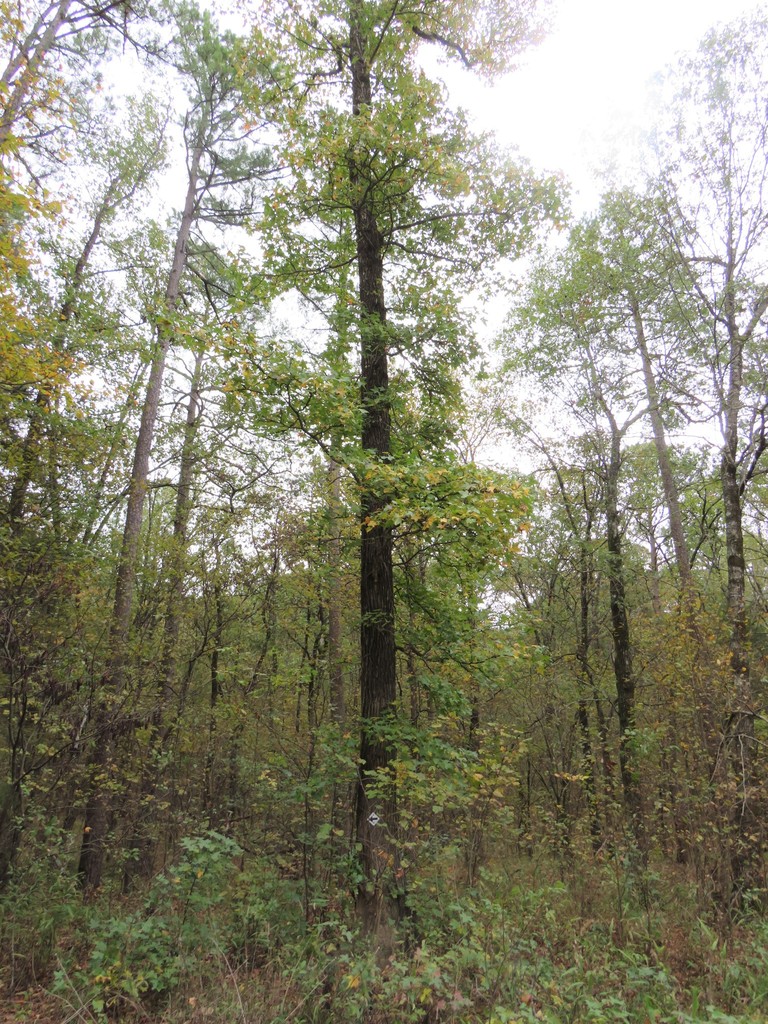
Blooms March-May. A large, aromatic tree with a straight trunk and conical crown that becomes round and spreading with age. Palmate leaves are star-shaped with 5 lobes. Male and female flowers are found on the same plant. Male flowers are borne in small clusters along an upright stalk and female flowers in a spherical cluster at the end of a stalk. The fruit is a globular, spiky, woody ball. Many species of birds and squirrels enjoy the seeds. Larval host: Edwards’ Hairstreak (Satyrium edwardsii).

References

1) Griffith, Bryce, Omernick & Rodgers (2007). Ecoregions of Texas. 2) Miller, George O., Landscaping with Native Plants of Texas 2nd Ed., 2013, pg 48. 3) Wasowski and Wasowski, Native Texas Plants Landscaping Region by Region, 1991, pg. 335. 4) https://www.wildflower.org/plants/result.php?id_plant=LIST2. 5) https://portal.torcherbaria.org/portal/taxa/index.php?taxon=Liquidambar+styraciflua&formsubmit=Search+Terms. 6) http://bonap.net/TDC/Image/Map?taxonType=Species&taxonId=449&locationType=County&mapType=Normal. 7) https://www.itis.gov/servlet/SingleRpt/SingleRpt?search_topic=TSN&search_value=19027#null
Material Treatment Method Collection References
Seed Stratification Stratify one to two months at 41 degrees. Collect mature fruiting heads before they have completely dried. Spread out the heads until they release the seeds (5-10 days at 68 degrees). Air dry https://www.wildflower.org/plants/result.php?id_plant=LIST2
Stem Cutting Leafy cuttings taken with a heel can be rooted in summer under mist. https://www.wildflower.org/plants/result.php?id_plant=LIST2

About the Region

2026 Fall Symposium Logo

This low-elevations region of Texas extends inland from the barrier islands, about 60 or so miles, and stretches from Brownsville to Louisiana. In total, it covers about 9.5 million acres, with a high point of 150 feet in elevation. More than 1000 species of plants can be found in this region. On the southern end, species more common in Mexico (such as Sabal mexicana) and Central America occur.

The barrier islands provide us with dune systems, and clay flats to the inland side, which have species found in these areas alone. Many plants here, such as Ipomoea pes-caprae (beach morning glory), can be found throughout tropical regions of the globe. I’ve encountered the same species on the beaches of Guam.

Once inland, vast marshes and wet prairies occur. Occasionally, oak (Quercus fusiformis) groves can be found. Common grasses include species of Bothriochloa, Paspalum, and Sporobolus; eastern gamagrass (Tripsacum dactyloides); and switchgrass (Panicum species). Many rivers and creeks cut through the Gulf Prairies, and along these riparian areas various species of trees, Sabal minor, and other plants adapted to clay soils can be found. Due to overgrazing, farming, and fire suppression, woody species such as mesquite (Prosopis glandulosa) and huisache (Acacia farnesiana), and invasive species such as chinaberry (Melia azedarach), Brazilian pepper (Schinus terebinthifolius), and Chinese tallow (Sapium sebiferum) have increased and displaced our native flora.

Source: Wildflowers of Texas by Michael Eason