
Prairie Gayfeather

Liatris pycnostachya

Other common name(s):

Prairie Blazing Star, Prairie Liatris, Kansas Blazing Star, Kansas Gayfeather, Kansas Liatris, Cat-tail Blazing Star, Cat-tail Gayfeather, Cat-tail Liatris, Hairy Button-snakeroot

Family:

Asteraceae (Aster Family)

Plant Ecoregion Distribution Map

This map uses data from the US EPA. EPA  servers have been offline frequently so maps may not display. We are working on a solution.

East Central Texas Plains, Gulf Coast Prairies and Marshes, Western Gulf Coastal Plain
Northern Post Oak Savanna, Northern Prairie Outliers
Northern Humid Gulf Coastal Prairies
Flatwoods, Floodplains and Low Terraces3, Pleistocene Fluvial Terraces, Red River Bottomlands, Southern Tertiary Uplands, Tertiary Uplands

Plant Characteristics

Growth Form

Herbaceous

Height

1
to
5
ft.

Spread

0.5
to
1
ft.

Leaf Retention

Deciduous

Lifespan

Perennial

Habitat and Care Requirements

Soil Type(s)

Clay, Loam, Poor Drainage, Rocky, Sand

Light Requirement

Sun

Water Requirement

Medium

Native Habitat

Grassland, Woodland

Bloom and Attraction

Bloom Color

Pink, Purple

Bloom Season

Summer, Fall

Seasonal Interest

Nectar, Pollen

Wildlife Benefit

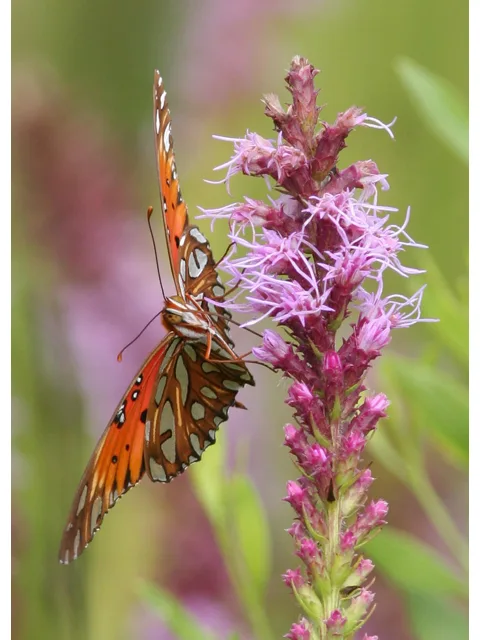
Bees, Butterflies, Nectar Insects

Maintenance

Low maintenance. One of the few Liatris that will grow in moist soils. Can be grown as an ornamental. Makes good cut flowers. Native habitat: bluffs, moist or dry prairies and open woods

Description

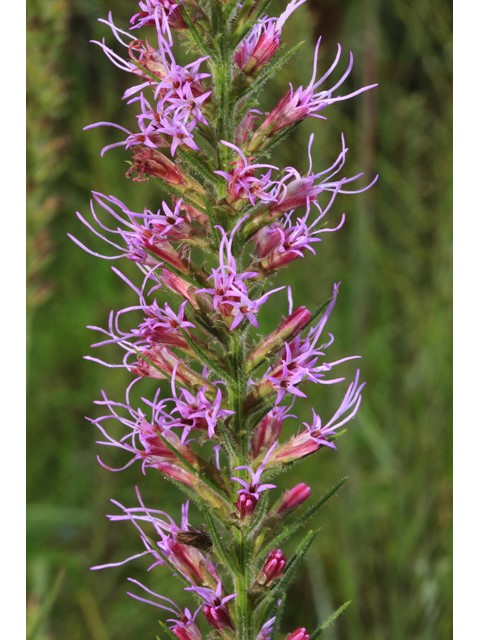
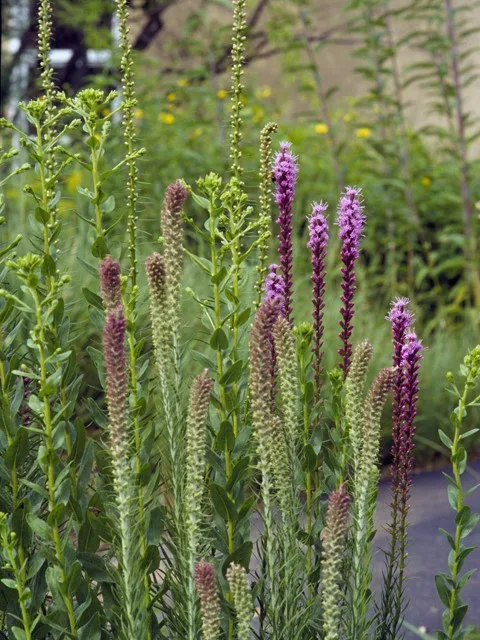
Blooms June-December. Tall, coarse, hairy, very leafy stem. The lower portion of the stem is covered with short, fuzzy, grass-like leaves. Tall, thick spikes of purple flowers bloom from the top down. The fruit is a cypsela: a dry, one-seeded fruit, usually topped by pappus.
Material Treatment Method Collection References
Clump Division Carefully dig up the plant and separate the clumps, ensuring each division has a portion of the root system. Replant immediately in well-prepared soil. Division is best done in the spring or fall. https://earthone.io/plant/liatris%20pycnostachya?srsltid=AfmBOorlwP1LTFQpBzjGnUU4vg_ZLpAdUFwm5vX8U-yy6AgNOV3IWqPh
Seed Scarification, Stratification Llightly nick seed with a knife, use rock tumbler or boiling water) and moist stratification (3 months at 40 degrees). Scarified seeds may be sown outside in late fall or stored, stratified and sown the following spring. These plants produce a large amount of seed so storing the seed in paper bags in the refrigerator after collection and sowing in early spring offers good results as well. When sowing ex-situ, germination usually occurs within 20-25 days. The optimum temperature range is 55-75 degrees F in well drained soil. Barely cover the seed with growing media and reduce soil temperature at night. Wait until the flower heads on the entire stalk have turned fluffy tan before collecting. Bring the stalks inside to air-dry then shake or brush the nutlets from the heads. Seeds can be stored with chaff in paper bags or envelopes in the refrigerator. https://www.wildflower.org/plants/result.php?id_plant=LIPY

About the Region

2026 Fall Symposium Logo

This low-elevations region of Texas extends inland from the barrier islands, about 60 or so miles, and stretches from Brownsville to Louisiana. In total, it covers about 9.5 million acres, with a high point of 150 feet in elevation. More than 1000 species of plants can be found in this region. On the southern end, species more common in Mexico (such as Sabal mexicana) and Central America occur.

The barrier islands provide us with dune systems, and clay flats to the inland side, which have species found in these areas alone. Many plants here, such as Ipomoea pes-caprae (beach morning glory), can be found throughout tropical regions of the globe. I’ve encountered the same species on the beaches of Guam.

Once inland, vast marshes and wet prairies occur. Occasionally, oak (Quercus fusiformis) groves can be found. Common grasses include species of Bothriochloa, Paspalum, and Sporobolus; eastern gamagrass (Tripsacum dactyloides); and switchgrass (Panicum species). Many rivers and creeks cut through the Gulf Prairies, and along these riparian areas various species of trees, Sabal minor, and other plants adapted to clay soils can be found. Due to overgrazing, farming, and fire suppression, woody species such as mesquite (Prosopis glandulosa) and huisache (Acacia farnesiana), and invasive species such as chinaberry (Melia azedarach), Brazilian pepper (Schinus terebinthifolius), and Chinese tallow (Sapium sebiferum) have increased and displaced our native flora.

Source: Wildflowers of Texas by Michael Eason