

Learn about Native Plants
People who desire to learn about what creates a healthy ecosystem or just want a garden that will thrive in their ecoregion, should start with native plants.
Native Plant Societies offer a variety of ways to learn and develop a knowledge base of plants that do the very best in any landscape and perform valuable work to preserve and protect our environment. Gardeners will learn to recognize native habitat.
The Role of Native Plant Societies
Native plant societies (NPS) are usually non-profit, volunteer-based organizations with a few employees who do the administrative and accounting work necessary to run an organization. NPS need a solid and growing membership to survive and be effective.
Native plants are specific to geographic areas called ecoregions defined by non-living factors such as climate, longitude, latitude, and soil type. Native plants, animals, bacteria and fungi have all worked together over time to create ecosystems that thrive in their specific ecoregion. For eons they lived together and depended on each other in very set ways. They have coevolved. The food webs created are intricate and dependent on the native flora. This balance of life also defines ecoregions and the habitats within them. The flora and fauna of deserts will be different from that in prairies or forests. Native plants that are specific to an ecoregion are usually best known by members of the native plant societies in that region.
Find Your Local NPS!
NPS are located in every state in the US and across Canada, another vast geographic area with many different ecoregions. To learn more about the work of other native plant societies in the United States and Canada, please visit the following websites. You can help support a native plant society and educate others all across North America!
Native Plant Society of Texas
Native Plant Societies of US and Canada
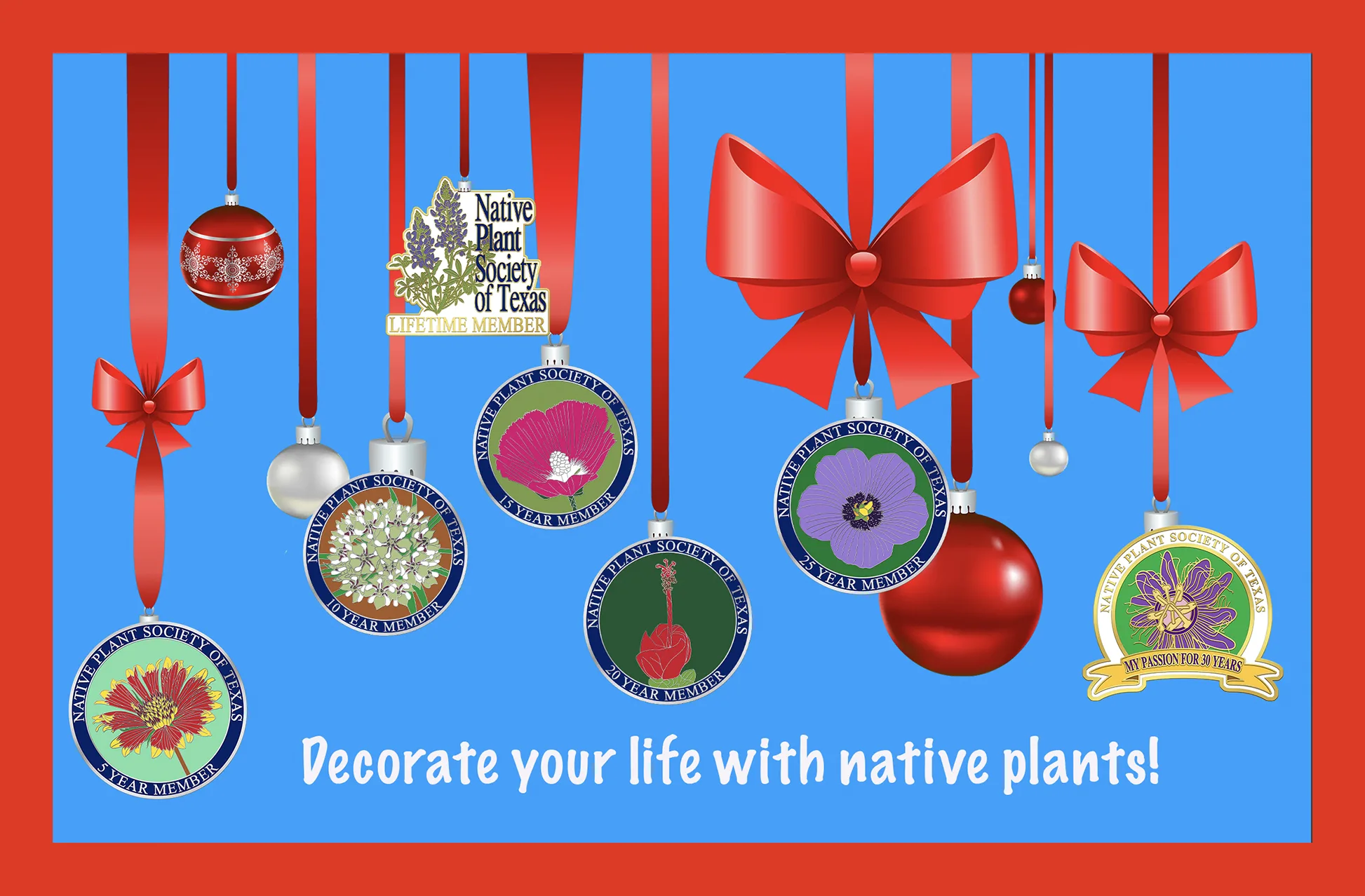
Consider giving yourself or someone else the gift of membership this holiday season! Before long you too will become knowledgeable, passionate and happy to share that passion with others!
