

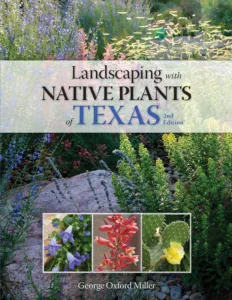
In this comprehensive, richly illustrated guide, author George Oxford Miller provides the “how-to,” “when-to,” and “what-to” for gardeners, landscapers, and homeowners throughout Texas. Have you ever planted a beautiful—and expensive—shrub in your yard and watched it slowly die because it was in the wrong location? Insufficient sunlight, too much water, improper soil, or too hot an exposure can turn the nursery-perfect specimen into an eyesore. This all-in-one DIY guide helps you beautify your yard using low-maintenance native plants specifically adapted to your local growing conditions.
Whether as foundation hedges, mass plantings, or accent shrubs, Texas’ vast offering of native species can bring year-round beauty to any lawn space. Covering wildflowers, shrubs, trees, vines, cacti, and groundcovers, this book selects the species that combine ornamental qualities, growth habit, adaptability, and year-round beauty for the highest landscape value.
Chapters include photos, maps, charts, and design samples to provide guidelines for species selection and planting, ongoing maintenance, landscape design, and water and energy conservation. Plant descriptions provide detailed habitat requirements for hundreds of native plants, and photos illustrate how each plant looks in the landscape. In Landscaping with Native Plants of Texas, new and experienced gardeners alike will find the facts and advice needed to choose the plants best adapted for their particular landscape. The ornamental beauty of Texas’ native species and the economic advantages of using plants adapted to the local climate demonstrate that the best for our landscapes often comes from our own backyards. And perhaps most importantly, using native plants encourages the repair and preservation of natural plant communities and the wildlife they shelter.
