

Winners of three contests will be celebrated at the fall symposium – video, photography, and newsletters. Judges looked at each entry and awarded points using an evaluation form. Scores were added up and the resulting totals determined the winners.
Photo Contest
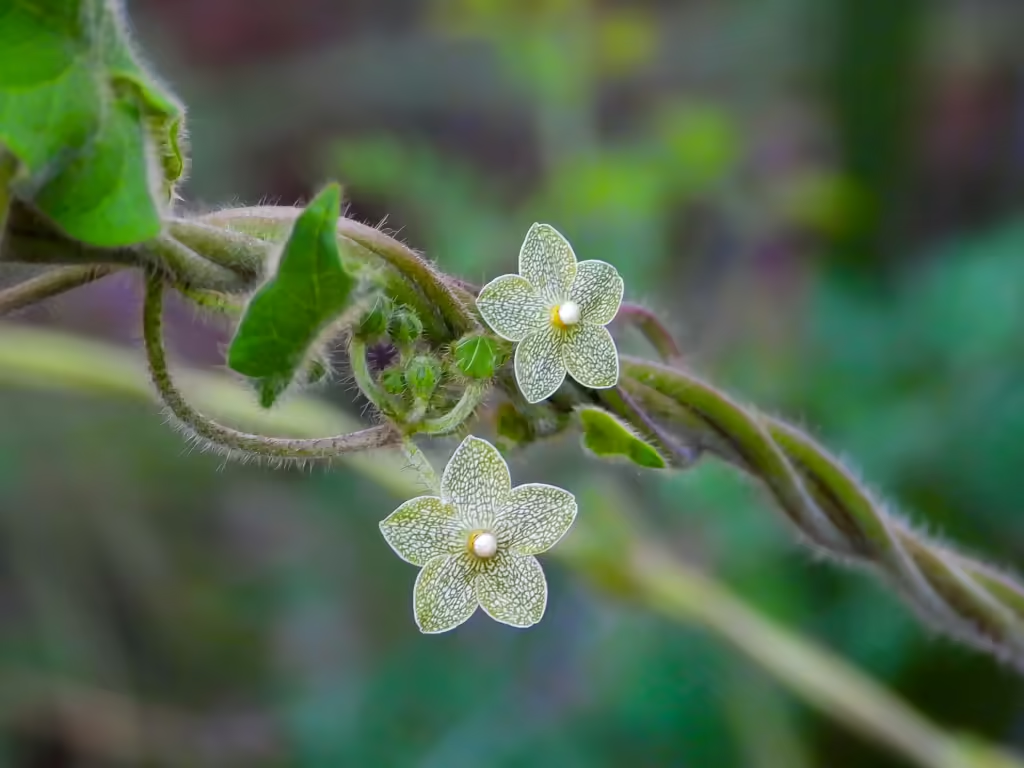
Meghan James won Best in Show for her photo of Matelea reticulata (shown above).
The judges also selected a winning photo for each ecoregion in Texas for which there were entries.

Chapter Newsletter Contest
The New Braunfels Trumpet Vine was the clear winner of the newsletter contest. Editor Gail Groves submitted the June 2024 edition for the contest. You can download and read the entry here.
The judges agreed that this was a great example of a chapter newsletter and commented that they thought the title was hilarious.
Other chapters competing in the contest were Lindheimer, La Bahia, and Clear Lake. Please check out all of them by visiting the chapter websites and searching for the newsletter.

Video Contest
Congratulations to Diane Karch-Osowski for her video interviewing the winners of the 15th annual Native Plant Art Exhibition in the Denton ISD. Click to watch on YouTube.
Watch all of the 2024 video contest entries in this YouTube playlist.
The Judges
This contest could not have been possible without the many volunteer hours of our judges. They are winners too.
Contest judges this year were Dana Austin, Debbie Bush, Ginny Baresch, Jan Rogers, Leah Fenley, Marty Shows, Mary Beach, Michelle Fissel, Michelle Michel, Robert Benson, and Vicki Blachman.
The scoring sheets and contest rules were developed by Lonnie Childs and Robert Kamper. The 2024 contest was organized by a committee consisting of Craig Dalton, Renata Lucia, and Bill Hopkins.
History
In 1996 the Amarillo Chapter announced the annual Charlene Barnard Memorial Award which would be presented for the best photo in a state-wide contest run and organized by the Amarillo Chapter. A committee was established to choose one particular plant each year which was the subject of the photo. Members mailed their submissions in 3×5 or 4×6 format to the committee which judged the submissions and presented the award at the fall symposium.
In 2010, the symposium committee organized contests for flower arrangement and photos. In both contests submissions were physically brought to the exhibit area, where symposium attendees voted for their favorites. This contest format was continued by subsequent symposiums.
However, organizers were looking for ways to bring the contests into the digital age. Robert Kamper used laptops showing digital files in the exhibit area at the 2015 symposium. Then in 2018, Rachel Cywinski and Andrew Awalt organized a photo contest that was all-digital. with online voting by members.
Meanwhile an annual video contest was initiated in 2016, followed by an annual chapter newsletter contest in 2017. Both of these contests employed the format still in use today. In 2020 the photo contest was re-organized into the same format.
