Kerrville Chapter

Programs

Nature Journaling

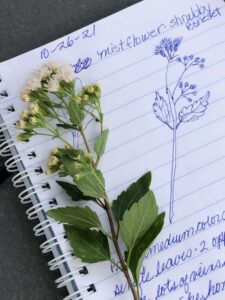
Nature journaling is all about documenting your observations of the natural world. No drawing skills are required although they will get better with practice. It is what you want it to be; citizen science, art, creative writing, or more. And it can be all of the above. It can be about travel, your garden, a weather log, bugs or birds, and many more possible topics.

Please come with your sketchbook and chosen art supplies.  If you prefer, bring a camera or journal.  We have one participant who brings a nature oriented coloring book!  Check our calendar for the next scheduled session.  Let’s discuss what your purpose for journaling is – recording words and/or pictures?
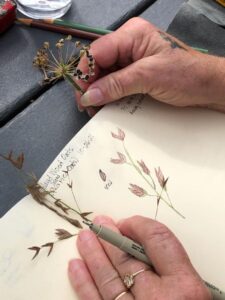
Facilitator: Nancy Huffman, an artist specializing in Hill Country landscape painting, is a member of the Kerrville NPSOT chapter, a Master Naturalist and a retired high school art teacher.  See examples of her beautiful work on her website, NancyHuffman.com.  

You can view a PDF summary of her Nature Journaling presentation.

In addition, you can view Nancy’s Nature Journaling PowerPoint Presentation, which places the concept of nature journals in history as well as showing pictures of examples of nature journaling going on right now.

You can also watch Nancy’s demonstration of working in a Nature Journal.

Demonstration Gardens

Carroll Abbott Garden

Carroll Abbott (1926-1984) was the founder of the Native Plant Society of Texas and one of the early promoters of preserving and gardening with native

NICE! Native Plant Partners

The NICE Native Plant Partners program is a collaboration between the Native Plant Society of Texas and local nurseries around the state to offer natives that are right for the local environment. Texas is a large, diverse state and plants that work for one region may not always be the best choice in a different region. Native Plant Partners committees run by our local chapters create a list of Plant of the Month plants (in some areas a Plant of the Season) in cooperation with participating local nurseries and wholesalers in order to assure availability. The Native Plant Society chapter then helps promote the Plant of the Month through its website and newspaper articles, signs at the point of sale and other means. Often an information sheet on the plant is available at the nursery.

Native Landscape Certification Program

Our Native Landscape Certification Program (NLCP) is a series of day-long classes highlighting best practices for native plant landscaping, including wildlife habitat gardening.

Each class consists of an indoor training session and a plant identification session. We show you plants native to the local ecoregion and illustrate their use in the landscape.

In each level you are presented with 45 native Texas plants recommended for your area, and 5 non-native plants to avoid.

Goals of the NLCP classes are to (a) educate NPSOT members and the general public about the value of natives, (b) how to use native plants in home, public and commercial landscapes and habitat restorations, and to (c) provide native landscape education, CEUs, and credentials to landscape professionals, developers, and nature-oriented groups.

  • Level 1: Introduction to Native Landscapes – Class & Plant Walk
  • Level 2: Design and Development with Native Plants – Class & Plant Walk
  • Level 3: Installing and Maintaining Native Landscapes – Class & Plant Walk
  • Level 4: Stewardship of Native Plant Communities (under development) – Class & Plant Walk Visit Native Landscape Certification Program
 
PGARP – Pollinator Garden Assistance and Recognition Program https://txmn.org/hillcountry/pgarp/
The Pollinator Garden Assistance and Recognition Program is a joint project with a network of Texas Master Naturalist and Native Plant Society (NPSOT) volunteers who educate local homeowners, groups, institutions, and organizations about the importance of native plants and habitat in our unique Hill Country environment. We help plan native pollinator gardens.

The program’s volunteers advise gardeners who wish to plant pollinator gardens which provide nectar and habitat for native pollinators: bees, butterflies, moths, insects, beetles, bats and hummingbirds.

About the Region

2026 Fall Symposium Logo

This low-elevations region of Texas extends inland from the barrier islands, about 60 or so miles, and stretches from Brownsville to Louisiana. In total, it covers about 9.5 million acres, with a high point of 150 feet in elevation. More than 1000 species of plants can be found in this region. On the southern end, species more common in Mexico (such as Sabal mexicana) and Central America occur.

The barrier islands provide us with dune systems, and clay flats to the inland side, which have species found in these areas alone. Many plants here, such as Ipomoea pes-caprae (beach morning glory), can be found throughout tropical regions of the globe. I’ve encountered the same species on the beaches of Guam.

Once inland, vast marshes and wet prairies occur. Occasionally, oak (Quercus fusiformis) groves can be found. Common grasses include species of Bothriochloa, Paspalum, and Sporobolus; eastern gamagrass (Tripsacum dactyloides); and switchgrass (Panicum species). Many rivers and creeks cut through the Gulf Prairies, and along these riparian areas various species of trees, Sabal minor, and other plants adapted to clay soils can be found. Due to overgrazing, farming, and fire suppression, woody species such as mesquite (Prosopis glandulosa) and huisache (Acacia farnesiana), and invasive species such as chinaberry (Melia azedarach), Brazilian pepper (Schinus terebinthifolius), and Chinese tallow (Sapium sebiferum) have increased and displaced our native flora.

Source: Wildflowers of Texas by Michael Eason