

About this Program
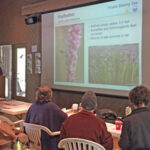
The Native Landscape Certification Program (NLCP) is a series of 4 day-long classes that teach best practices for native plant landscaping – including wildlife habitat gardening. Each class consists of a classroom-type training session and a plant identification section. We show you plants native to the local ecoregion, illustrating their use in the landscape. You will also see common non-native plants which may take over our natural areas. In each level you are presented 45 native Texas plants recommended for your landscape and 5 plants to avoid. Classes are adapted to the area in which they are offered.
Targeted audiences include homeowners, native plant enthusiasts, landscape architects, landscape designers, nursery and landscape maintenance employees, park employees, Texas Master Naturalists, Texas Master Gardeners, teachers, and other interested parties.
Our classes can qualify for TEA CPEs, TNLA CEUs, ASLA self-reported hours, TMG and TMN hours.
We look forward to working with you to increase your appreciation and use of native plants in landscapes, including
- emphasizing a sense of place for residents and visitors,
- increasing the presence of desirable wildlife species,
- reducing the use of water and other precious resources, and
- enhancing and protecting our natural world.
NLCP is a state-wide program, but classes focus on the characteristics and plants of the region in which they are taught. Please register for classes located in the region in which you wish to landscape.
Steering Committee
Since 2014, the Native Landscape Certification Program has been run by a Steering Committee reporting to the State Board of the Native Plant Society of Texas. Day to day operations are handled by an NLCP Coordinator under the guidance of the Steering Committee.
The Steering Committee meets regularly, usually once a month. If you would like to contact the Steering Committee about a concern or an idea, please use the form below and note that you are directing the message to the Steering Committee.
Contact Native Landscape Certification Program
To learn more about the landscaping program and scheduled classes, please contact Linda Foss, NLCP Coordinator.
