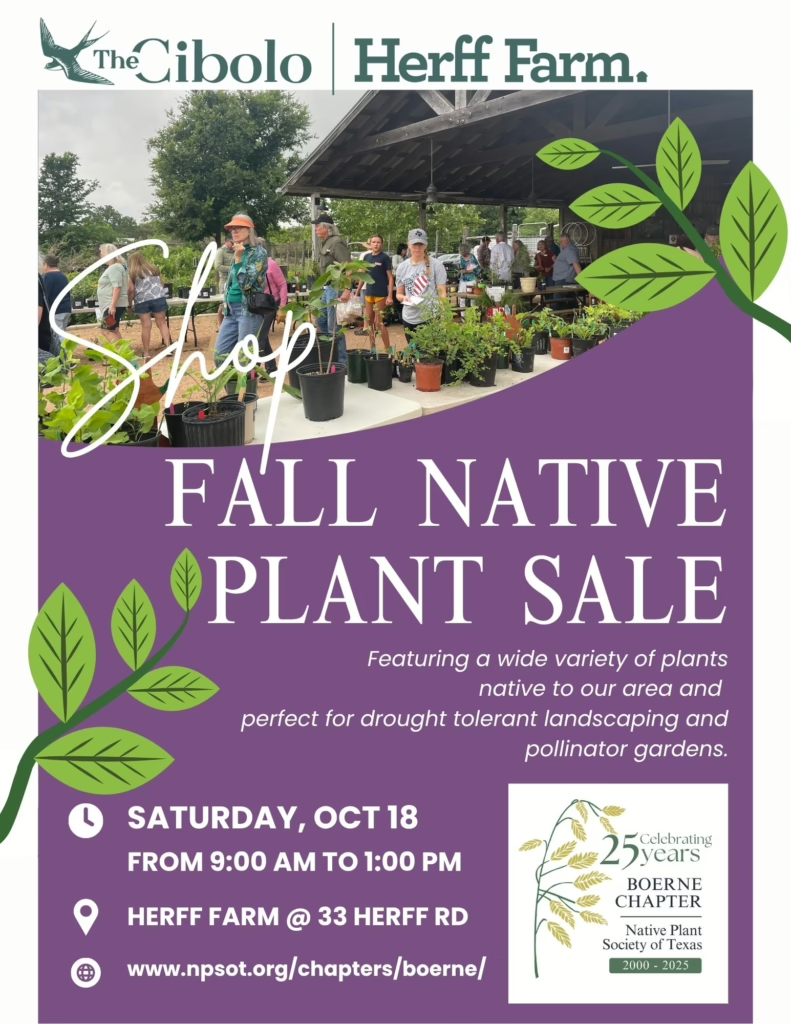
October 18, 2025 @ 9:00 am – 1:00 pm
Planting season will be here soon! Come check out what our native plant growers have to offer at the Fall Native Plant Sale at the Herff Farm Teaching Barn. Open to the Public.
Take advantage of this opportunity to easily obtain native plants suited for our ecoregion. Along with making your space beautiful, you’ll be providing food and habitat for butterflies, birds and other wildlife. Many native plants even do well in containers!
This fall we have a record number of plants available for sale: 971 plants and 126 different species! Below is a partial list of plants that will be available at the sale. Please note that this is a partial list – there will be even more!
4-Nerve Daisy
Alamo Vine
American Beautyberry – Callicarpa Americana
Anacaucho Orchid
Antelope Horn Milkweed – Asclepias asperula
Bigtooth Maple
Blackeyed Susan – Rudbeckia fulgida “Goldsturm”
Blackfoot Daisy – Melampodium leucanthum
Brazos Penstemon
Bur Oak- Quercus macrocarpa
Cedar Sage
Chili Pequin
Coral Berry
Coral Honeysuckle Lonicera sempervirens
Corona de Cristo Passionflower – Passiflora foetida var gossypifolia
Crucita – Chromolaena odorata
Drummond’s Wild Petunia- Ruellia drummondiana
Evergreen Sumac
Fall Aster Aster oblongifolium
Flame Acanthus – Anisacanthus quadrifidus
Foxglove – Penstemon cobaea
Fragrant Mistflower – Ageratina havaensis
Golden Groundsel- Packera obovata
Goldenball Leadtree – Leucana retusa
Gregg’s Blue Mist Flower – Conoclinium greggii
Gulf Muhly
Heartleaf Hibiscus – Hibiscus martianus
Lindheimer’s Morning Glory – Ipomoea lindheimeri
Lindheimer’s Senna – Senna lindheimeri
Lyre Leaf Sage – Salvia lyrate
Mealy Blue Sage – Salvia farinacea
Mexican Buckeye – Ungnadia speciosa
Mexican Plum – Prunus mexicana
Milkweed Vine
Missouri Violets – Viola missouriensis
Osage Orange / Bois D’arc tree – Maclura pomifera
Pigeonberry – Rivina humilis
Plateau Goldeneye – Viguiera dentata
Prairie Petunia – Ruellia humilis
Purple Coneflower – Echinacea augustifolia
Rock Rose – Pavonia Lasiopetala
Scarlet Sage – Red blooming – Salvia coccinea
Scarlet Sage – White blooming – Salvia coccinea
Skeleton Leaf Goldeneye – Viguiera stenoloba
Snailseed Vine
Sotol – Dasylirion texanum
Texas Betony
Texas Greeneyes – Berlandiera betonicifolia
Texas Milkweed – Asclepias texensis
Texas Red Yucca – Hesperaloe parviflora
Theresa’s Hackberry
Theresa’s Lindhemimer Muhly
Theresa’s Little Bluestem
Theresa’s Switchgrass
Turks Cap – Malvaviscus arboreus v drummondii
Twisted Leaf Yucca – Yucca rupicolo
Virginia Creeper – Parthenocissum quinequefolia
Wafer Ash
Western Ironweed – Vernonia baldwinii
Zexmenia – Wedelia hispida
Join us on Saturday, October 18th! NPSOT members will be on hand to answer your gardening and native plant questions!