
Celebrating 100 Years at W. G. Jones State Forest

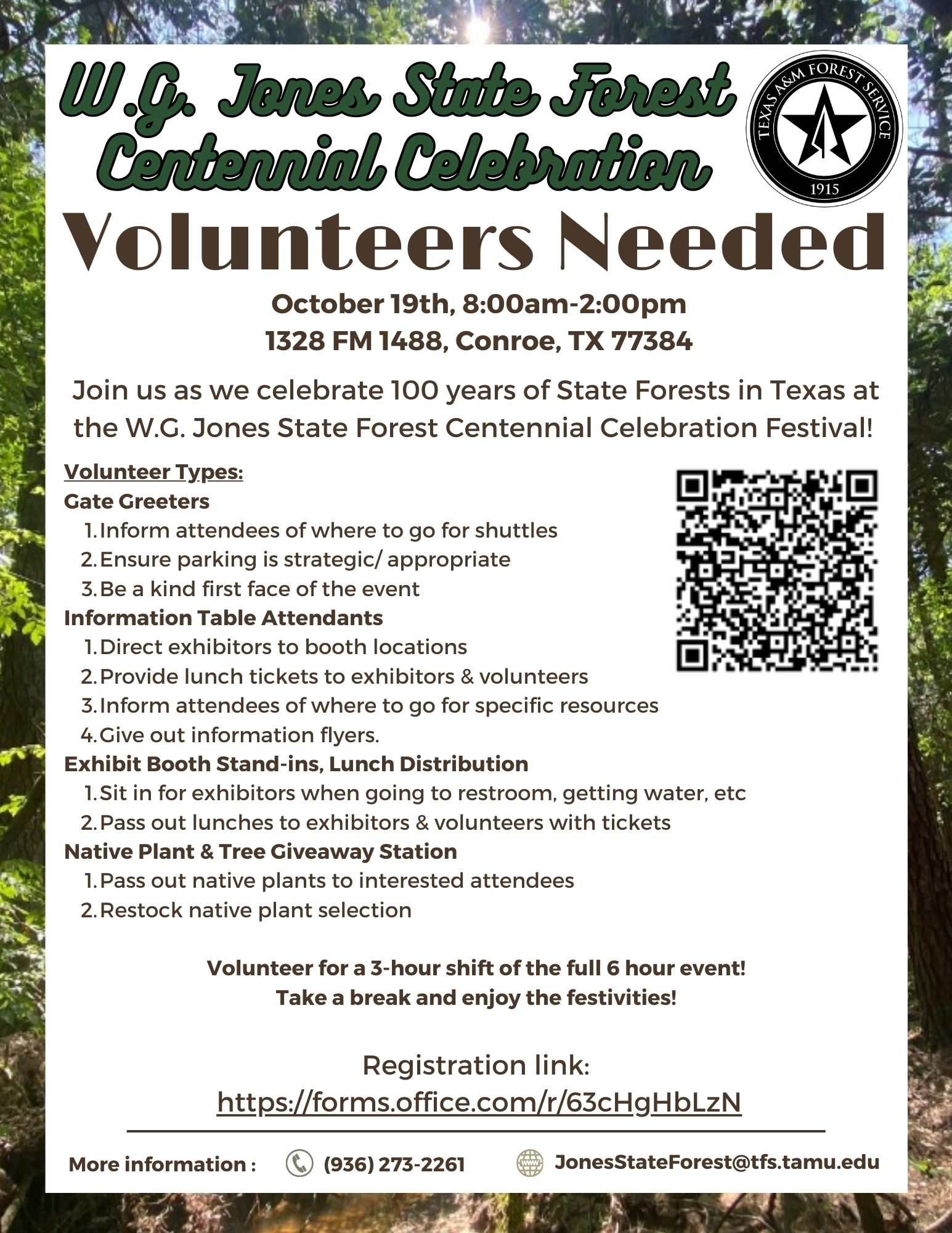
The staff at W. G. Jones State Forest is currently seeking volunteers to assist with its centennial festival at the W.G. Jonas State Forest on October 19th.

You are invited to be an essential part of the W.G. Jones State Forest Centennial Celebration, taking place on October 19, 2024. This landmark event will celebrate 100 years of Texas State Forests, and passionate volunteers are needed to help make this monumental event a success.

Event Details:

We are depending on the dedication of volunteers like you to ensure that this celebration is a memorable and smooth-running event for our diverse audience of an anticipated 500-1,500 attendees. Your support is crucial for our success, and we are offering a range of roles to match your interests and availability.

Volunteer Opportunities Include:

  • Gate Greeters: Welcome guests, guide them to shuttles, assist with parking, and provide a friendly first impression.
  • Information Table Attendants: Help direct exhibitors to their booths, distribute lunch tickets, inform attendees about resources, and hand out information flyers.
  • Exhibit Booth Stand-ins & Lunch Distribution: Cover for exhibitors during breaks and distribute lunches to exhibitors and volunteers.
  • Native Plant & Tree Giveaway Station: Distribute native plants to attendees and help restock the plant selection.

Volunteers are needed for 3-hour shifts during the 6-hour event. This allows you to contribute meaningfully while also enjoying the festivities and networking opportunities.

To Volunteer: Please complete the Volunteer Registration Form by October 11, 2024. Lunch will be provided. The sooner you register, the better we can plan and ensure a rewarding experience for everyone involved. Once registered, we will send you the Volunteer Information Packet with more details to help you prepare.

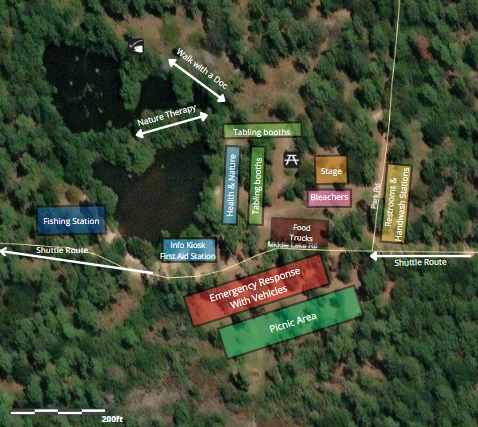
Additional Information: Draft event flyer, volunteer flyer, and event layout map.

Your participation is key to the success of this celebration, and we are grateful for your commitment to supporting and promoting the importance of Texas State Forests. If you have any questions or need more information, please feel free to reach out.

Contact: Jaden Kelly (936) 273-2261

Date
Oct 19 2024
Expired!
Time
9:00 am - 2:00 pm
Cost
$
Organizer
Pines and Prairies Calendar

About the Region

2026 Fall Symposium Logo

This low-elevations region of Texas extends inland from the barrier islands, about 60 or so miles, and stretches from Brownsville to Louisiana. In total, it covers about 9.5 million acres, with a high point of 150 feet in elevation. More than 1000 species of plants can be found in this region. On the southern end, species more common in Mexico (such as Sabal mexicana) and Central America occur.

The barrier islands provide us with dune systems, and clay flats to the inland side, which have species found in these areas alone. Many plants here, such as Ipomoea pes-caprae (beach morning glory), can be found throughout tropical regions of the globe. I’ve encountered the same species on the beaches of Guam.

Once inland, vast marshes and wet prairies occur. Occasionally, oak (Quercus fusiformis) groves can be found. Common grasses include species of Bothriochloa, Paspalum, and Sporobolus; eastern gamagrass (Tripsacum dactyloides); and switchgrass (Panicum species). Many rivers and creeks cut through the Gulf Prairies, and along these riparian areas various species of trees, Sabal minor, and other plants adapted to clay soils can be found. Due to overgrazing, farming, and fire suppression, woody species such as mesquite (Prosopis glandulosa) and huisache (Acacia farnesiana), and invasive species such as chinaberry (Melia azedarach), Brazilian pepper (Schinus terebinthifolius), and Chinese tallow (Sapium sebiferum) have increased and displaced our native flora.

Source: Wildflowers of Texas by Michael Eason