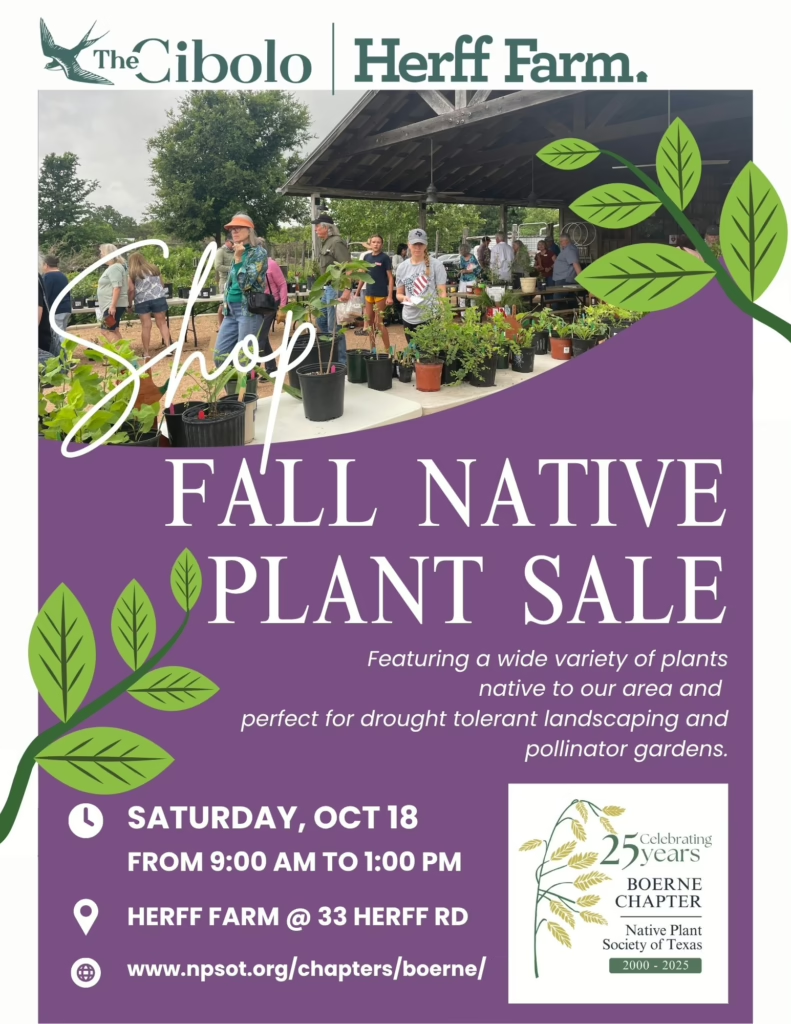

Fall Native Plant Sale – Open to the Public

Planting season will be here soon! Come check out what our native plant growers have to offer at the Fall Native Plant Sale at the Herff Farm Teaching Barn. Open to the Public.

Take advantage of this opportunity to easily obtain native plants suited for our ecoregion. Along with making your space beautiful, you’ll be providing food and habitat for butterflies, birds and other wildlife. Many native plants even do well in containers!

This fall we have a record number of plants available for sale: 971 plants and 126 different species! Below is a partial list of plants that will be available at the sale. Please note that this is a partial list – there will be even more!

4-Nerve Daisy

Alamo Vine

American Beautyberry – Callicarpa Americana

Anacaucho Orchid

Antelope Horn Milkweed – Asclepias asperula

Bigtooth Maple

Blackeyed Susan – Rudbeckia fulgida “Goldsturm”

Blackfoot Daisy – Melampodium leucanthum

Brazos Penstemon

Bur Oak- Quercus macrocarpa

Cedar Sage

Chili Pequin

Coral Berry

Coral Honeysuckle  Lonicera sempervirens

Corona de Cristo Passionflower – Passiflora foetida var gossypifolia

Crucita – Chromolaena odorata

Drummond’s Wild Petunia- Ruellia drummondiana

Evergreen Sumac

Fall Aster Aster oblongifolium

Flame Acanthus – Anisacanthus quadrifidus

Foxglove – Penstemon cobaea

Fragrant Mistflower – Ageratina havaensis

Golden Groundsel- Packera obovata

Goldenball Leadtree – Leucana retusa

Gregg’s Blue Mist Flower – Conoclinium greggii

Gulf Muhly

Heartleaf Hibiscus – Hibiscus martianus

Lindheimer’s Morning Glory – Ipomoea lindheimeri

Lindheimer’s Senna – Senna lindheimeri

Lyre Leaf Sage – Salvia lyrate

Mealy Blue Sage – Salvia farinacea

Mexican Buckeye – Ungnadia speciosa

Mexican Plum – Prunus mexicana

Milkweed Vine

Missouri Violets – Viola missouriensis

Osage Orange / Bois D’arc tree – Maclura pomifera

Pigeonberry – Rivina humilis

Plateau Goldeneye – Viguiera dentata

Prairie Petunia – Ruellia humilis

Purple Coneflower – Echinacea augustifolia

Rock Rose – Pavonia Lasiopetala

Scarlet Sage – Red blooming – Salvia coccinea

Scarlet Sage – White blooming – Salvia coccinea

Skeleton Leaf Goldeneye  – Viguiera stenoloba

Snailseed Vine

Sotol  – Dasylirion texanum

Texas Betony

Texas Greeneyes – Berlandiera betonicifolia

Texas Milkweed – Asclepias texensis

Texas Red Yucca – Hesperaloe parviflora

Theresa’s Hackberry

Theresa’s Lindhemimer Muhly

Theresa’s Little Bluestem

Theresa’s Switchgrass

Turks Cap – Malvaviscus arboreus v drummondii

Twisted Leaf Yucca – Yucca rupicolo

Virginia Creeper – Parthenocissum quinequefolia

Wafer Ash

Western Ironweed – Vernonia baldwinii

Zexmenia – Wedelia hispida

Join us on Saturday, October 18th! NPSOT members will be on hand to answer your gardening and native plant questions!

Date
Oct 18 2025
Expired!
Time
9:00 am - 1:00 pm
Cost
$
Category
Organizer
Boerne Calendar

About the Region

2026 Fall Symposium Logo

This low-elevations region of Texas extends inland from the barrier islands, about 60 or so miles, and stretches from Brownsville to Louisiana. In total, it covers about 9.5 million acres, with a high point of 150 feet in elevation. More than 1000 species of plants can be found in this region. On the southern end, species more common in Mexico (such as Sabal mexicana) and Central America occur.

The barrier islands provide us with dune systems, and clay flats to the inland side, which have species found in these areas alone. Many plants here, such as Ipomoea pes-caprae (beach morning glory), can be found throughout tropical regions of the globe. I’ve encountered the same species on the beaches of Guam.

Once inland, vast marshes and wet prairies occur. Occasionally, oak (Quercus fusiformis) groves can be found. Common grasses include species of Bothriochloa, Paspalum, and Sporobolus; eastern gamagrass (Tripsacum dactyloides); and switchgrass (Panicum species). Many rivers and creeks cut through the Gulf Prairies, and along these riparian areas various species of trees, Sabal minor, and other plants adapted to clay soils can be found. Due to overgrazing, farming, and fire suppression, woody species such as mesquite (Prosopis glandulosa) and huisache (Acacia farnesiana), and invasive species such as chinaberry (Melia azedarach), Brazilian pepper (Schinus terebinthifolius), and Chinese tallow (Sapium sebiferum) have increased and displaced our native flora.

Source: Wildflowers of Texas by Michael Eason