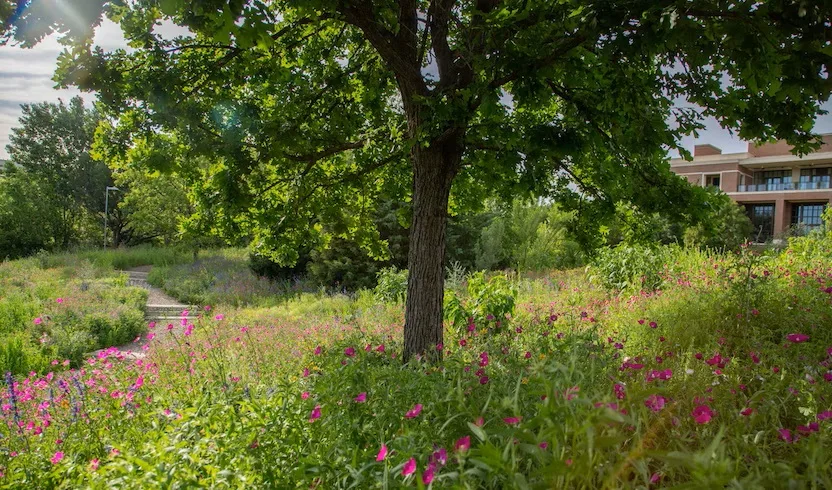

Field Trip – Laura Bush Native Texas Park, Dallas

On May 2, our chapter has the opportunity to take a guided tour of this beautiful park! We will meet our docents at 10am at the main (north) gate at the George W Bush Presidential Center at 2843 SMU Blvd in Dallas. Guests are invited to participate, including children. The drive is approximately two hours from Quitman. Contact Linda Mahony (972-467-3624) for carpool information and to RSVP.

The tour should be concluded by noon, after which the participants can choose to go into the library or to meet for lunch at La Madeleine restaurant at 3072 Mockingbird Lane.

While the tour is free, going into the George W. Bush Presidential Library will cost $23 for seniors. Within the library, you can see things such as a full-size replica of the Oval Office, a lot of baseball memorabilia, and a piece of steel from the World Trade Center can be seen. The native plantings around the George W. Bush Presidential Library were designed and planted on what was once parking lot abutted to US-75 on the campus of Southern Methodist University. Three of the state’s 10 ecoregions meet in Dallas and are represented in the park: Post Oak Savannah, Cross Timbers Forest, and Blackland Prairie.

RSVP REQUIRED:  If you would like to RSVP to attend, please contact us. Once we receive your RSVP, we will email you the REQUIRED liability release form which must be signed before participating. Be sure to mark your calendars! For more information about the Laura Bush Native Texas Park in Dallas, click HERE.

Date
May 02 2026
Expired!
Time
10:00 am - 12:00 pm
Cost
$
Category
Organizer
Lakes and Pines Calendar

About the Region

2026 Fall Symposium Logo

This low-elevations region of Texas extends inland from the barrier islands, about 60 or so miles, and stretches from Brownsville to Louisiana. In total, it covers about 9.5 million acres, with a high point of 150 feet in elevation. More than 1000 species of plants can be found in this region. On the southern end, species more common in Mexico (such as Sabal mexicana) and Central America occur.

The barrier islands provide us with dune systems, and clay flats to the inland side, which have species found in these areas alone. Many plants here, such as Ipomoea pes-caprae (beach morning glory), can be found throughout tropical regions of the globe. I’ve encountered the same species on the beaches of Guam.

Once inland, vast marshes and wet prairies occur. Occasionally, oak (Quercus fusiformis) groves can be found. Common grasses include species of Bothriochloa, Paspalum, and Sporobolus; eastern gamagrass (Tripsacum dactyloides); and switchgrass (Panicum species). Many rivers and creeks cut through the Gulf Prairies, and along these riparian areas various species of trees, Sabal minor, and other plants adapted to clay soils can be found. Due to overgrazing, farming, and fire suppression, woody species such as mesquite (Prosopis glandulosa) and huisache (Acacia farnesiana), and invasive species such as chinaberry (Melia azedarach), Brazilian pepper (Schinus terebinthifolius), and Chinese tallow (Sapium sebiferum) have increased and displaced our native flora.

Source: Wildflowers of Texas by Michael Eason