Home » Events » Field Trip: Lawther-Deer Park Prairie
Field Trip: Lawther-Deer Park Prairie
Meeting Location: Registration is required and limited space is available. The location will be sent to registered participants only. Email Della_Barbato@TexasPrairie.org to register. She will e-mail you a liability waiver and important parking instructions.
Things To Bring: We will wander off trail, so boots/closed toe shoes and bug spray recommended. There are some wetlands, and since your leader is a wetland ecologist he likely is going to want to get wet to see fun species such as powdery thalia (Thalia dealbata). Follow at your own risk (you should do it – why not?). Please bring adequate hydration and other items you may require to be comfortable. We will be in full sun the entire time, so dress appropriately.
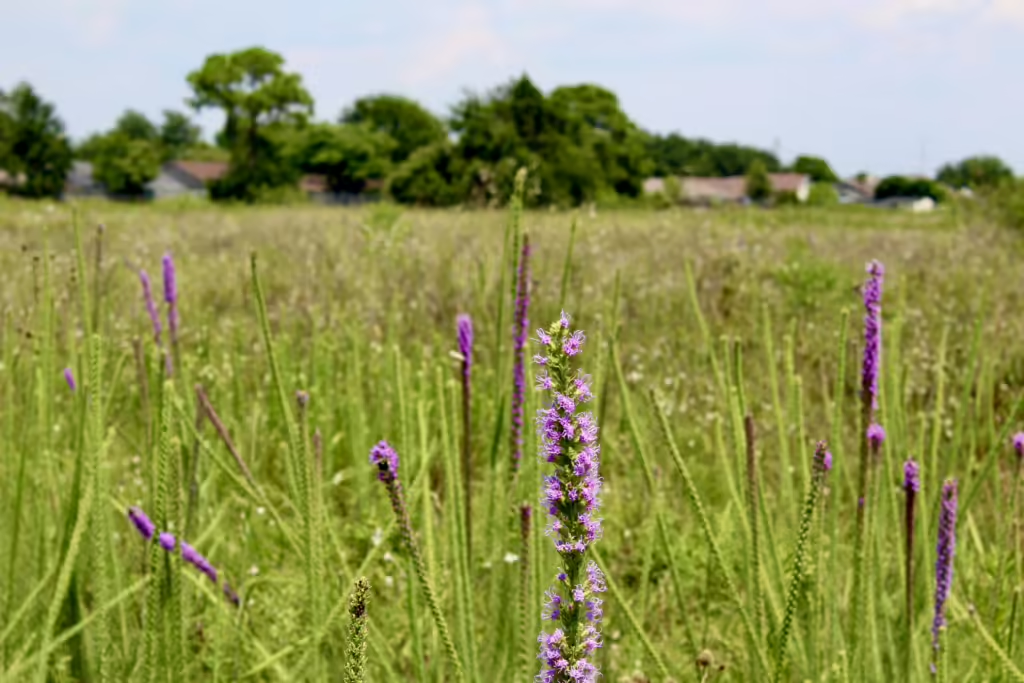
Field Trip Overview: Please at some point, find out the conservation story of this 51 acre property, it speaks accolades of many people and groups who came together to preserve a jewel of the habitat type that used to dominate the Greater Houston Area. This is called a “platinum prairie” with over 400 plant species identified. In depth information provided by Singhurst et al. in The Vascular Flora and Plant Communities of Lawther-Deer Park Prairie, Harris County, Texas, USA (link below). As Singhurst et al. points out there are six distinctive vegetation communities present within the area. Plant species representation include Grasses (84 species), Sunflowers (68 species), Sedges (33 species) and Legumes (19 species). Since your leader is a grass and sedge nerd- we will focus on finding some uncommon species to the area such as slender bluestem (Schizachyrium tenerum), Pineywoods dropseed (Sporobolus junceus), purple silkyscale (Anthenantia rufa), Texas windmill grass (Chloris texensis), and Georgia nutrush (Scleria georgiana- one of leader’s favorites, has cool iridescent pits on achene [seed]). It may be a week or two early, but we may find nodding ladies tresses (Spiranthes cernua). From a conservation perspective, we will discuss how these areas are key to preserving diversity and genetics and can be utilized to promote future restoration efforts. Additionally, we may also discuss management limitations of areas like this (e.g. difficulty burning/grazing, invasive pathways, woody encroachment, etc.).
Leader Bio: Andy Newman is the Chief Ecologist at The Earth Partners and has 15 years’ experience working within diverse ecosystems for a wide array of project types. His position places an emphasis leading the technical ecological restoration of projects, managing construction and adaptive management, and helping clients meet their compensatory mitigation requirements. His background includes environmental restoration planning, stakeholder engagement, construction, planting, and ecological uplift assessment. Andy’s specialties include aquatic feature delineations and jurisdictional determinations, Clean Water Act permitting, threatened and endangered species identification and consultations, NEPA compliance, plant identification, and community classification. His favorite ecosystems include longleaf pine savannas, coastal prairies, and southern Appalachian forests.
Additional Coordination Details: Please contact Bob Romero for any further coordination details at bobromero@gmail.com or by phone at (713) 248-6030.
This low-elevations region of Texas extends inland from the barrier islands, about 60 or so miles, and stretches from Brownsville to Louisiana. In total, it covers about 9.5 million acres, with a high point of 150 feet in elevation. More than 1000 species of plants can be found in this region. On the southern end, species more common in Mexico (such as Sabal mexicana) and Central America occur.
The barrier islands provide us with dune systems, and clay flats to the inland side, which have species found in these areas alone. Many plants here, such as Ipomoea pes-caprae (beach morning glory), can be found throughout tropical regions of the globe. I’ve encountered the same species on the beaches of Guam.
Once inland, vast marshes and wet prairies occur. Occasionally, oak (Quercus fusiformis) groves can be found. Common grasses include species of Bothriochloa, Paspalum, and Sporobolus; eastern gamagrass (Tripsacum dactyloides); and switchgrass (Panicum species). Many rivers and creeks cut through the Gulf Prairies, and along these riparian areas various species of trees, Sabal minor, and other plants adapted to clay soils can be found. Due to overgrazing, farming, and fire suppression, woody species such as mesquite (Prosopis glandulosa) and huisache (Acacia farnesiana), and invasive species such as chinaberry (Melia azedarach), Brazilian pepper (Schinus terebinthifolius), and Chinese tallow (Sapium sebiferum) have increased and displaced our native flora.