
Field Trip: Spring Creek Parkway

Meeting Location:  Spring Creek Parkway Trailhead (Spring Creek Parkway Trailhead at 59 in Google Maps) on the west side of US 59/I 69 in Humble, Texas (GPS: 30.02581, -95.263713)

Things To Bring: We will likely wander off trail, so boots/closed toe shoes and bug spray recommended. Please bring adequate hydration and other items you may require to be comfortable. We will be in full sun portions of the time, so dress appropriately.

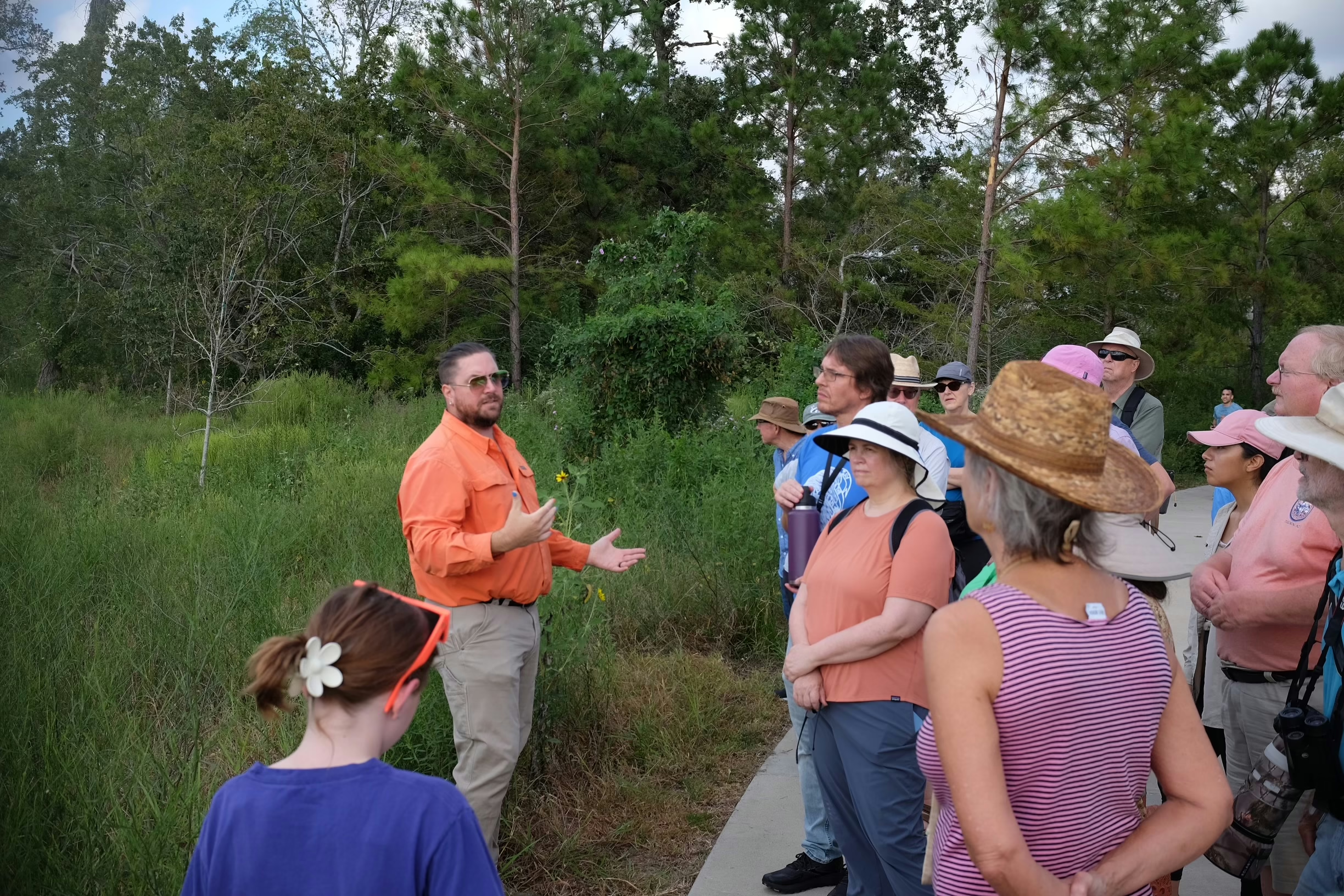
Field Trip Overview: This portion of the Spring Creek trail is situated on an old Spring Creek depositional feature and contains deep sands. We will walk and look for openings in the forested portions of the trail for areas that contain bluejack oak (Quercus incana), post oak (Q. stellata), tropic croton (Croton glandulosa), Reverchon’s spiderwort (Tradescantia reverchonii), slender scratch daisy (Croptilon divaricatum), viperina (Zornia bracteata) and other deep sand specialists. We will then walk off trail to seepage slopes dominated by netted chain fern (Woodwardia areolata), royal fern (Osmunda regalis), and Kunth’s maiden fern (Thelypteris kunthii). This area also contains some other interesting species such primrose-leaved violet (Viola primulifolia), greater marsh St. Johnswort (Hypericum walteri), and several uncommon sedges (Carex and Eleocharis species). We will then explore some floodplain/bottomland forested communities dominated by bald cypress (Taxodium distichum), water oak (Q. nigra), willow oak (Q. phellos), cherrybark oak (Q. pagoda), American elm (Ulmus americana), green ash (Fraxinus pennslyvanica), and sweetgum (Liquidambar styraciflua). Two-winged silverbell (Halesia diptera) should be in full bloom in the understory. It is also one of the only places Andy knows were to find tung oil tree (Vernicia fordii) growing wild in Harris County.

Additional Site Information: https://www.bayoulandconservancy.org/spring-creek-greenway

Additional Coordination Details: Please contact Bob Romero for any further coordination details at
bobromero@gmail.com or by phone at 713.248.6030.

Date
May 10 2025
Expired!
Time
9:00 am - 11:00 am
Cost
$
Category

About the Region

2026 Fall Symposium Logo

This low-elevations region of Texas extends inland from the barrier islands, about 60 or so miles, and stretches from Brownsville to Louisiana. In total, it covers about 9.5 million acres, with a high point of 150 feet in elevation. More than 1000 species of plants can be found in this region. On the southern end, species more common in Mexico (such as Sabal mexicana) and Central America occur.

The barrier islands provide us with dune systems, and clay flats to the inland side, which have species found in these areas alone. Many plants here, such as Ipomoea pes-caprae (beach morning glory), can be found throughout tropical regions of the globe. I’ve encountered the same species on the beaches of Guam.

Once inland, vast marshes and wet prairies occur. Occasionally, oak (Quercus fusiformis) groves can be found. Common grasses include species of Bothriochloa, Paspalum, and Sporobolus; eastern gamagrass (Tripsacum dactyloides); and switchgrass (Panicum species). Many rivers and creeks cut through the Gulf Prairies, and along these riparian areas various species of trees, Sabal minor, and other plants adapted to clay soils can be found. Due to overgrazing, farming, and fire suppression, woody species such as mesquite (Prosopis glandulosa) and huisache (Acacia farnesiana), and invasive species such as chinaberry (Melia azedarach), Brazilian pepper (Schinus terebinthifolius), and Chinese tallow (Sapium sebiferum) have increased and displaced our native flora.

Source: Wildflowers of Texas by Michael Eason