
Field Trip: Warren Ranch Saline Barrens

OLYMPUS DIGITAL CAMERA

Meeting Location: Meet approximately 0.5 miles south of Matt Cook Memorial Wildlife Viewing Platform on Warren Ranch Road in northwestern Harris County. The gate for this location is north of the intersection of Warren Ranch Road and Jack Road. GPS coordinates are: 29.96934, -95.84305

Things To Bring: Closed toe shoes and bug spray are recommended. Please bring adequate hydration and other items you may require to be comfortable. It is anticipated that we will be in full sun the entire time, so dress appropriately.

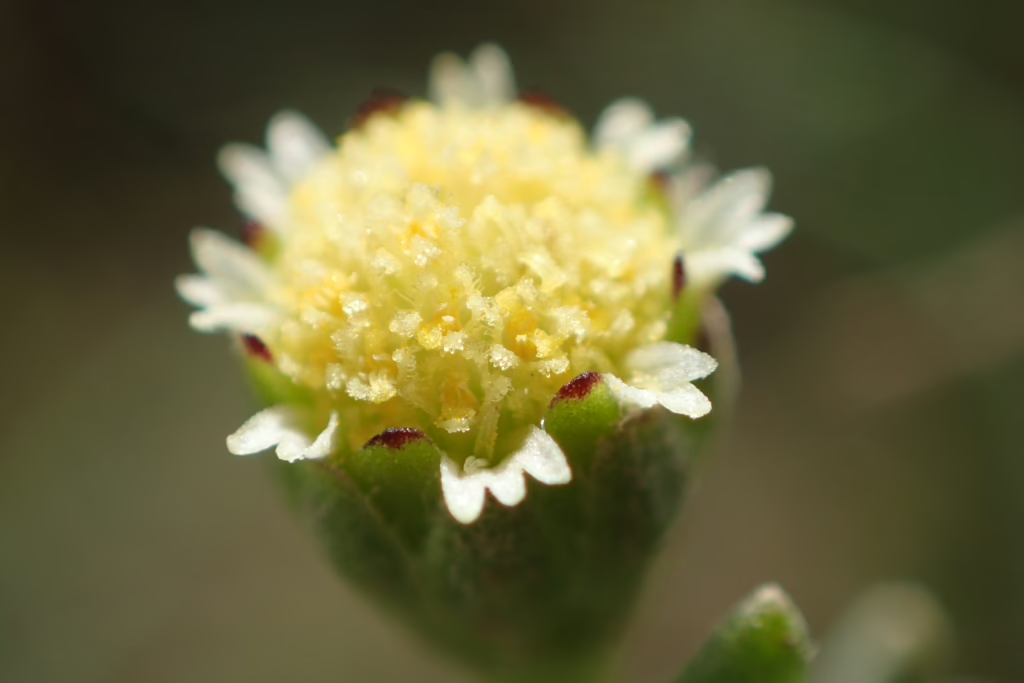
Field Trip Overview: This field trip will be focused on seeing rare species endemic to saline barrens that occur on the Texas coastal prairie. Jason Singhurst (Texas Parks and Wildlife Department biologist) described these habitats as the pyramid dropseed (Sporobolus pyramidatus), bristle-seed sand-spurrey (Spergularia echinosperma), narrowleaf marsh elder (Iva angustifolia), and Texas prairie dawn (Hymenoxys texana) herbaceous vegetation community of the Houston Saline Prairie. There are several other unique species that we may find including Texas windmill grass (Chloris texensis) and Texas Willkommia (Willkommia texana). The below talk by the field trip leader on YouTube and paper by Singhurst are suggested reference material to review prior to field trip to help participants understand these unique systems.

Additional Flora Information: https://www.phytoneuron.net/2014Phytoneuron/19PhytoN-Hymenoxystexana.pdf

Field Trip Leader’s Talk About Saline Barrens: https://www.youtube.com/watch?v=YgbwKeKJwoI&t=1223s

Additional Site Information: https://www.coastalprairieconservancy.org/

Waiver to Fill Out: https://www.coastalprairieconservancy.org/waiver-of-liability-release-and-indemnity-and-media-release-form

Additional Coordination Details: Please contact Bob Romero for any further coordination details at
bobromero@gmail.com or by phone at 713.248.6030.

Date
Mar 29 2025
Expired!
Time
9:00 am - 11:00 am
Cost
$
Category

About the Region

2026 Fall Symposium Logo

This low-elevations region of Texas extends inland from the barrier islands, about 60 or so miles, and stretches from Brownsville to Louisiana. In total, it covers about 9.5 million acres, with a high point of 150 feet in elevation. More than 1000 species of plants can be found in this region. On the southern end, species more common in Mexico (such as Sabal mexicana) and Central America occur.

The barrier islands provide us with dune systems, and clay flats to the inland side, which have species found in these areas alone. Many plants here, such as Ipomoea pes-caprae (beach morning glory), can be found throughout tropical regions of the globe. I’ve encountered the same species on the beaches of Guam.

Once inland, vast marshes and wet prairies occur. Occasionally, oak (Quercus fusiformis) groves can be found. Common grasses include species of Bothriochloa, Paspalum, and Sporobolus; eastern gamagrass (Tripsacum dactyloides); and switchgrass (Panicum species). Many rivers and creeks cut through the Gulf Prairies, and along these riparian areas various species of trees, Sabal minor, and other plants adapted to clay soils can be found. Due to overgrazing, farming, and fire suppression, woody species such as mesquite (Prosopis glandulosa) and huisache (Acacia farnesiana), and invasive species such as chinaberry (Melia azedarach), Brazilian pepper (Schinus terebinthifolius), and Chinese tallow (Sapium sebiferum) have increased and displaced our native flora.

Source: Wildflowers of Texas by Michael Eason