
Greener Gulfton: Native Plants for Health, Resilience, and Biodiversity – July 18

IMPORTANT NOTE:
Due to continued power outage at the Houston Arboretum, we are not able to offer an in-person meeting this week. We will meet via Zoom only. Please register to ensure we have capacity for all who want to participate:

https://us02web.zoom.us/meeting/register/tZclduiorj8oHNeUPLx31SwIQ-Yh6I8MfMoY

Gulfton is a culturally rich neighborhood in southwest Houston with great leadership and a can-do spirit. Yet, it is a nature-deprived neighborhood, putting the human community at risk for rising temperatures, air pollution, and increased stress levels. Fortunately an effort is underway to plant trees, provide nature-rich shade shelters, bus stops and more! Part of this transformation is the Greener Gulfton effort and we will tell that story.


About the Speaker

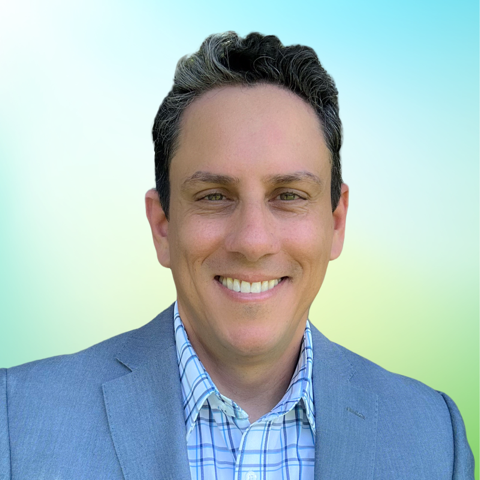
Jaime González is an award-winning conservationist, environmental educator, public speaker, and coalition builder working at the intersection of human health, biodiversity conservation, equity, and climate action. He works to influence policy, secure funding, catalyze planning and embed community-based projects that unlock the power of nature for community well-being and environmental health. Jaime serves as board chair for the North American Association for Environmental Education (NAAEE), as a board member for Madres del Parque, and as a climate justice advisor to Harris County. He formerly worked for The Nature Conservancy, the Coastal Prairie Conservancy, Houston Arboretum & Nature
Center, and the Nature Heritage Society.

Jaime has won numerous local, state, and national awards for his work, including the Distinguished Alumni Award from the University of Houston’s College of Natural Sciences and Mathematics, the 2022 Houston Visionary Award from Center for Houston’s Future, the Prairie Champion Award from the Coastal Prairie Conservancy, and the Elizabeth Hull Abernathy Award from the Garden Club of America for outstanding contributions to environmental education of youth.

Our monthly chapter meetings are held on every 3rd Thursday, January – November. Our meetings are free and open to the public thanks to our members and sponsors.

Meetings will also be live-streamed and recorded for later viewing.

Return to Houston Chapter Page

Date
Jul 18 2024
Expired!
Time
7:00 pm - 8:00 pm
Cost
$
More Info
Read More

About the Region

2026 Fall Symposium Logo

This low-elevations region of Texas extends inland from the barrier islands, about 60 or so miles, and stretches from Brownsville to Louisiana. In total, it covers about 9.5 million acres, with a high point of 150 feet in elevation. More than 1000 species of plants can be found in this region. On the southern end, species more common in Mexico (such as Sabal mexicana) and Central America occur.

The barrier islands provide us with dune systems, and clay flats to the inland side, which have species found in these areas alone. Many plants here, such as Ipomoea pes-caprae (beach morning glory), can be found throughout tropical regions of the globe. I’ve encountered the same species on the beaches of Guam.

Once inland, vast marshes and wet prairies occur. Occasionally, oak (Quercus fusiformis) groves can be found. Common grasses include species of Bothriochloa, Paspalum, and Sporobolus; eastern gamagrass (Tripsacum dactyloides); and switchgrass (Panicum species). Many rivers and creeks cut through the Gulf Prairies, and along these riparian areas various species of trees, Sabal minor, and other plants adapted to clay soils can be found. Due to overgrazing, farming, and fire suppression, woody species such as mesquite (Prosopis glandulosa) and huisache (Acacia farnesiana), and invasive species such as chinaberry (Melia azedarach), Brazilian pepper (Schinus terebinthifolius), and Chinese tallow (Sapium sebiferum) have increased and displaced our native flora.

Source: Wildflowers of Texas by Michael Eason