
Homegrown National Park: How to Get on the Map!

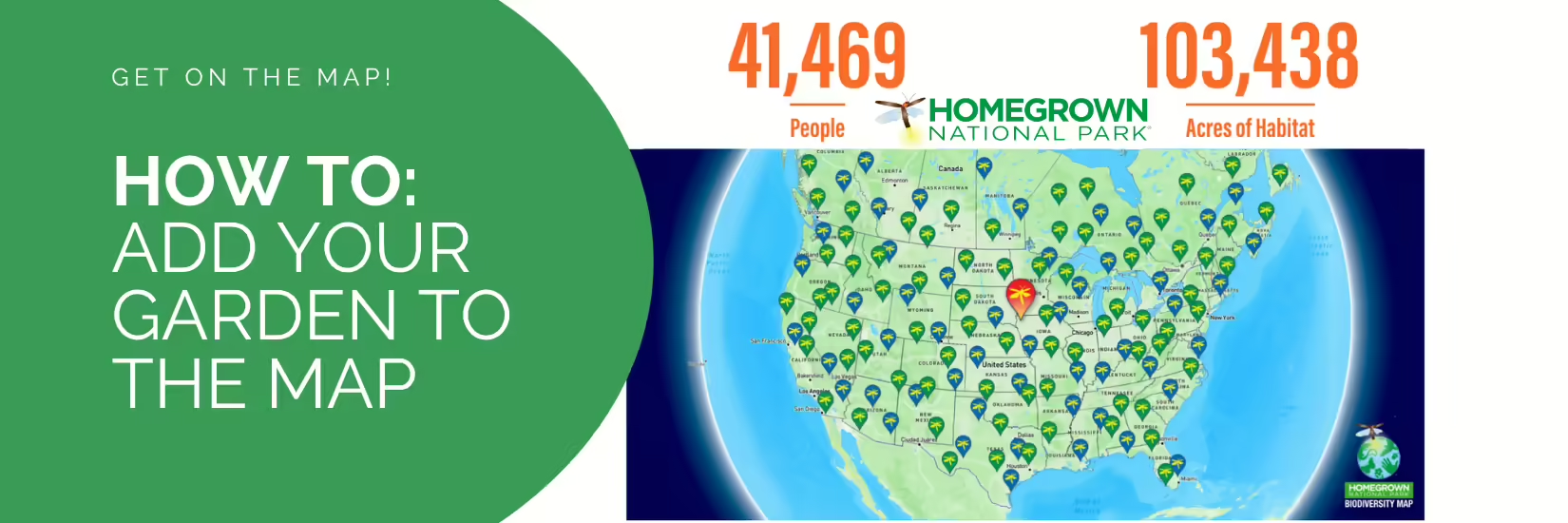
To celebrate the 15th anniversary of Texas Native Plant Week (Oct. 20-26), we invite you to participate in the “Get on the Map!” challenge. In October, NPSOT is partnering with Doug Tallamy’s Homegrown National Park®, with the goal of adding 100 new Texas native plant gardens to their Biodiversity Map! 

Via Zoom Virtual Meeting

Join the movement to restore 20 million acres of private land by planting native species. Raise awareness and urgently inspire others to help address the biodiversity crisis by adding native plants and removing invasive ones where we live, work, learn, pray and play. No experience necessary!Our speaker, Krista De Cooke, Strategic Partnership and Science Lead, with Homegrown National Park® (HNP), explains how you can get on the Homegrown National Park map as part of the largest cooperative conservation project to regenerate biodiversity ever attempted!  She will even show you how to connect your garden to the statewide Native Plant Society of Texas or your Local NPSOT – Chapter in your membership profile.Zoom link. Details on website link below.

Join us for a Zoom call with Homegrown National Park® Tuesday, October 22nd at 7 pm to learn more; register here:

https://npsot-org.zoom.us/meeting/register/tZMpdeCgrj4qHNfWSN84YIt53GqTzZzkB6W7

Ready to add your garden to the map now? Here’s how: https://www.npsot.org/our-work/texas-native-plant-week/get-on-the-homegrown-national-park-map/

Questions? Email us at Homegrown-Natl-Park@npsot.org.

Date
Oct 22 2024
Expired!
Time
7:00 pm - 8:00 pm
Cost
$
Category

About the Region

2026 Fall Symposium Logo

This low-elevations region of Texas extends inland from the barrier islands, about 60 or so miles, and stretches from Brownsville to Louisiana. In total, it covers about 9.5 million acres, with a high point of 150 feet in elevation. More than 1000 species of plants can be found in this region. On the southern end, species more common in Mexico (such as Sabal mexicana) and Central America occur.

The barrier islands provide us with dune systems, and clay flats to the inland side, which have species found in these areas alone. Many plants here, such as Ipomoea pes-caprae (beach morning glory), can be found throughout tropical regions of the globe. I’ve encountered the same species on the beaches of Guam.

Once inland, vast marshes and wet prairies occur. Occasionally, oak (Quercus fusiformis) groves can be found. Common grasses include species of Bothriochloa, Paspalum, and Sporobolus; eastern gamagrass (Tripsacum dactyloides); and switchgrass (Panicum species). Many rivers and creeks cut through the Gulf Prairies, and along these riparian areas various species of trees, Sabal minor, and other plants adapted to clay soils can be found. Due to overgrazing, farming, and fire suppression, woody species such as mesquite (Prosopis glandulosa) and huisache (Acacia farnesiana), and invasive species such as chinaberry (Melia azedarach), Brazilian pepper (Schinus terebinthifolius), and Chinese tallow (Sapium sebiferum) have increased and displaced our native flora.

Source: Wildflowers of Texas by Michael Eason