Home » San Antonio » A Rare Texas Native-Conservation of the Bracted Twistflower (Streptanthus bracteatus)
San Antonio Chapter
A Rare Texas Native-Conservation of the Bracted Twistflower (Streptanthus bracteatus)
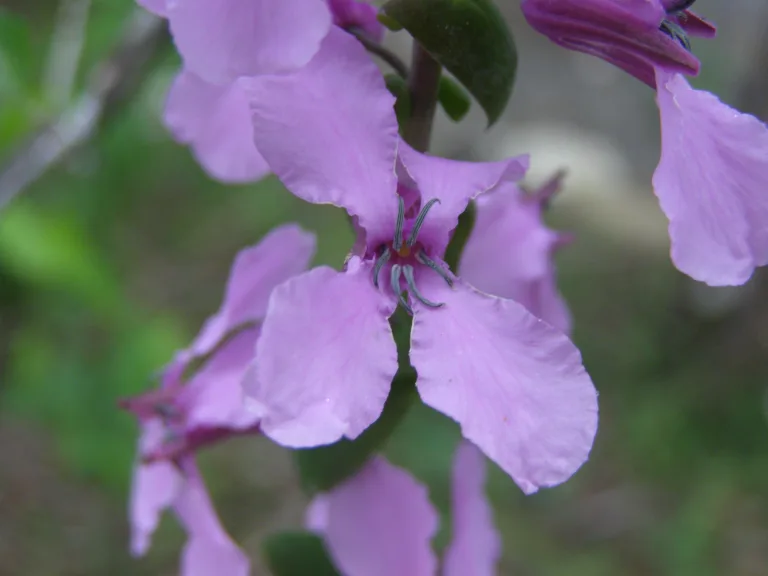
Photo by Wendy Leonard
February 2024 Presentation by Wendy Leonard A Rare Texas Native-Conservation of the Bracted Twistflower (Streptanthus bracteatus)
Explore the factors limiting the growth and distribution of a true Texas Native, the endemic Bracted twistflower (Streptanthus bracteatus). A member of the Brassicaceae (mustard) family, S. bracteatus is a rare wildflower growing exclusively in the Edward’s Plateau ecoregion. With less than 12 populations remaining, the species was listed at threatened in 2023. Much of the populations that remain are experiencing decline due to a number of factors including genetic inbreeding, mismanagement of habitat, residential development, and over browsing by deer, just to name a few. Wendy Leonard will discuss conservation efforts for Bexar and Medina Counties and the work being done to help save this species.
Wendy Leonard has been with the City of San Antonio for 19 years. She has a BS in Wildlife Biology and Geography: Resource and Environmental Studies from Texas State University-San Marcos and a Master’s of Science in Biology with thesis in Plant Ecology at the University of Texas at San Antonio. Her thesis research focused on the factors limiting the growth and distribution of a rare Texas endemic wildflower. In the City of San Antonio Natural Areas, she manages native plant communities, surveys and monitors rare and endangered species and conducts research and restoration projects.
View Recording of Lecture
To contribute to the preservation of the Bracted Twistflower, you can donate to the non-profit Imperiled Inc. by clicking on the link below:
About the Region
This low-elevations region of Texas extends inland from the barrier islands, about 60 or so miles, and stretches from Brownsville to Louisiana. In total, it covers about 9.5 million acres, with a high point of 150 feet in elevation. More than 1000 species of plants can be found in this region. On the southern end, species more common in Mexico (such as Sabal mexicana) and Central America occur.
The barrier islands provide us with dune systems, and clay flats to the inland side, which have species found in these areas alone. Many plants here, such as Ipomoea pes-caprae (beach morning glory), can be found throughout tropical regions of the globe. I’ve encountered the same species on the beaches of Guam.
Once inland, vast marshes and wet prairies occur. Occasionally, oak (Quercus fusiformis) groves can be found. Common grasses include species of Bothriochloa, Paspalum, and Sporobolus; eastern gamagrass (Tripsacum dactyloides); and switchgrass (Panicum species). Many rivers and creeks cut through the Gulf Prairies, and along these riparian areas various species of trees, Sabal minor, and other plants adapted to clay soils can be found. Due to overgrazing, farming, and fire suppression, woody species such as mesquite (Prosopis glandulosa) and huisache (Acacia farnesiana), and invasive species such as chinaberry (Melia azedarach), Brazilian pepper (Schinus terebinthifolius), and Chinese tallow (Sapium sebiferum) have increased and displaced our native flora.