San Antonio Chapter

Native Plant Sale

Native Plant Sale at The Nectar BAR

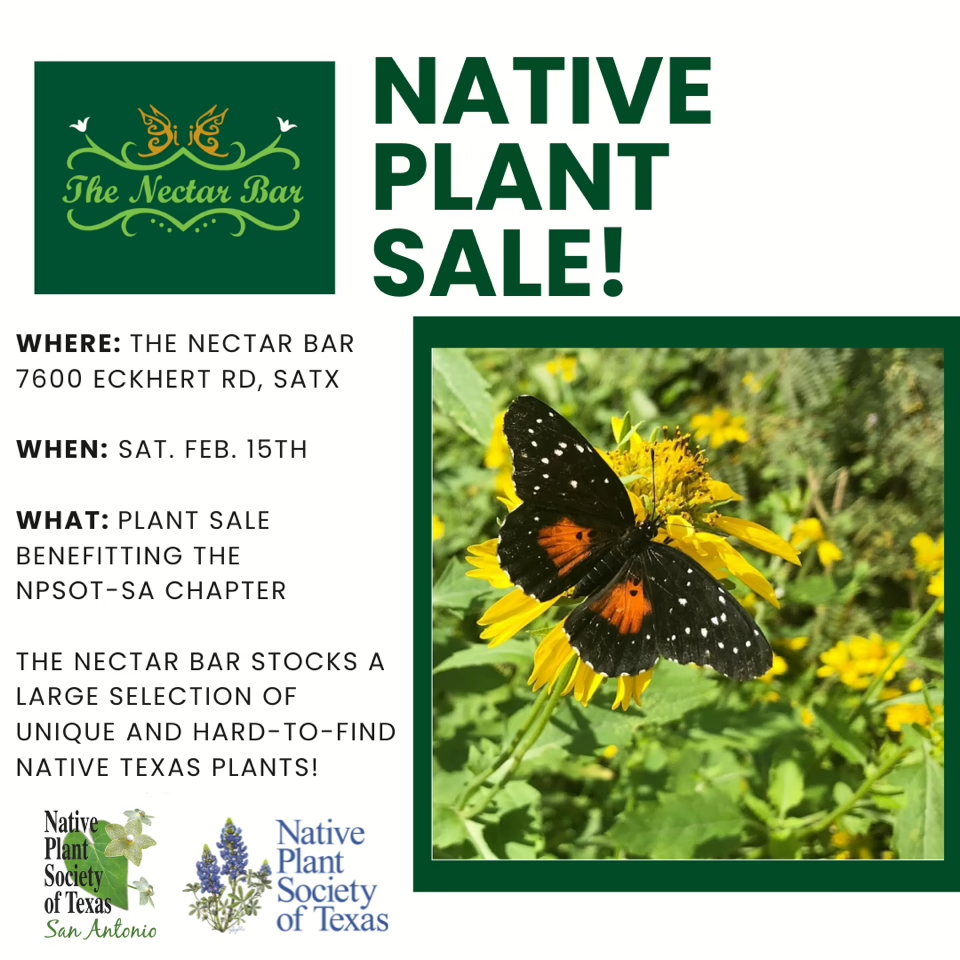
Mark your calendars! You will not want to miss this native plant sale! The Nectar Bar exclusively carries native plants that benefit our local ecosystem and that thrive in our unique climate. In addition to well know species, it stocks a large selection of unique and hard-to-find native Texas plants. Plus, every plant purchased on this date at the Nectar Bar will result in a financial contribution to our Chapter!

Download a sneak peak of plant list for the sale!

The Nectar Bar is one of our chapter’s NICE nurseries! To learn more about our NICE program Support our NICE Partners – Native Plant Society of Texas.

Interested in volunteering? The sale starts at 10am but we will be providing six plant associates to assist customers over various 2.5 hour shifts between 9:30 am and 3:30 pm.  To register, click here.

 

NPSOT-SA Plant Sale At SAWS Spring Bloom

Saturday, March 8, 2025 from 9 a.m. to 1 p.m at SAWS Headquarters, 2800 US Hwy 281 North.

For a third year, we will have a plant sale booth at the SAWS Spring Bloom.  We will need set-up volunteers for a couple of hours on Friday, March 7 to unload plants and set up the booth.  The time on Friday is TBD.  On Saturday,  there is only one shift, running 8:30 am until 1 pm (or we sell out).  Need cashiers for check out and plant associates to assist customers in plant selection. 
 
To register, click here

Stay In Touch

Join our mailing list to learn about upcoming native plant sales.

About the Region

2026 Fall Symposium Logo

This low-elevations region of Texas extends inland from the barrier islands, about 60 or so miles, and stretches from Brownsville to Louisiana. In total, it covers about 9.5 million acres, with a high point of 150 feet in elevation. More than 1000 species of plants can be found in this region. On the southern end, species more common in Mexico (such as Sabal mexicana) and Central America occur.

The barrier islands provide us with dune systems, and clay flats to the inland side, which have species found in these areas alone. Many plants here, such as Ipomoea pes-caprae (beach morning glory), can be found throughout tropical regions of the globe. I’ve encountered the same species on the beaches of Guam.

Once inland, vast marshes and wet prairies occur. Occasionally, oak (Quercus fusiformis) groves can be found. Common grasses include species of Bothriochloa, Paspalum, and Sporobolus; eastern gamagrass (Tripsacum dactyloides); and switchgrass (Panicum species). Many rivers and creeks cut through the Gulf Prairies, and along these riparian areas various species of trees, Sabal minor, and other plants adapted to clay soils can be found. Due to overgrazing, farming, and fire suppression, woody species such as mesquite (Prosopis glandulosa) and huisache (Acacia farnesiana), and invasive species such as chinaberry (Melia azedarach), Brazilian pepper (Schinus terebinthifolius), and Chinese tallow (Sapium sebiferum) have increased and displaced our native flora.

Source: Wildflowers of Texas by Michael Eason