Dallas Chapter

NPSOT Dallas February 19, 2024 meeting with Adam Black: Neglected Priorities of the Plant Conservation World

February 19, 2024 Dallas Chapter, NPSOT meeting with Adam Black.
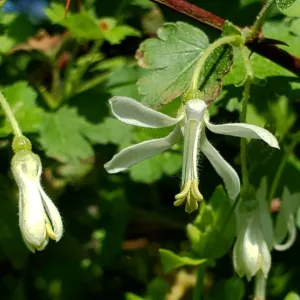
Ribes curvatum, Granite Gooseberry
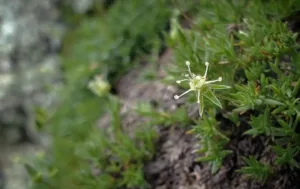
Arenaria livermorensis, Livermore Sandwort

Plant conservationists often tend to focus on glamorous species like intriguing carnivorous plants, showy rare orchids and other flashy wildflowers while almost completely ignoring the many scrawny, inconspicuous, yet ecologically important components of our floral diversity. Learning to value the subtle beauty of these ungainly low-key species and their critical role in their ecosystem can hopefully generate greater support of these aesthetically unexceptional plants in need of help.
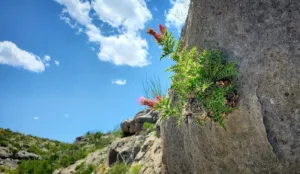
Cirsium turneri, Cliff Thistle

Adam Black is currently the Director of Horticulture and Plant Conservation at Bartlett Tree Research Laboratories and Arboretum in Charlotte, NC. A former Texas resident, he remains very active with collaborative ex-situ conservation of the state’s many imperiled plant species. In addition to extensive familiarity of the southern US flora, he has been involved in field work and plant explorations in New Caledonia, Taiwan, The Philippines, South Africa and beyond.

About the Region

2026 Fall Symposium Logo

This low-elevations region of Texas extends inland from the barrier islands, about 60 or so miles, and stretches from Brownsville to Louisiana. In total, it covers about 9.5 million acres, with a high point of 150 feet in elevation. More than 1000 species of plants can be found in this region. On the southern end, species more common in Mexico (such as Sabal mexicana) and Central America occur.

The barrier islands provide us with dune systems, and clay flats to the inland side, which have species found in these areas alone. Many plants here, such as Ipomoea pes-caprae (beach morning glory), can be found throughout tropical regions of the globe. I’ve encountered the same species on the beaches of Guam.

Once inland, vast marshes and wet prairies occur. Occasionally, oak (Quercus fusiformis) groves can be found. Common grasses include species of Bothriochloa, Paspalum, and Sporobolus; eastern gamagrass (Tripsacum dactyloides); and switchgrass (Panicum species). Many rivers and creeks cut through the Gulf Prairies, and along these riparian areas various species of trees, Sabal minor, and other plants adapted to clay soils can be found. Due to overgrazing, farming, and fire suppression, woody species such as mesquite (Prosopis glandulosa) and huisache (Acacia farnesiana), and invasive species such as chinaberry (Melia azedarach), Brazilian pepper (Schinus terebinthifolius), and Chinese tallow (Sapium sebiferum) have increased and displaced our native flora.

Source: Wildflowers of Texas by Michael Eason