
Dallas Chapter

NICE! Native Plant Partner Nurseries

Texas is a large and diverse state. Plants that work for one region may not always be the best choice in a different region. The Native Plant Society of Texas created the NICE Native Plant Partners program to help nurseries offer natives that are right for the local environment.

Committees for Native Plant Partners are run by local chapters and create the Plant of the Season lists in cooperation with wholesalers in order to assure availability and in cooperation with participating local nurseries. The Native Plant Society of Texas then helps promote the Plant of the Season through our website and  newspaper articles, signs at the point of sale and other means. Information sheets on the plant are available at the nursery along with care and planting instructions. The following Dallas county nurseries are currently participating in our program.
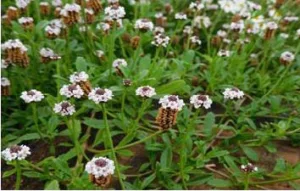

Summer 2023 Plant of the Season: Frogfruit, Phyla nodiflora (Lippia nodiflora)

Frogfruit, Phyla nodiflora (Lippia nodiflora)

Frogfruit, Phyla nodiflora (Lippia nodiflora), also called Texas Frogfruit,
or Sawtooth Frogfruit, is a member of the verbena family.
Frogfruit is a rapid grower and an excellent long-lived perennial groundcover.

Handouts and information
2023-06 NICE Frogfruit Information Sheet_Dallas (WORD DOC 6.14 MB)
2023-06 NICE Frogfruit Information Sheet_Dallas (PDF 173 KB)



Featured NICE! Plants of Previous Seasons

2023, Spring – Crossvine, Bignonia capreolata (PDF 99 KB)
2021, Winter-Spring – Prairie Verbena, Glandularia bipinnatifida (PDF 163 KB)
2021, Spring-Summer –
Purple Passionvine, Passiflora incarnata (PDF 306 KB)
2019, Winter-Spring Bluebonnet – Lupinus texensis (PDF 156 KB)
2019, Spring-SummerPurple Coneflower – Echinacea purpurea (PDF 156 KB)


The Dallas Chapter is currently partnering with these area nurseries:

North Haven Gardenswww.nhg.com/texas-natives/

Randy Johnson Organics – https://www.facebook.com/profile.php?id=100063160752141

Redenta’s – https://redentas.com/


NICE! nurseries in the greater DFW area:

Dallas Chapter Native Plant Partner Nurseries

Associated Chapters: Dallas
7700 Northaven Road, Dallas, TX 75230, USA
Associated Chapters: Dallas
Mesquite, TX, USA
Associated Chapters: Dallas
2001 Skillman St, Dallas, TX 75206, USA

Additional NICE Partner Nurseries in the DFW Area

Associated Chapters: Trinity Forks
7976 U.S. 377, Pilot Point, TX, USA
Associated Chapters: Trinity Forks
1570 North Stemmons Freeway, Lewisville, TX 75057, USA
Associated Chapters: Trinity Forks
2623 James St, Denton, TX, USA

Native Roots Perennial Farm & Garden

Associated Chapters: Trinity Forks
8463 Crest View Road, Sanger, TX, USA
Associated Chapters: Trinity Forks
4765 U.S. 377, Cross Roads, TX, USA
Associated Chapters: Trinity Forks
3801 Lariat Road, Denton, TX 76207, USA
Associated Chapters: Trinity Forks
12804 Pelzel Rd, Pilot Point, TX 76258, USA
Associated Chapters: Trinity Forks
1213 East Sunset Boulevard, Celina, TX, USA

About the Region

2026 Fall Symposium Logo

This low-elevations region of Texas extends inland from the barrier islands, about 60 or so miles, and stretches from Brownsville to Louisiana. In total, it covers about 9.5 million acres, with a high point of 150 feet in elevation. More than 1000 species of plants can be found in this region. On the southern end, species more common in Mexico (such as Sabal mexicana) and Central America occur.

The barrier islands provide us with dune systems, and clay flats to the inland side, which have species found in these areas alone. Many plants here, such as Ipomoea pes-caprae (beach morning glory), can be found throughout tropical regions of the globe. I’ve encountered the same species on the beaches of Guam.

Once inland, vast marshes and wet prairies occur. Occasionally, oak (Quercus fusiformis) groves can be found. Common grasses include species of Bothriochloa, Paspalum, and Sporobolus; eastern gamagrass (Tripsacum dactyloides); and switchgrass (Panicum species). Many rivers and creeks cut through the Gulf Prairies, and along these riparian areas various species of trees, Sabal minor, and other plants adapted to clay soils can be found. Due to overgrazing, farming, and fire suppression, woody species such as mesquite (Prosopis glandulosa) and huisache (Acacia farnesiana), and invasive species such as chinaberry (Melia azedarach), Brazilian pepper (Schinus terebinthifolius), and Chinese tallow (Sapium sebiferum) have increased and displaced our native flora.

Source: Wildflowers of Texas by Michael Eason