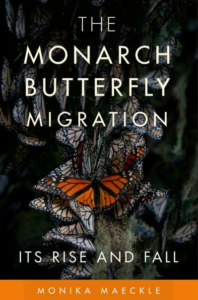
The Monarch Butterfly Migration- Its Rise and Fall

Monika Maeckle

Publisher:

University of Oklahoma Press

Publication Date:

August 20, 2024

Category:

History, Regional, Wildlife

Each fall, millions of monarch butterflies migrate from Canada to Mexico. Their incredible journey—nearly 3,000 miles long—takes them through Oklahoma, Texas, and other US states, where butterfly devotees eagerly await their arrival. The monarch migration is a brilliant demonstration of nature’s ingenuity, but the delicate creatures face many perils, and the number of migrating monarchs is declining sharply. This compelling book weaves natural history, science, and personal experience to explore the rise and fall of one of nature’s most spectacular phenomena.

While monarch butterflies have been migrating for centuries, they seized public attention in 1976 when a National Geographic magazine cover story featured the “discovery” of their roosting sites in Mexico. The article rocked the world of lepidoptery, solved a scientific mystery, and opened the door to human meddling. The new revelations put a spotlight on the insects, and inspired the creation of butterfly sanctuaries in Mexico as well as myriad efforts to protect them. Almost 40 years later, many believe that monarch butterflies are in danger of extinction. How real is that danger?

Journalist and butterfly advocate Monika Maeckle addresses this question and more as she delves into the rich history and current plight of the monarch butterfly. Through meticulous reporting, Maeckle offers unique insights on the butterflies as well as a nuanced portrait of the shifting and sometimes contentious community of scientists, enthusiasts, and “flutterati” who have emerged to support the monarchs’ cause.

A highly engaging book, The Monarch Butterfly Migration also focuses a wider lens on the effects of climate change and the tensions between advocacy and scientific accuracy. In addition to calling for environmental sustainability, this book reminds each of us to notice—and never take for granted—the natural wonders in our own backyards.

About the Region

Fall Symposium 2025 Logo - Teach for the Future

Salado, the location of our Fall 2025 Symposium, lies at the intersection of two ecoregions: the Edwards Plateau (Limestone Cut Plain) and Blackland Prairie (Northern Blackland Prairie).

The Edwards Plateau area is also called the Hill Country; however, this general term covers a much larger area extending farther north. Spring-fed creeks are found throughout the region; deep limestone canyons, rivers, and lakes (reservoirs) are common. Ashe juniper is perhaps the most common woody species found throughout the region. Additional woody species include various species of oak, with live oak (Quercus fusiformis) being the most common. Sycamores (Platanus occidentalis) and bald cypress (Taxodium distichum) border waterways. This area is well known for its spring wildflower displays, though they may be viewed in spring, late summer, and fall, as well. According to Texas Parks and Wildlife, average annual rainfall in the Edwards Plateau ranges from 15 to 34 inches.

The Blackland Prairie extends from the Red River south to San Antonio, bordered on the west by the Edwards Plateau and the Cross Timbers, and on the east by the Post Oak Savannah. Annual rainfall averages 30 to 40 inches, with higher averages to the east. This region is dominated by prairie species. The most common grass species include little bluestem (Schizachyrium scoparium) and Indian grass (Sorghastrum nutans) in the uplands and switchgrass (Panicum virgatum) in the riparian areas and drainages. Common herbaceous flowering plants include salvias, penstemons, and silphiums. This area has suffered greatly from overgrazing and agricultural use. Few intact areas remain, though many of the plants can be found along county roadsides throughout the region.

Our fall Symposium host chapter, the Tonkawa Chapter, includes both of these ecoregions.

Source: Wildflowers of Texas by Michael Eason