
Guineagrass

Invasive Description

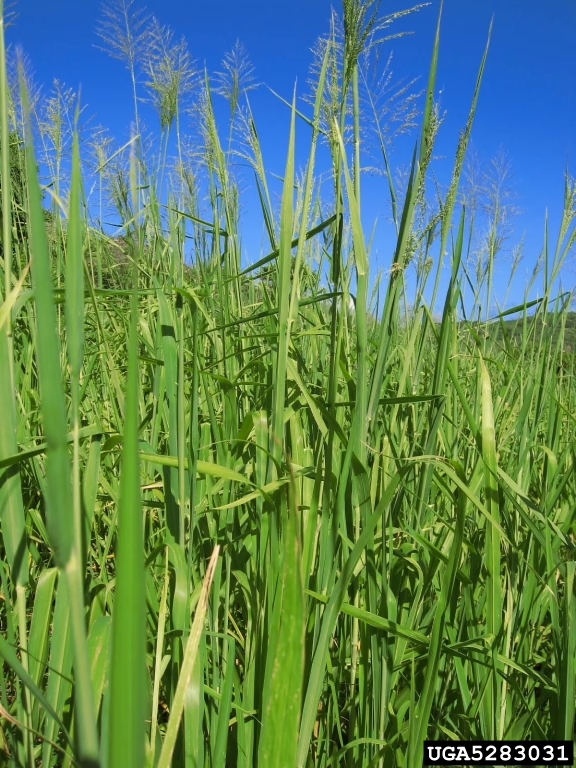
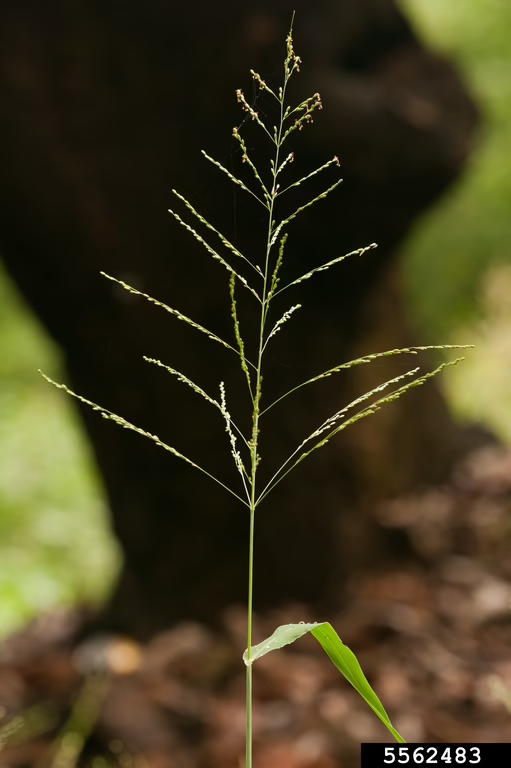
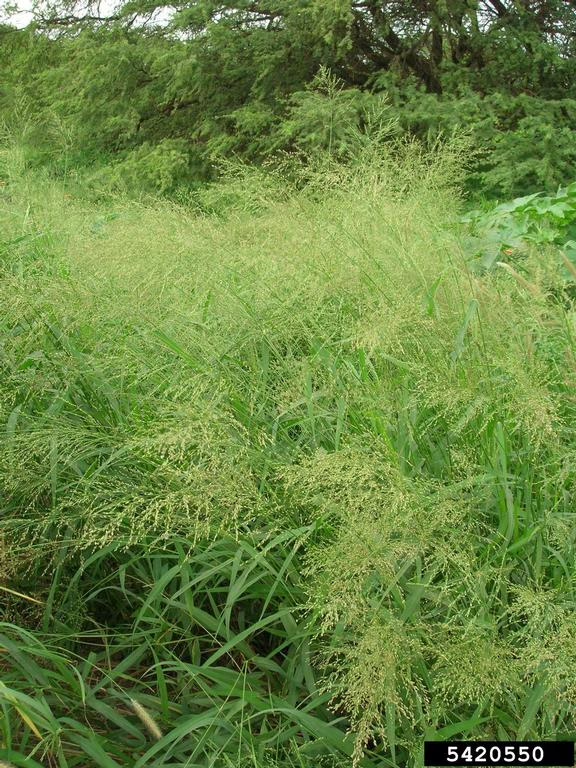
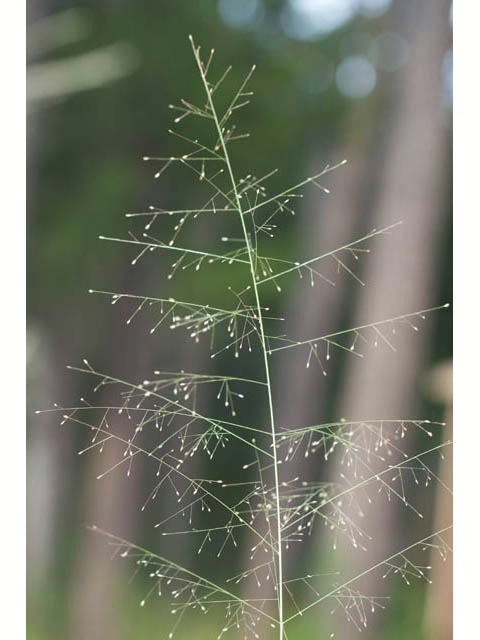
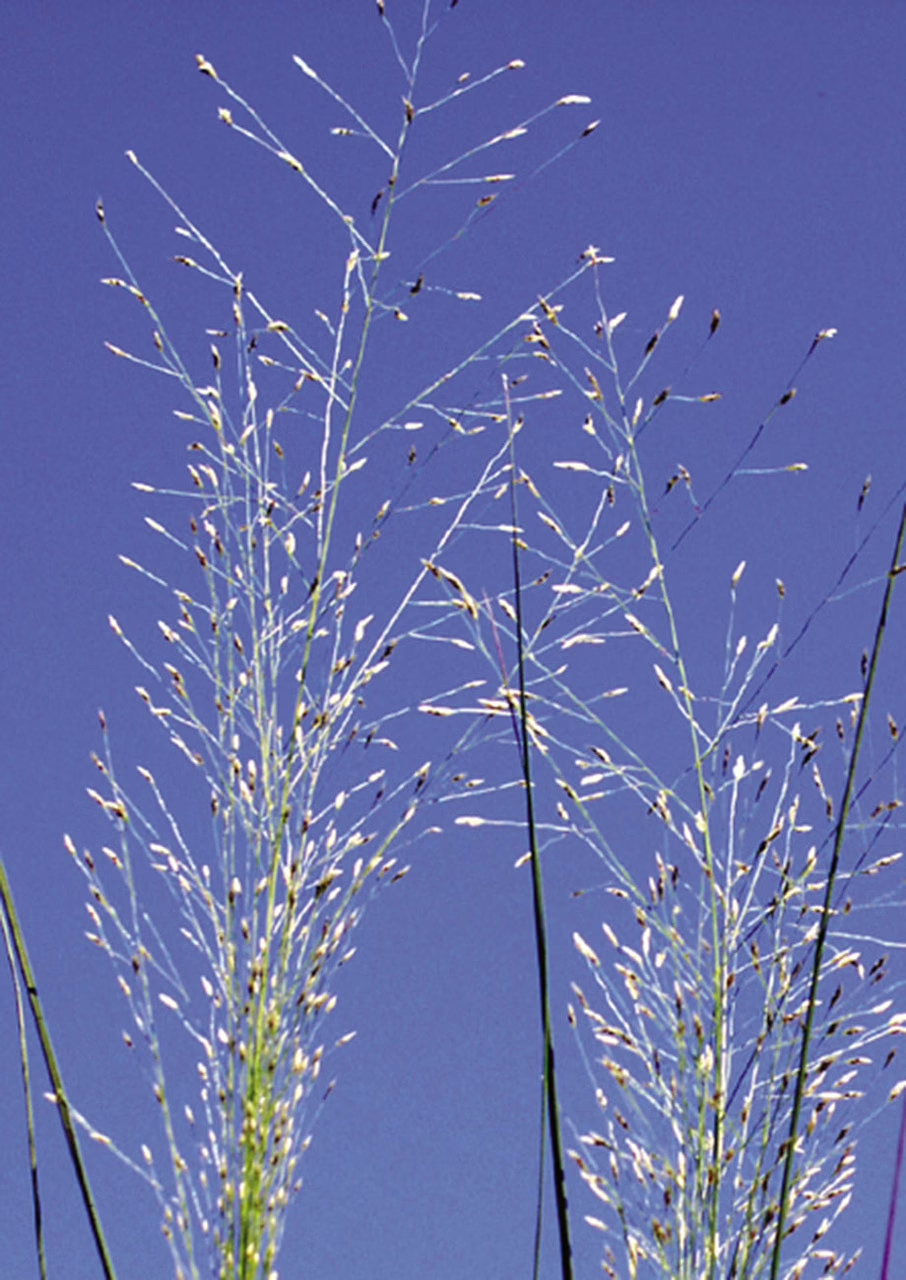
Guineagrass was first recorded in the late 1600s by a naturalist named Hans Sloane, who observed it growing in Barbados and later in Jamaica. He described it as a tall grass—about 4 to 5 feet high—with thick joints along the stem. Since then, guineagrass has been spread around the world, both accidentally and intentionally, because it’s useful as livestock forage. Today, it grows widely across tropical and subtropical regions. It is a clumping, long-lived grass that can grow about 2 to 6 feet tall. Its leaves are narrow and pointed, and it produces loose, branching flower clusters. The seeds are small—about the size of a grain of sand—and form at the tips of these clusters.

Ecological Threat

Guineagrass can quickly take over open areas like pastures and disturbed land, forming thick stands that crowd out native plants. It releases chemicals into the soil that make it harder for other plants to grow, and in new environments, it may face fewer pests or diseases, giving it an extra advantage.

Because it tolerates drought, guineagrass can accumulate substantial dry plant material. This makes fires more intense, which can kill off native plants that aren’t adapted to fire. Guineagrass, however, survives and often takes over even more after a fire.

Although it produces many seeds, most don’t successfully grow and don’t last long. The seeds usually spread only short distances by wind. Even so, the plant bounces back quickly after fire by regrowing from underground stems.

How to Eradicate

For information on how to eradicate this invasive, view our statement on herbicide use and preferred alternatives for invasive plants.

Native Alternatives

You can replace this invasive plant with native alternatives. Here are some plants that make superior replacements.

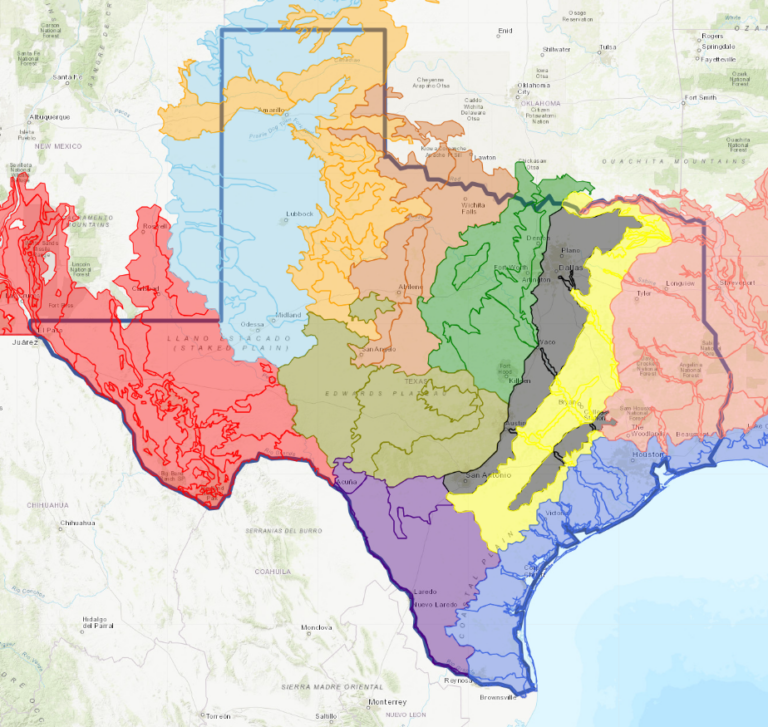
Match your location on the Texas map to the color squares on the replacement plants below to find suitable replacements for your ecoregion.

Click for more details about the ecoregions

About the Region

2026 Fall Symposium Logo

This low-elevations region of Texas extends inland from the barrier islands, about 60 or so miles, and stretches from Brownsville to Louisiana. In total, it covers about 9.5 million acres, with a high point of 150 feet in elevation. More than 1000 species of plants can be found in this region. On the southern end, species more common in Mexico (such as Sabal mexicana) and Central America occur.

The barrier islands provide us with dune systems, and clay flats to the inland side, which have species found in these areas alone. Many plants here, such as Ipomoea pes-caprae (beach morning glory), can be found throughout tropical regions of the globe. I’ve encountered the same species on the beaches of Guam.

Once inland, vast marshes and wet prairies occur. Occasionally, oak (Quercus fusiformis) groves can be found. Common grasses include species of Bothriochloa, Paspalum, and Sporobolus; eastern gamagrass (Tripsacum dactyloides); and switchgrass (Panicum species). Many rivers and creeks cut through the Gulf Prairies, and along these riparian areas various species of trees, Sabal minor, and other plants adapted to clay soils can be found. Due to overgrazing, farming, and fire suppression, woody species such as mesquite (Prosopis glandulosa) and huisache (Acacia farnesiana), and invasive species such as chinaberry (Melia azedarach), Brazilian pepper (Schinus terebinthifolius), and Chinese tallow (Sapium sebiferum) have increased and displaced our native flora.

Source: Wildflowers of Texas by Michael Eason