Member News: Engaging the Next Generation

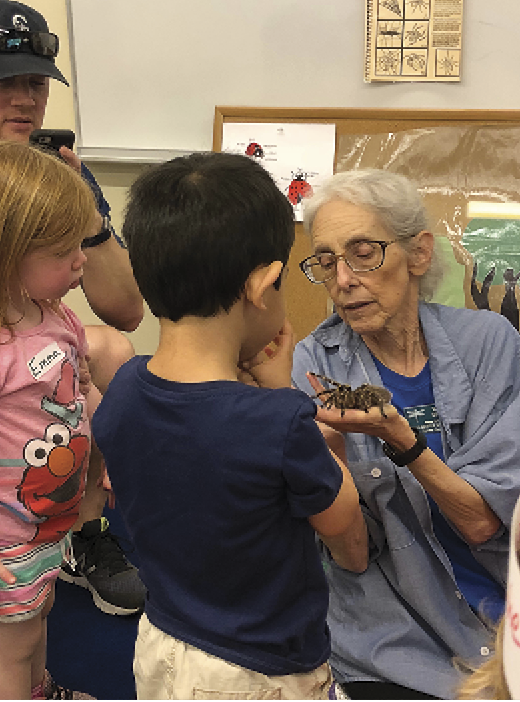
Dr. Drezek believes that children can best learn about the natural world through movement, touching, and hands-on experience.

Empowering young people to become environmental stewards for the next generation is critical to the long-term success of many conservation initiatives. For more than 50 years, San Antonio Chapter member and Master Naturalist Dr. Wendy Drezek has been on the cutting edge of that movement in her work educating children.

Her Growing Up WILD/Project WILD early childhood program and Family Nature Guides were developed for educators of children aged 3-7 to build on children’s natural sense of wonder about nature, wildlife, and the world around them. Sample Family Nature materials include topics like Untangling Invasives–understanding the difference between native, invasive, and aggressive plants–and Ecoregions, which discusses the incredible environmental diversity of Texas.

As a natural extension to that work, Dr. Drezek has also developed the Starting Out Wild Curriculum, a set of over two dozen nature education learning units that are developmentally appropriate for the youngest naturalists, from birth to age 3. For more information, visit txmn.org/alamo/area-resources/starting-out-wild/-Ed

"I’m going to argue for teaching nature to toddlers. Children today are on screens and experiencing life virtually from the earliest months. Our children are experiencing “nature deficit disorder”–lack of contact with the natural world."

Did you like this article? It’s from our Winter 2024 Texas Native Plants magazine. Read more here
About the Region

2026 Fall Symposium Logo

This low-elevations region of Texas extends inland from the barrier islands, about 60 or so miles, and stretches from Brownsville to Louisiana. In total, it covers about 9.5 million acres, with a high point of 150 feet in elevation. More than 1000 species of plants can be found in this region. On the southern end, species more common in Mexico (such as Sabal mexicana) and Central America occur.

The barrier islands provide us with dune systems, and clay flats to the inland side, which have species found in these areas alone. Many plants here, such as Ipomoea pes-caprae (beach morning glory), can be found throughout tropical regions of the globe. I’ve encountered the same species on the beaches of Guam.

Once inland, vast marshes and wet prairies occur. Occasionally, oak (Quercus fusiformis) groves can be found. Common grasses include species of Bothriochloa, Paspalum, and Sporobolus; eastern gamagrass (Tripsacum dactyloides); and switchgrass (Panicum species). Many rivers and creeks cut through the Gulf Prairies, and along these riparian areas various species of trees, Sabal minor, and other plants adapted to clay soils can be found. Due to overgrazing, farming, and fire suppression, woody species such as mesquite (Prosopis glandulosa) and huisache (Acacia farnesiana), and invasive species such as chinaberry (Melia azedarach), Brazilian pepper (Schinus terebinthifolius), and Chinese tallow (Sapium sebiferum) have increased and displaced our native flora.

Source: Wildflowers of Texas by Michael Eason
